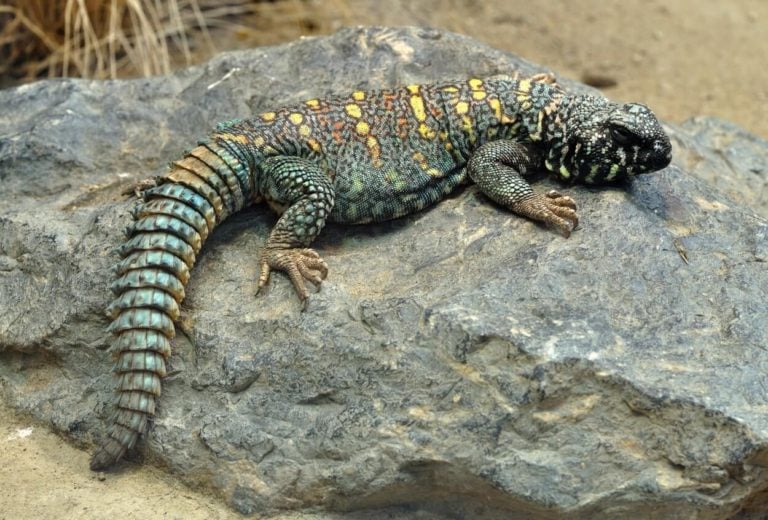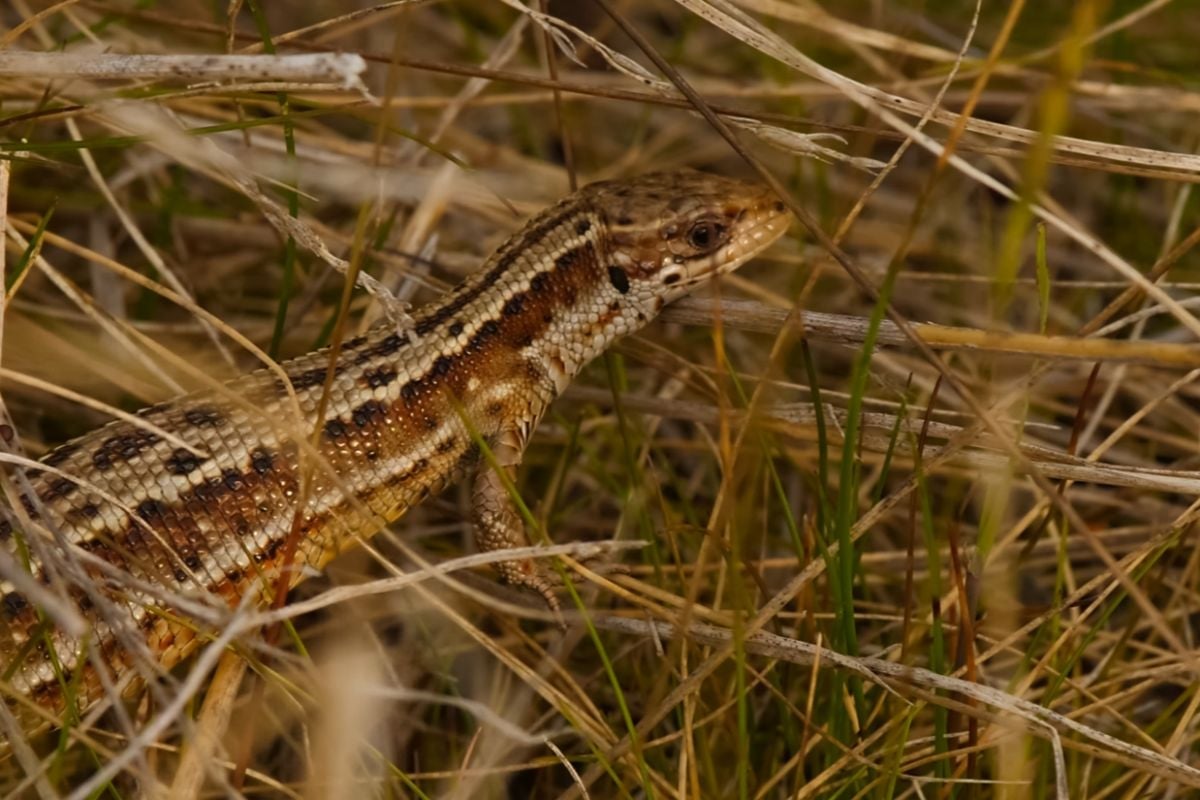
If your female lizard has just laid eggs — whether expected or a surprise — the first question is usually the same: how long until they hatch? The answer depends heavily on the species and the incubation temperature, with times ranging from as little as 35 days for leopard geckos to over 250 days for chameleon species.
Getting incubation right isn’t complicated, but it does require consistency. Temperature, humidity, substrate moisture, and egg orientation all play a direct role in whether hatchlings emerge healthy — or don’t emerge at all. This guide covers everything: species-specific timelines, step-by-step incubator setup, how to tell if eggs are fertile, and what to do once they hatch.
Table of Contents
Lizard Egg Incubation Times by Species
The single most important variable in incubation time is temperature — warmer incubation (within the safe range for that species) shortens the incubation period, while cooler temperatures extend it. The times below reflect typical ranges at the recommended incubation temperatures, based on published herpetological care guidelines and breeder data.[1]
| Species | Incubation Temp | Incubation Time | Clutch Size |
|---|---|---|---|
| Leopard Gecko | 80–88°F (27–31°C) | 35–89 days | 2 eggs per clutch |
| Bearded Dragon | 84–86°F (29–30°C) | 55–75 days | 15–35 eggs |
| Crested Gecko | 72–80°F (22–27°C) | 60–120 days | 2 eggs per clutch |
| Blue Tongue Skink | Live birth (viviparous) | N/A — live birth | 10–25 live young |
| Green Iguana | 85–88°F (29–31°C) | 90–120 days | 25–45 eggs |
| Ball Python | 88–90°F (31–32°C) | 55–60 days | 4–8 eggs |
| Veiled Chameleon | 68–72°F (20–22°C) | 180–240 days | 25–85 eggs |
| Corn Snake | 78–82°F (26–28°C) | 58–62 days | 10–30 eggs |
| Tokay Gecko | 80–86°F (27–30°C) | 90–150 days | 2 eggs (cemented) |
| Panther Chameleon | 72–76°F (22–24°C) | 180–300 days | 10–40 eggs |
| Green Anole | 80–85°F (27–29°C) | 30–45 days | 1–2 eggs every 2 weeks |
| Savannah Monitor | 86–90°F (30–32°C) | 150–180 days | 20–50 eggs |
Key takeaway: Chameleons are by far the longest-incubating lizards commonly kept as pets — often requiring 6–10 months. Green anoles and leopard geckos are among the fastest. It’s also worth noting that bearded dragons exhibit temperature-dependent sex determination (TSD) — meaning incubation temperature influences the sex ratio of the hatchlings.[2] Not sure how many eggs to expect? Our guide on how many eggs lizards lay covers clutch sizes in detail.
How to Tell If Lizard Eggs Are Fertile
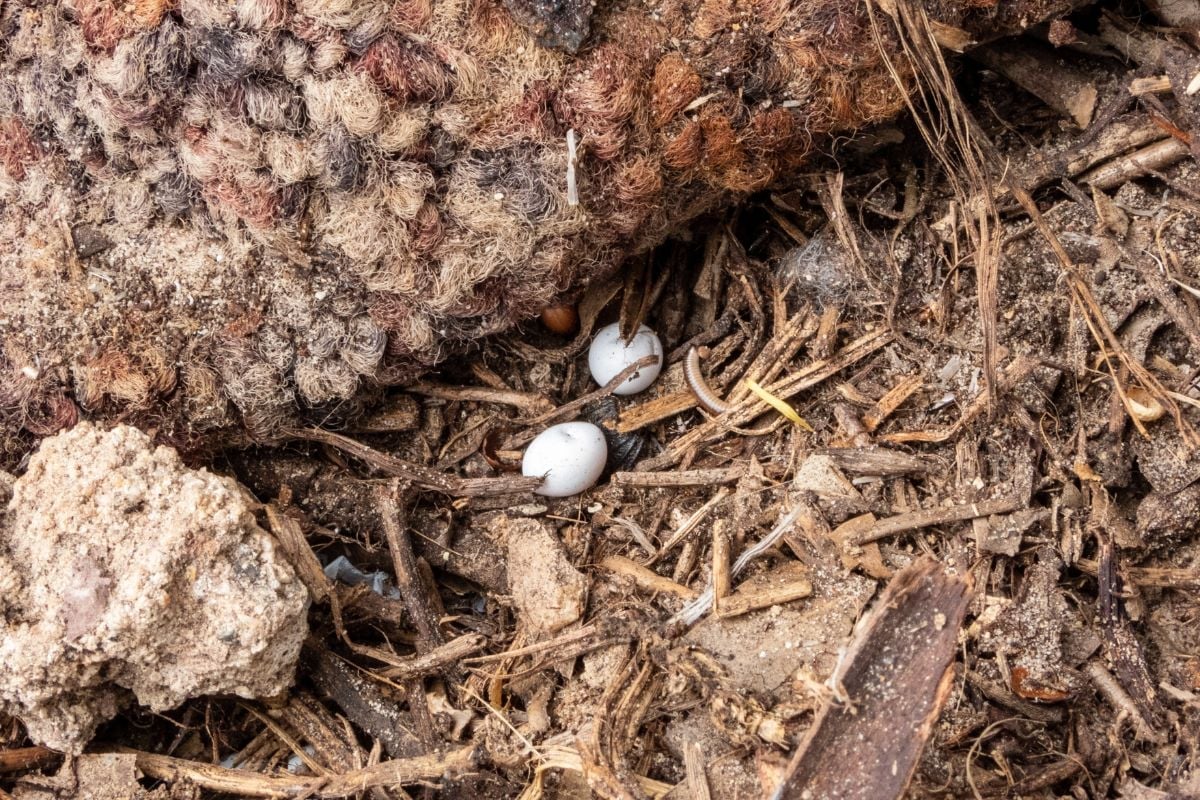
Not all lizard eggs will be fertile — especially from a female kept alone, or one where fertilisation was unsuccessful. Incubating infertile eggs wastes time and enclosure space, so it’s worth candling your eggs a week or two after laying. Curious what healthy eggs should look like in the first place? Take a look at our guide on what lizard eggs look like — it covers colour, shape, and texture for common species.
Candling Lizard Eggs
Candling means shining a bright light through the egg to illuminate the contents. In a dark room, hold a small torch (a phone torch works perfectly) directly against the side of the egg:
- Fertile egg: After 7–10 days you’ll see a pink or red network of veins, often surrounding a small embryo — a clear sign of healthy development
- Infertile egg: The interior looks uniformly yellow or orange with no visible veining — called a “yolker.” These won’t hatch
- Too early: If candled in the first 3–5 days, even fertile eggs may show no veining yet. Wait until day 7–10 before making a judgement
Signs of a failing egg: Eggs that turn yellow, develop a deep sunken dent that doesn’t recover when humidity is adjusted, emit an odour, or develop mould that spreads throughout the interior are usually no longer viable. Remove these promptly to prevent mould spreading to healthy neighbouring eggs.
What Do Healthy Lizard Eggs Look Like?
A healthy, freshly laid lizard egg is typically white to off-white, firm but slightly flexible (not hard-shelled like a bird egg), oval-shaped, and slightly damp from the laying process. As incubation progresses, healthy eggs often increase slightly in size as the embryo absorbs moisture. Some dimpling near the end of incubation is normal — it can actually signal that hatching is imminent. For gecko-specific egg appearance, our gecko egg guide goes into more detail on what to expect from species like crested geckos and leopard geckos.
How to Set Up a Lizard Egg Incubator
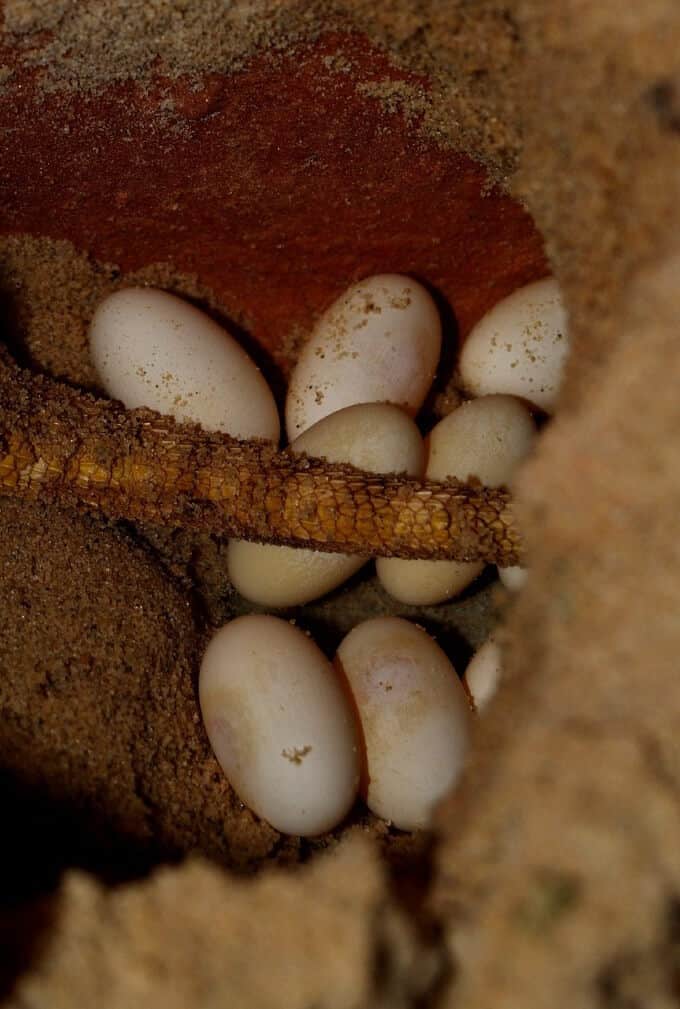
Whether you’re incubating bearded dragon eggs, leopard gecko eggs, or corn snake eggs, the fundamentals are the same. Here’s the process step by step.
Step 1: Mark Each Egg Before Moving It
Before moving eggs from where they were laid, use a soft graphite pencil to make a small dot or X on the top of each egg. This step is critical — reptile embryos attach to the upper surface of the egg shell shortly after laying. If an egg is rotated more than 45 degrees from its original position, the embryo can detach and die.[3] Never use ink — it can penetrate the porous shell. Pencil only, every time.
Step 2: Choose Your Incubation Substrate
The substrate holds moisture around the eggs without waterlogging them. The three most widely used options are:
- Vermiculite — the most popular choice. Lightweight, holds moisture well, resistant to mould. Mix with water at a 1:1 ratio by weight (not volume)
- Perlite — slightly better drainage than vermiculite; also mixed 1:1 by weight. Good for species needing slightly drier conditions
- Hatchrite — a commercial pre-mixed incubation substrate; convenient but more expensive
The squeeze test: Your substrate moisture is correct if you can squeeze a handful and it barely holds its shape but releases no drips. Too wet causes fungal issues; too dry causes eggs to desiccate and collapse.
Step 3: Place Eggs in the Container
Press the substrate into a clean plastic container — a deli cup or small food container works perfectly for smaller clutches like those from leopard geckos or crested geckos. Create a small depression for each egg and nestle them in with their marked side facing up, buried to roughly half their depth. Leave a small gap between eggs — eggs touching each other can share any mould that develops.
Place the lid on the container but leave it slightly ajar, or poke a few small ventilation holes. Some gas exchange is needed — a completely sealed container causes CO₂ build-up that can suffocate embryos.
Step 4: Set and Monitor Temperature
Refer to the species-specific temperatures in the table above. A dedicated reptile egg incubator gives the most consistent results — brands like ReptiPro, Hovabator, and Zoo Med’s ReptiTemp are all widely used. A DIY setup using a styrofoam cooler, a low-wattage heat source, and a reliable thermostat can also work well and is considerably cheaper.
Never place a heat mat directly under eggs — radiant heat from below creates temperature stratification inside the egg, which causes developmental problems. Heat should come from the sides or above, and must always be thermostat-regulated. Temperature consistency matters more than hitting a precise number — spikes above the maximum safe temperature are more damaging than incubating at the lower end of the safe range.
Always verify your incubator temperature with a separate calibrated digital thermometer — do not rely solely on the incubator’s built-in display if it has one. The same principle applies to enclosures: we always recommend a backup thermometer for any temperature-sensitive setup.
Step 5: Maintain Correct Humidity
Most lizard eggs incubate best at 70–90% relative humidity. The moisture in your incubation substrate does most of the work — as long as substrate moisture is correct, the humidity inside a semi-sealed container maintains itself naturally for weeks. Check every 2–3 weeks, and if the substrate is starting to dry out and eggs look slightly shrunken, mist the sides of the container lightly (not directly onto the eggs) and re-seal. Exceptions exist: veiled chameleon and panther chameleon eggs actually benefit from a drier incubation period of several months followed by a diapause — research your specific chameleon species carefully, as their incubation protocol differs significantly from other lizards.[4]
Signs That Lizard Eggs Are About to Hatch
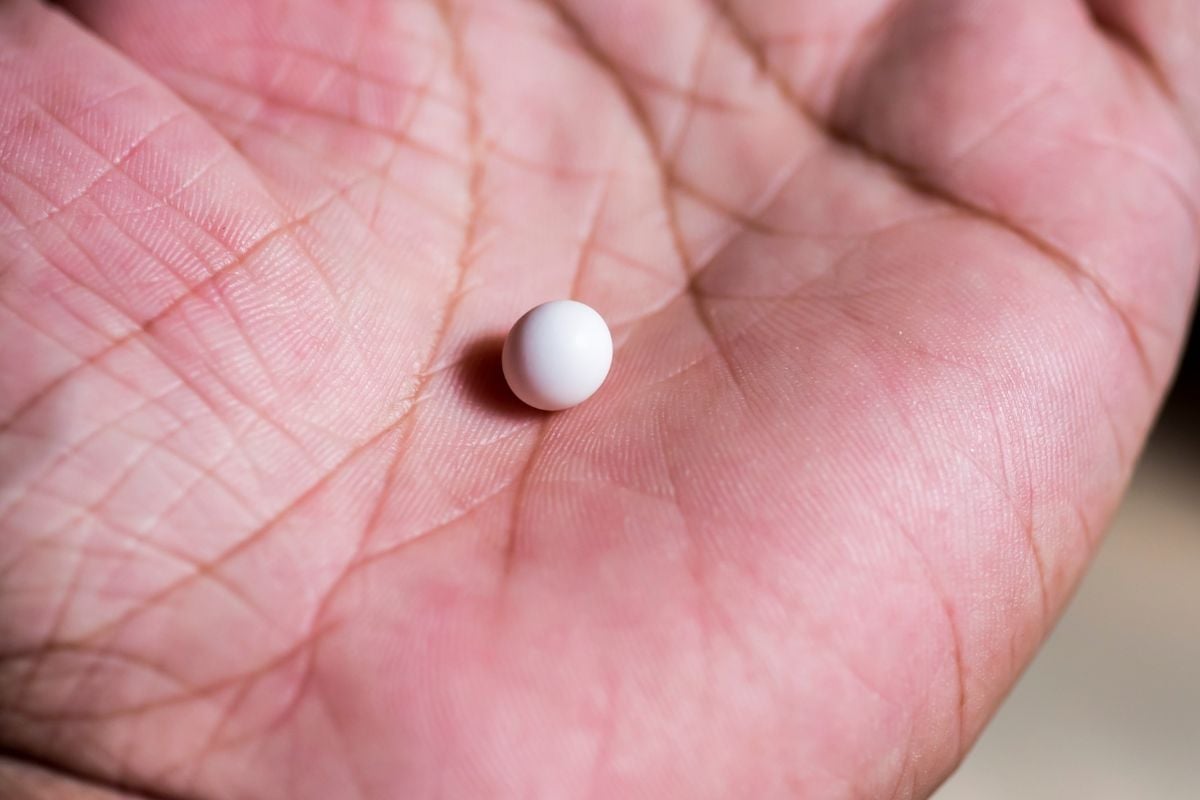
As hatching approaches — typically in the final week — you’ll notice several changes that tell you to start watching closely:
- Dimpling or deflating: The egg surface becomes slightly concave. This is normal and indicates the embryo is absorbing the last of the yolk sac — not a sign of dehydration at this late stage
- “Sweating”: Small water droplets appear on the egg surface. This happens because the embryo produces metabolic water as it fully develops — another positive sign
- Colour change: Some species’ eggs shift from white to a slightly yellowish or grey tone just before hatching
- Movement: You may be able to see or feel slight movement inside the egg as the hatchling positions itself to pip
- Pipping: The hatchling uses its egg tooth — a temporary sharp projection on the tip of the snout — to make the first slit in the egg shell. Once you see a pip, hatching is usually within 12–48 hours
Do Not Assist Hatching Unless Necessary
Once an egg has pipped, resist the urge to help the hatchling out. The process of struggling free from the shell stimulates circulation, lung function, and the absorption of remaining yolk. Premature assistance can tear blood vessels still attached to the shell membrane and cause fatal haemorrhage.
The only exception is if a hatchling has been visibly stuck at the pip stage for more than 24 hours with no progress. In that case, very gently enlarging the pip opening slightly (without pulling the animal) can help. If in doubt, contact a reptile vet — the Association of Reptilian and Amphibian Veterinarians (ARAV) has a directory to help you find a qualified exotic vet near you.
After the Eggs Hatch: What to Do Next
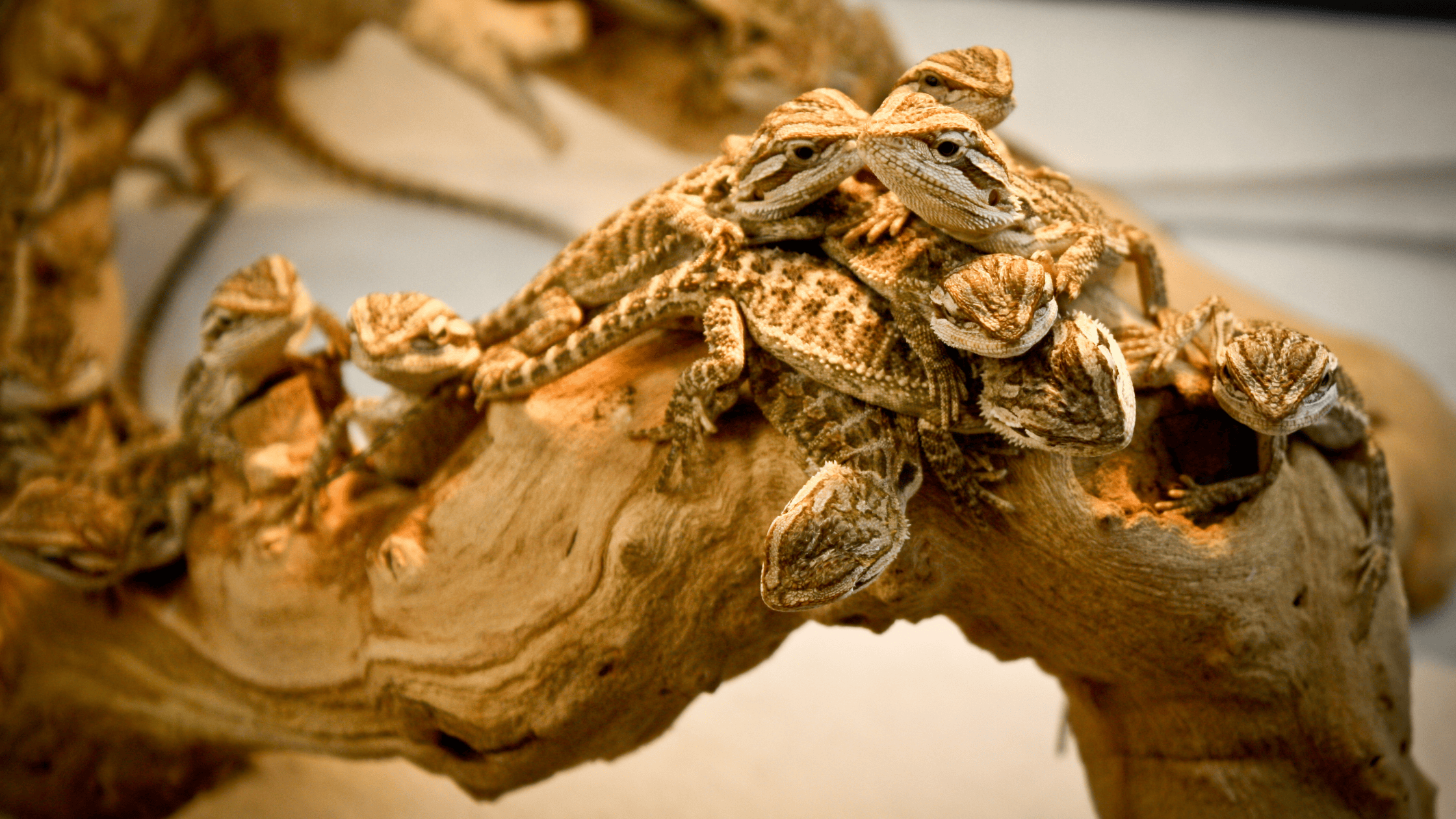
Once a hatchling has fully emerged, leave it in the incubation container for 12–24 hours. This gives it time to fully absorb any remaining yolk sac, complete the transition, and stabilise before being moved to a nursery setup. Do not offer food during this period.
Prepare a Nursery Enclosure
Hatchlings should not go directly into an adult enclosure — they need smaller, more manageable spaces where food is easier to find and temperatures are accessible without large distances to travel. A 10-gallon tank is suitable for most small hatchlings initially. For species-specific enclosure guidance, see our care guides for leopard geckos, bearded dragons, crested geckos, and corn snakes.
Keep the setup simple at first: paper towel substrate (easy to clean, eliminates impaction risk), a warm hide, a cool hide, a shallow water dish, and appropriate lighting. Once hatchlings are feeding confidently and growing well — typically 4–6 weeks — you can transition to a more naturalistic setup.
Separating Hatchlings
Many lizard hatchlings can be housed together initially, but watch carefully for competition over food, basking spots, and any signs of aggression. Bearded dragon hatchlings in particular must be monitored closely — they will nip each other’s tails and toes, and larger siblings will outcompete smaller ones for food. Our full guide on caring for bearded dragon eggs and hatchlings goes into more detail for that species specifically.
First Feeding
Most hatchlings will begin feeding within the first few days. The general rule for prey size is that food items should be no wider than the space between the hatchling’s eyes. For insectivorous species like leopard geckos, small crickets or fruit flies are ideal. For omnivorous hatchlings like young bearded dragons, offer a mix of small feeders and finely chopped greens. Dust all feeders with calcium powder from the very first feed — hatchlings are growing fast and calcium deficiency develops quickly in young reptiles.
Common Incubation Problems and Solutions
| Problem | Likely Cause | Solution |
|---|---|---|
| Eggs collapsing / severe denting | Substrate too dry; humidity too low | Lightly mist container sides (not directly on eggs); check substrate moisture |
| Mould on egg surface | Too much moisture; poor ventilation | Gently remove surface mould with a dry cotton bud; improve ventilation; reduce substrate moisture slightly |
| Eggs turning yellow with no veining | Infertile (yolker) | Candle to confirm; remove after 3 weeks if no development visible |
| Eggs developing then dying | Temperature spike; humidity crash; egg rotated | Verify thermostat accuracy with secondary thermometer; check eggs haven’t shifted; stabilise temperature |
| Hatching much later than expected | Incubation temperature too low | Verify with calibrated thermometer; raise temp slightly if within safe range |
| Hatchling fully formed but stuck | Egg membrane dried; hatchling too weak | Wait 24hrs after pipping; if no progress, gently enlarge pip; consult a reptile vet if hatchling appears unresponsive |
Frequently Asked Questions
How long does it take for lizard eggs to hatch?
It depends on the species and incubation temperature. Leopard geckos hatch in 35–89 days, bearded dragons in 55–75 days, crested geckos in 60–120 days, and green iguanas in 90–120 days. Chameleons are the longest — veiled and panther chameleons can take 180–300 days. Warmer incubation temperatures (within the safe range) shorten the incubation period.
What temperature should lizard eggs be incubated at?
It varies by species. Most common pet lizards incubate between 80–88°F (27–31°C). Chameleons are a notable exception — they need cooler incubation at around 68–76°F (20–24°C). A reliable thermostat is essential, as temperature spikes above the safe maximum can kill developing embryos. Always verify with a secondary calibrated thermometer.
Can lizard eggs hatch without an incubator?
Small clutches can sometimes be incubated without a dedicated incubator — a sealed container with moist substrate placed in a consistently warm room may work for tropical species. However, room temperature fluctuates too much for reliable results. A dedicated reptile egg incubator or a DIY setup using a styrofoam cooler and a thermostat is strongly recommended for the best hatch rates.
How do I know if my lizard eggs are fertile?
Candle the eggs after 7–10 days by shining a bright torch through the egg in a dark room. Fertile eggs will show a network of pink or red veins surrounding a small embryo. Infertile eggs (yolkers) appear uniformly yellow or orange with no visible structure. Healthy eggs are white, firm, and slightly flexible — not collapsed, deeply discoloured, or foul-smelling.
Should I turn lizard eggs like bird eggs?
No — never rotate or turn lizard eggs. Reptile embryos attach to the top surface of the egg shell shortly after laying. Rotating the egg detaches the embryo and will kill it. Always mark the top of each egg with a pencil dot before moving it, and keep that mark facing up throughout the entire incubation period.
What humidity do lizard eggs need?
Most lizard eggs incubate well at 70–90% relative humidity. The moisture in your incubation substrate (vermiculite or perlite mixed with water at 1:1 by weight) maintains this naturally inside a semi-sealed container. Check the substrate every 2–3 weeks and lightly mist the container sides (not directly on eggs) if the substrate is drying out.
Final Thoughts
Lizard egg incubation is one of the most rewarding parts of keeping reptiles. The key is preparation: mark your eggs before moving them, keep temperature and humidity stable, candle early to identify infertile eggs, and resist interfering once pipping begins. Get those steps right and your hatchlings have the best possible start.
For species-specific guidance on breeding and egg care, see our detailed care guides for bearded dragon eggs, leopard geckos, crested geckos, and corn snakes. You might also find our guide on how many eggs lizards lay useful if you’re trying to gauge how many hatchlings to prepare for.
References
- Uetz, P., Freed, P. & Hošek, J. (eds.) The Reptile Database. Available at: reptile-database.org
- Shine, R. (1999). Why is sex determined by nest temperature in many reptiles? Trends in Ecology & Evolution. 14(5):186–189. doi:10.1016/S0169-5347(98)01575-4
- Packard, G.C. & Packard, M.J. (1988). The physiological ecology of reptilian eggs and embryos. In: Biology of the Reptilia. Vol. 16. Alan R. Liss. pp.523–605.
- Chameleon Academy. Chameleon Egg Incubation Guide. Available at: chameleonacademy.com