Choosing the right pet tortoise is genuinely one of the most important decisions you can make in this hobby. These are long-lived animals — some will outlive you — so picking a species that fits your experience level, living situation, and long-term commitment is not something to rush. I have kept several tortoise species over the years, and the ones that become long-term disappointments are almost always cases of someone picking the wrong species for their circumstances.
This list covers 13 of the best pet tortoise species available to keepers today. Each entry includes care level, adult size, lifespan, the biggest challenge you will face, and who the species is genuinely suited for. Whether you are looking for a small, manageable beginner tortoise or a spectacular display animal, there is something here for every situation.
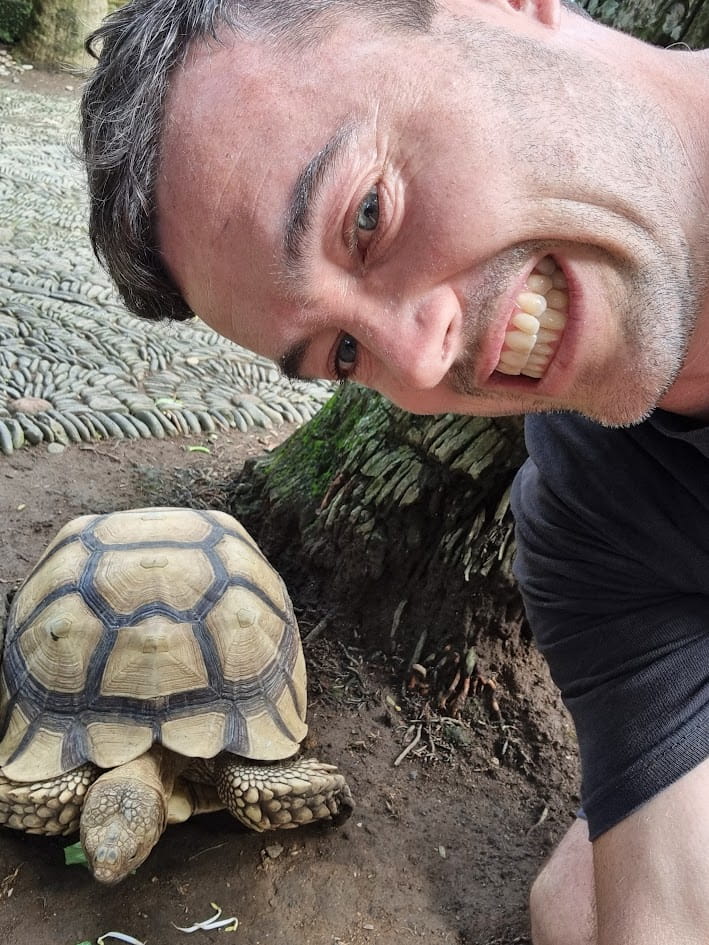
Table of Contents
- Quick Comparison: All 13 Species at a Glance
- What to Consider Before Choosing a Pet Tortoise
- 1. Russian Tortoise
- 2. Greek Tortoise
- 3. Hermann’s Tortoise
- 4. Pancake Tortoise
- 5. Red-Footed Tortoise
- 6. Marginated Tortoise
- 7. Elongated Tortoise
- 8. Indian Star Tortoise
- 9. Yellow-Footed Tortoise
- 10. Leopard Tortoise
- 11. Egyptian Tortoise
- 12. Sulcata Tortoise
- 13. Burmese Mountain Tortoise
- Which Pet Tortoise Is Right for You?
- Frequently Asked Questions
Quick Comparison: All 13 Species at a Glance
Use this table to quickly compare size, care level, and lifespan before reading the full entries below. Care level is rated for captive keeping — not just initial difficulty, but the ongoing commitment required.
| Species | Adult Size | Care Level | Lifespan | Best For |
|---|---|---|---|---|
| Russian Tortoise | 6–10 in | ⭐ Beginner | 40–50 yrs | First tortoise, limited space |
| Greek Tortoise | 5–8 in | ⭐ Beginner | 50–100 yrs | First tortoise, indoor keeping |
| Hermann’s Tortoise | 6–11 in | ⭐ Beginner | 50–75 yrs | Beginners, temperate climates |
| Pancake Tortoise | 6–7 in | ⭐⭐ Intermediate | 25–35 yrs | Experienced beginners |
| Red-Footed Tortoise | 10–14 in | ⭐⭐ Intermediate | 30–50 yrs | Keepers with outdoor space |
| Yellow-Footed Tortoise | 14–24 in | ⭐⭐ Intermediate | 50–80 yrs | Experienced keepers |
| Elongated Tortoise | 12–14 in | ⭐⭐ Intermediate | 30–40 yrs | Experienced intermediate keepers |
| Indian Star Tortoise | 7–12 in | ⭐⭐ Intermediate | 35–80 yrs | Keepers with humidity control |
| Marginated Tortoise | 12–15 in | ⭐⭐ Intermediate | 50–100 yrs | Outdoor keepers in warm climates |
| Egyptian Tortoise | 4–5 in | ⭐⭐⭐ Advanced | 70–100 yrs | Experienced collectors |
| Leopard Tortoise | 10–18 in | ⭐⭐⭐ Advanced | 50–100 yrs | Keepers with large outdoor space |
| Sulcata Tortoise | 25–30 in | ⭐⭐⭐ Advanced | 70–150 yrs | Dedicated keepers with land |
| Burmese Mountain Tortoise | 24+ in | ⭐⭐⭐ Advanced | 50–80 yrs | Experienced, large outdoor space |
What to Consider Before Choosing a Pet Tortoise
Before committing to any species, three questions matter more than anything else:
How much space do you have? Small species like the Russian and Greek tortoise can thrive in a well-set-up indoor enclosure. Medium to large species will need outdoor pens. Giants like the sulcata need large dedicated outdoor areas and will destroy anything less.
What is your climate? Many species can be kept outdoors seasonally in temperate climates but need to come in for winter. Others need subtropical temperatures year-round. Know your local climate before you pick a species that cannot tolerate it.
What is your long-term commitment? Many tortoise species live 50–100 years. A Russian tortoise purchased today may outlive you. This is not a reason not to keep them, but it is a reason to plan ahead — who will care for this animal if circumstances change? According to the Tortoise Trust, one of the leading tortoise welfare organisations globally, failure to plan for long-term care is one of the most common welfare issues affecting captive tortoises.
1. Russian Tortoise
Care Level: ⭐ Beginner | Adult Size: 6–10 inches | Lifespan: 40–50+ years
The Russian tortoise is consistently the species I recommend most to first-time tortoise owners. They are active and personable, manageable in size, tolerant of a reasonable temperature range, and genuinely interactive compared to many other tortoise species. Once comfortable in their enclosure, they recognise their owners and respond to food presentation in ways that larger, more reclusive species often do not.

The shell features shades of olive green, tan, black, and brown with an inverted scute pattern — the raised portions are darker while the centres are lighter, which is the reverse of most tortoise species. They have four sharp claws on each foot, which they use for burrowing.
Russians are cold-hardy compared to tropical tortoise species, which makes them suitable for outdoor keeping in temperate climates during the warmer months. They brumate naturally in cooler temperatures — allowing a healthy, well-fed Russian to brumate is normal and healthy practice.
Biggest challenge: Escape prevention. Russian tortoises burrow and climb with surprising efficiency, so enclosure walls must go deep into the substrate and be tall enough that climbing is not possible.
Expert Tip: Russian tortoises are one of the few species that genuinely do well in a temperate climate without supplemental heating during summer. If your daytime temperatures reach 70°F+ regularly, they can live outside from spring through autumn — which makes husbandry much simpler.
2. Greek Tortoise
Care Level: ⭐ Beginner | Adult Size: 5–8 inches | Lifespan: 50–100 years
Small, even-tempered, and adaptable, the Greek tortoise is one of the most widely kept species in the world — and for good reason. These tortoises are forgiving of minor husbandry variations, do not need massive enclosures, and are peaceful in temperament. Their tall, steeply domed carapace features rich tan and dark black scutes arranged in a pattern reminiscent of Greek mosaic work, which is exactly how they get their common name.

Greek tortoises are actually a group of closely related subspecies (Testudo graeca) rather than a single uniform species, and care requirements can vary slightly depending on the subspecies. Most available in the pet trade are from Mediterranean or Middle Eastern populations, which do well in drier, Mediterranean-style setups.
A naturalistic setup with edible plants, a tortoise-safe substrate, hides, and a basking spot is all they need to thrive indoors. As long as you have those essentials in place, Greek tortoises are content and easy to maintain long term.
Biggest challenge: Lifespan planning. A well-kept Greek tortoise can live 50–100 years. This is a multi-generational commitment that requires genuine planning for the animal’s future care.
3. Hermann’s Tortoise
Care Level: ⭐ Beginner | Adult Size: 6–11 inches | Lifespan: 50–75 years
The Hermann’s tortoise is a Mediterranean species that makes a wonderful first tortoise. There are two main subspecies: the Western Hermann’s (Testudo hermanni hermanni), which stays smaller at 6–8 inches, and the Eastern Hermann’s (Testudo hermanni boettgeri), which reaches up to 11 inches. Care requirements are essentially the same for both.

They come from rocky hillsides and evergreen forests around the Mediterranean, and in captivity they appreciate a habitat that reflects this — rocks to climb, edible plants, and a good hide box. Hermann’s tolerate a relatively wide temperature range: daytime temperatures of 80–86°F with nighttime drops to 60°F are perfectly manageable. This cold tolerance makes them good candidates for outdoor summer keeping in temperate climates, with supervised brumation in autumn.
Biggest challenge: Sourcing. Always buy captive-bred Hermann’s tortoises. Wild-caught specimens carry parasites, stress poorly in captivity, and are subject to CITES protections in many countries. Reputable breeders will provide documentation.
4. Pancake Tortoise
Care Level: ⭐⭐ Intermediate | Adult Size: 6–7 inches | Lifespan: 25–35 years
The pancake tortoise (Malacochersus tornieri) is one of the most unusual tortoise species in the hobby. Instead of the tall, domed carapace typical of most tortoises, pancake tortoises have a remarkably flat, flexible shell — and this is not just for looks. In the wild, they use this flattened profile to wedge themselves into narrow rock crevices when threatened, inflating their lungs to make themselves nearly impossible to extract.

Native to southern Kenya and parts of Tanzania, pancake tortoises thrive in rocky, semi-arid scrub habitat. They are faster and more agile than most tortoise species, which adds to their appeal as display animals. They can also be kept in groups — unlike many tortoise species — as long as the enclosure is large enough and there are sufficient hides.
Wild exportation of this species has been restricted due to population pressure, so captive-bred specimens are the norm. They can be harder to find than mainstream species.
Biggest challenge: Escape prevention. Thanks to their flat bodies, pancake tortoises can slip under gaps that would stop any other tortoise. They are also surprisingly accomplished climbers. Every potential escape route must be sealed before housing these animals.
5. Red-Footed Tortoise
Care Level: ⭐⭐ Intermediate | Adult Size: 10–14 inches | Lifespan: 30–50 years
The red-footed tortoise is one of the most characterful and engaging tortoises you can keep. Native to Central and South America, these are omnivores rather than strict herbivores — they eat a varied diet including leafy greens, fruits, fungi, and occasional animal protein. This dietary flexibility makes feeding interesting and means they process nutrition very efficiently compared to grass-grazing species.

The species gets its common name from the distinct bright red scaling on the legs and, in some individuals, the face and head. The carapace is a darker brown or grey with lighter tan centres to the raised scutes.
Red-footed tortoises require humid conditions — they come from tropical forest habitats where humidity stays high year-round. This is a step up in complexity from Mediterranean species like the Russian or Greek, which is why I rate them as intermediate rather than beginner.
Biggest challenge: Humidity maintenance. Red-foots need 70–80% relative humidity consistently. In dry climates this requires regular misting, a humid hide, and attention to substrate moisture. Respiratory infections follow quickly when humidity is chronically low.
Expert Tip: Red-footed tortoises are remarkably personable for a reptile. Given time, most will approach their keeper at feeding time and show clear food preferences. They are one of the species that consistently surprises new owners with just how interactive they can be.
6. Marginated Tortoise
Care Level: ⭐⭐ Intermediate | Adult Size: 12–15 inches | Lifespan: 50–100 years
The marginated tortoise (Testudo marginata) is the largest of the European tortoise species and one of the most distinctive. Juveniles display a striking black and pearly white shell colouration that fades to dark grey with age. The most recognisable feature is the flared marginal scutes around the edge of the carapace — particularly at the rear — which give the tortoise a frilled silhouette unlike any other European species.

Found in isolated populations across southern Greece and parts of Italy, marginated tortoises do well in outdoor Mediterranean-style enclosures in warm climates. Their larger adult size means they need more space than a Russian or Greek tortoise, but their care requirements are similar in principle — dry, warm, with good sun access and appropriate diet of grasses and leafy weeds.
They are prolific breeders in captivity and captive-bred specimens are widely available. Both sexes can be housed together successfully in a well-sized enclosure.
Biggest challenge: Security. Marginated tortoises burrow enthusiastically and can climb short barriers. Enclosure walls need to be tall, go deep into the substrate, and have no climbing aids near the perimeter.
7. Elongated Tortoise
Care Level: ⭐⭐ Intermediate | Adult Size: 12–14 inches | Lifespan: 30–40 years
The elongated tortoise (Indotestudo elongata) stands out immediately from other tortoise species — as the name suggests, its carapace is noticeably longer and more oval in profile than the rounded domes of Mediterranean and African species. Females tend to be wider and appear even more rounded. The shell is usually pale yellow or tan with dark brown blotching on each scute.

Native to tropical forests across India, Southeast Asia, and southern China, elongated tortoises have genuinely different environmental needs from Mediterranean species. They are shade-dwelling forest animals — they do not bask the way desert or grassland tortoises do, and they prefer dappled light and leaf litter to open, sunny environments. Bright, hot, dry setups stress them significantly.
They also need a humidity gradient in their enclosure — a drier basking zone and a more humid retreat zone — along with access to a soaking area. Getting this balance right requires more effort than a simple dry-land setup.
Biggest challenge: Creating the correct environmental gradient. The combination of tropical humidity requirements and shade-preference makes these tortoises less straightforward than Mediterranean species. Experienced beginners ready to step up will find them genuinely rewarding.
8. Indian Star Tortoise
Care Level: ⭐⭐ Intermediate | Adult Size: 7–12 inches | Lifespan: 35–80 years
The Indian star tortoise (Geochelone elegans) is arguably the most visually spectacular small-to-medium tortoise in the hobby. Each scute on the carapace has a dark brown or black base with bright yellow or pale tan lines radiating from the centre — the star pattern the species is named for. When multiple scutes are viewed together across the carapace, the effect is genuinely striking and immediately distinctive.

Native to arid and semi-arid habitats across India, Sri Lanka, and Pakistan, Indian star tortoises actually require reasonably high humidity despite coming from a dry-looking environment. In the wild, they shelter in monsoon vegetation and need humidity levels of up to 80% — particularly at night and in their hide zone. This somewhat counterintuitive requirement catches many new keepers off guard.
They need a soaking dish, humidity hides, and regular misting to stay healthy. Females are significantly larger than males.
Biggest challenge: Humidity management. Indian star tortoises are not forgiving of chronically dry conditions. Respiratory infections and pyramiding (abnormal shell growth) are both linked to inadequate humidity. A digital hygrometer and consistent misting schedule are non-negotiable.
9. Yellow-Footed Tortoise
Care Level: ⭐⭐ Intermediate | Adult Size: 14–24 inches | Lifespan: 50–80 years
The yellow-footed tortoise (Chelonoidis denticulata) is the largest tortoise species on mainland South America and a close relative of the red-footed tortoise. It shares much of the same care profile — humid tropical conditions, omnivorous diet, active temperament — but grows considerably larger. Typical captive specimens reach 14 inches, though the species can reach 24–28 inches under exceptional conditions.

The colouration is more muted than its red-footed cousin — yellowish-tan scaling on the head, feet, and face against dark brown skin, with raised tan-centred scutes on the carapace. The visual appeal is subtler but still impressive, particularly in a well-decorated tropical enclosure.
Like the red-footed tortoise, yellow-foots are omnivores. Their diet in the wild includes leafy vegetation, fallen fruits, fungi, carrion, and occasional invertebrates — variety is important in captivity to replicate this broad nutritional profile.
Biggest challenge: Size combined with humidity requirements. These tortoises need large, humid enclosures — which takes meaningful space and infrastructure to provide properly. Best suited to keepers who can commit to a long-term tropical tortoise setup.
10. Leopard Tortoise
Care Level: ⭐⭐⭐ Advanced | Adult Size: 10–18 inches | Lifespan: 50–100 years
The leopard tortoise (Stigmochelys pardalis) is the fourth-largest tortoise species in the world and one of the most visually impressive. The shell is tall and steeply domed with a tan or light brown base and dramatic black splotching — the leopard-spot pattern that gives the species its name. It is an immediately recognisable animal that attracts serious attention in any collection.

Native to the savannas of sub-Saharan Africa, leopard tortoises need a large, warm outdoor environment to thrive. They are active grazers that cover considerable ground in a day, and a cramped indoor enclosure is genuinely inadequate for an adult. Most keepers with adult leopard tortoises maintain large outdoor pens with live grass for grazing and a heated shelter for cooler periods.
They also require a basking spot of at least 95°F (35°C). They are not cold-tolerant and must be brought inside or provided with supplemental heating when temperatures drop. Importantly, leopard tortoises should not be kept in high-humidity environments — they are susceptible to respiratory infections if conditions are too damp, which makes them a poor choice for keepers in wet climates unless very careful management is in place.
Biggest challenge: Climate and space requirements. This species needs warm, dry conditions and significant outdoor space. It is not a suitable tortoise for most indoor-only set-ups or cold, wet climates.
11. Egyptian Tortoise
Care Level: ⭐⭐⭐ Advanced | Adult Size: 4–5 inches | Lifespan: 70–100 years
The Egyptian tortoise (Testudo kleinmanni) is one of the smallest tortoise species in the world, and one of the rarest in captivity. Adults reach just 4–5 inches — small enough to sit comfortably in your palm. The shell is pale ivory to golden-yellow, perfectly adapted for heat reflection in the Saharan and Middle Eastern desert environments these tortoises come from.

Wild Egyptian tortoises are critically endangered and fully protected under CITES Appendix I. Import is prohibited. The only legitimate route to ownership is through established captive-breeding programmes. This makes them rare and relatively expensive — but genuinely exciting for a serious collector.
Their care requirements are exacting. They need very precise temperature gradients, very low humidity (they come from some of the driest habitats on earth), high-quality lighting, and a specific diet of dry grasses and desert herbs. They are not forgiving of husbandry errors the way larger, more robust species often are.
Biggest challenge: The combination of rarity, legal restrictions, and precise husbandry requirements make Egyptian tortoises a species for experienced collectors only. They are not suitable as a first or second tortoise.
12. Sulcata Tortoise
Care Level: ⭐⭐⭐ Advanced | Adult Size: 25–30 inches | Lifespan: 70–150 years
The sulcata tortoise (Centrochelys sulcata) — also called the African spurred tortoise — is the third-largest tortoise in the world and the largest species found on the African mainland. Full-grown adults reach 25–30 inches in length and weigh over 100 pounds. They are powerful, destructive animals that will dismantle wooden fencing, dig under barriers, and uproot planted enclosures with remarkable efficiency.

The size commitment is genuine. A juvenile sulcata purchased at a few inches and a few ounces will become an animal that needs a substantial permanent outdoor enclosure with reinforced concrete or block walls within a few years. Many rescues are at capacity with rehomed sulcatas from owners who did not anticipate the adult size. Please research this thoroughly before purchasing.
That said, for keepers who can genuinely provide the space — typically a minimum of 100 square feet of outdoor pen for a single adult, more is always better — sulcatas are extraordinary animals. They live in excess of 70 years regularly, have strong personalities, and are impressively robust in health. Our guide to building an outdoor sulcata enclosure and our sulcata feeding guide are worth reading before committing to this species.
Biggest challenge: Scale of commitment. Sulcatas are not suitable for apartments, small gardens, or keepers who cannot commit to building and maintaining serious outdoor infrastructure. Their lifespan also means lifelong planning is essential.
Expert Tip: If you are set on a large, impressive tortoise but cannot commit to sulcata-level space, the leopard tortoise is worth considering. It is a big, stunning animal that stops short of the sulcata’s scale, though it still needs significant outdoor space.
13. Burmese Mountain Tortoise
Care Level: ⭐⭐⭐ Advanced | Adult Size: 24+ inches | Lifespan: 50–80 years
The Burmese mountain tortoise (Manouria emys) is one of the largest tortoises in Asia and a genuinely unusual species in the hobby. They can reach 24 inches or more in length and weigh up to 100 pounds — but unlike the sulcata, which is a dry grassland species, the Burmese mountain tortoise comes from cool, humid montane forests in Myanmar, Malaysia, Thailand, and Sumatra.
This makes their husbandry distinctly different from most other large tortoises. They do not need the extreme heat of an African species — in fact, they prefer cooler ambient temperatures (70–80°F) and high humidity (70–80%). Overheating is a real risk if care parameters are not understood before purchase.
Wild specimens are protected, but captive-bred animals are available through specialist breeders. They can be kept in groups or pairs in large outdoor pens where climate permits, which is one advantage over the more solitary sulcata.
Biggest challenge: Unusual combination of large size and cool, humid requirements. Many keepers assume all large tortoises need hot, dry conditions — the Burmese mountain tortoise is the opposite, and mistakes in temperature or humidity management lead to serious health problems quickly.
Which Pet Tortoise Is Right for You?
If you are a beginner, start with the Russian tortoise, Greek tortoise, or Hermann’s tortoise. These three species are manageable in size, well-supported by an active captive-breeding community, forgiving of minor husbandry errors, and genuinely engaging to keep. They are also the most widely available and come with the best documented captive care information.
If you have kept a Mediterranean species successfully for a few years and are ready to step up, the red-footed tortoise or Indian star tortoise are both excellent next steps — different in requirements from what you have been keeping, but achievable with the right preparation.
The sulcata and leopard tortoise are magnificent animals best reserved for keepers who genuinely have the outdoor space and long-term commitment they require. If you are not sure whether you qualify, a smaller species will serve you — and the tortoise — better.
Once you have chosen your species, also check our guide to the best pet turtles if you are keeping a mixed chelonian collection, and if you end up with a sulcata, our baby sulcata food list is a useful early reference.
Frequently Asked Questions
What is the best pet tortoise for beginners?
The Russian tortoise is the best overall beginner tortoise. It is manageable in size at 6 to 10 inches, more active and personable than many species, cold-tolerant enough for outdoor summer keeping in temperate climates, and well-supported by captive breeding. The Greek tortoise and Hermanns tortoise are close alternatives with similar care requirements.
What is the smallest pet tortoise?
The Egyptian tortoise is one of the smallest tortoise species in the world, reaching only 4 to 5 inches as an adult. However, it is a critically endangered species available only through specialist breeders and is not recommended for beginners. For a small beginner tortoise, the Russian tortoise at 6 to 10 inches is a more practical choice.
How long do pet tortoises live?
Lifespan varies significantly by species. Smaller Mediterranean species like the Russian, Greek, and Hermanns tortoise can live 40 to 100 years. Large species like the sulcata and leopard tortoise regularly live 70 to 100 years or more. Even the shorter-lived species on this list, such as the pancake tortoise, live 25 to 35 years. All tortoises are a long-term commitment.
Can tortoises be kept indoors?
Smaller species such as the Russian tortoise, Greek tortoise, Hermanns tortoise, and Indian star tortoise can be kept successfully indoors in a well-set-up tortoise table or vivarium with quality UVB lighting and correct temperatures. Larger species like the sulcata, leopard tortoise, and Burmese mountain tortoise genuinely need outdoor space and are not suited to indoor-only keeping as adults.
What is the easiest tortoise to care for?
The Russian tortoise and Greek tortoise are widely considered the easiest tortoises to care for. Both are small, tolerant of a relatively wide temperature range, well-documented in captivity, and have active captive breeding communities that produce healthy, parasite-free animals. The Russian tortoise has a slight edge in terms of activity level and personality.
Do tortoises need to be kept in pairs?
No. Most tortoise species are solitary by nature and do not need a companion. Housing multiple tortoises together requires significantly more space and can lead to competition, stress, and injury, particularly between males. Single tortoises kept with proper husbandry, enrichment, and appropriate interaction with their keeper live perfectly fulfilling lives.