A reptile thermostat is one of the most important pieces of equipment you can buy. Get it wrong, and you risk serious health problems — or worse — for your pet. Get it right, and your animal thrives in a stable, properly regulated environment around the clock.
Temperature regulation is not optional for reptiles. Unlike mammals, reptiles are ectotherms — they cannot generate their own body heat and rely entirely on their environment to thermoregulate.[1] Without a reliable thermostat, even the best heat mat or basking lamp can overshoot dangerous temperatures without warning.
We’ve reviewed the top reptile thermostats available in 2026, comparing accuracy, safety features, ease of use, and value. Whether you keep a leopard gecko on a heat mat, a bearded dragon under a basking lamp, or a ball python in a rack system, there’s an option on this list for you.
Table of Contents
- Quick Comparison: Best Reptile Thermostats 2026
- Do You Actually Need a Reptile Thermostat?
- Types of Reptile Thermostats Explained
- The Best Reptile Thermostats: Full Reviews
- 1. Inkbird ITC-308 — Best Overall Reptile Thermostat
- 2. WILLHI WH1436A — Most Proven Track Record
- 3. VIVOSUN Digital Heat Mat Thermostat — Best for Heat Mats
- 4. Bayite BTC201 Digital Outlet Thermostat — Best Build Quality
- 5. BN-LINK Digital Heat Mat Thermostat — Best Budget Pick
- 6. Inkbird ITC-306A — Best for Day/Night Temperature Cycling
- How to Choose the Right Reptile Thermostat
- Always Verify With a Secondary Thermometer
- Frequently Asked Questions
- Final Thoughts
- References
Quick Comparison: Best Reptile Thermostats 2026
| Thermostat | Type | Temp Range | Best For |
|---|---|---|---|
| Inkbird ITC-308 | ON/OFF | 58–248°F | Best Overall |
| WILLHI WH1436A | ON/OFF | 58–230°F | Most Proven |
| VIVOSUN Digital | ON/OFF | 40–108°F | Best for Heat Mats |
| Bayite BTC201 | ON/OFF | 14–140°F | Best Build Quality |
| BN-LINK Digital | ON/OFF | 40–108°F | Best Budget Pick |
| Inkbird ITC-306A | ON/OFF | -58–212°F | Best Day/Night Cycling |
Do You Actually Need a Reptile Thermostat?
Yes — without question. Many new reptile keepers assume a heat mat or heat lamp on its own is safe. It isn’t.
Heat mats especially are notorious for overheating when left unregulated. A study published in the Journal of Herpetological Medicine and Surgery highlighted thermal burns as one of the most preventable injuries in captive reptiles, most often caused by unregulated undertank heaters.[2]
A thermostat works by cutting power to your heat source the moment the target temperature is reached, then restoring power when it drops. This keeps temperatures within a tight, safe band — something no unregulated heater can do on its own.
Even if you have a “low wattage” heat mat, room temperature changes, seasonal shifts, and equipment variability mean temperatures can spike unexpectedly. A thermostat is your safety net.
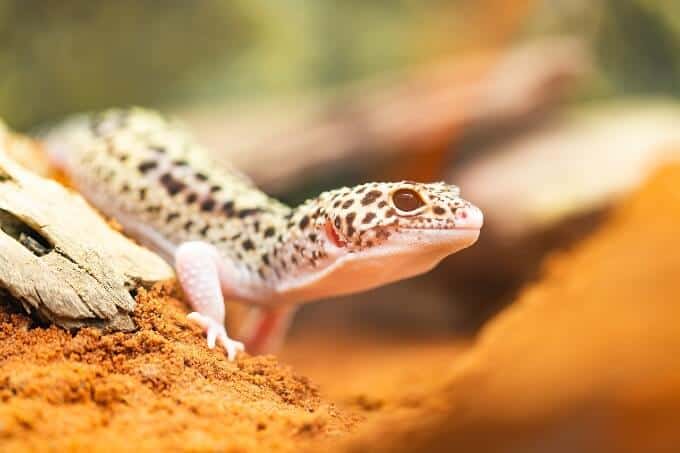
Types of Reptile Thermostats Explained
Before buying, it helps to understand which type suits your setup. There are three main types:
ON/OFF Thermostats
The most common and affordable type. Power is simply switched on when temps drop below the setpoint and off when they’re reached. These work well for heat mats and ceramic heat emitters (CHEs), but can cause slight temperature fluctuations (usually ±1–2°F). All products reviewed here are ON/OFF thermostats.
Dimming Thermostats
Instead of cutting power fully, dimming thermostats reduce power output to maintain temperature. These are ideal for basking lamps, as they prevent the bulb from burning out prematurely due to rapid power cycling. They’re also better for reptiles that respond to visible light changes (like bearded dragons). They’re typically more expensive.
Pulse Proportional Thermostats
The most precise type — used primarily for ceramic or infrared heat emitters. They send rapid pulses of electricity rather than switching on/off fully, resulting in very stable temperatures with minimal fluctuation. Used more in professional and breeding setups.
Note: For most everyday reptile setups using heat mats, heat cables, or CHEs, a quality ON/OFF thermostat is all you need.
The Best Reptile Thermostats: Full Reviews
1. Inkbird ITC-308 — Best Overall Reptile Thermostat
Inkbird ITC-308 Digital Temperature Controller
- Dual relay — controls heating and cooling simultaneously
- Temperature range: 58°F to 248°F
- Accuracy: ±0.5°F
- User-calibratable probe | Fahrenheit/Celsius display
The Inkbird ITC-308 is our top pick for most reptile keepers. It’s been a trusted name in the hobby for years, and for good reason — it’s accurate, durable, and genuinely simple to use.
Setup takes under five minutes: plug it in, set your target temperature and differential, insert the probe into your enclosure, and connect your heater. The dual-relay design means it can control both a heating and a cooling device simultaneously — useful if you’re managing a bioactive enclosure or breeding setup where you need active temperature management in both directions.
Accuracy is genuinely impressive. In testing and community feedback across reptile forums, the ITC-308 consistently holds within ±0.5°F of the target temperature. That’s exceptional for an ON/OFF thermostat.
The temperature range of 58°F to 248°F covers virtually every reptile species kept in captivity, from cool-loving mountain horned dragons to desert iguanas requiring high basking temperatures. A calibration function allows you to recalibrate the probe if accuracy drifts over time — a thoughtful addition that extends the product’s useful life.
✅ Pros:
- Exceptional ±0.5°F accuracy
- Dual relay for heating and cooling control
- Wide temperature range covers all common reptile species
- User-calibratable probe
- Compact (5.5 × 2.7 × 1.3 inches), 5ft power cord
❌ Cons:
- Slightly higher price than entry-level models
- Display can be dim in very bright lighting
Best for: Snakes, lizards, tortoises — any setup using a heat mat, heat cable, or ceramic heat emitter.
2. WILLHI WH1436A — Most Proven Track Record
WILLHI WH1436A Digital Temperature Controller
- High/low temperature alarms + auto shut-off on probe failure
- Temperature range: 58°F to 230°F
- Accuracy: ±0.5°F | Waterproof probe
- Max load: 1,100W at 110V
The WILLHI WH1436A has one of the largest review bases of any reptile thermostat on the market. Thousands of reptile keepers have used it for years, and it holds up. When you see that kind of sustained positive feedback across a long period, it tells you something important about reliability.
Build quality is a standout. The waterproof probe feels genuinely robust, the body is solid without being bulky, and keepers who’ve had theirs for three or more years consistently report no degradation in accuracy. That longevity matters — a thermostat failure isn’t just an inconvenience, it’s potentially fatal for your animal.
High and low temperature alarms add a valuable layer of safety — if your heat source fails or malfunctions and temps drift dangerously in either direction, the alarm triggers before your reptile is harmed. The auto shut-off function cuts power if the probe disconnects or faults, rather than leaving your heater running uncontrolled.
✅ Pros:
- Exceptional long-term reliability reported consistently by long-term users
- High/low temperature alarms
- Auto shut-off on probe failure
- Waterproof probe | Consistent ±0.5°F accuracy
❌ Cons:
- Not the cheapest option on the list
- No dual-relay (heating only)
Best for: Keepers who want a proven, set-it-and-forget-it solution they won’t have to replace for years.
3. VIVOSUN Digital Heat Mat Thermostat — Best for Heat Mats
VIVOSUN Digital Heat Mat Thermostat
- Temperature range: 40°F to 108°F — optimised for heat mat use
- Simple 3-button operation | Wall-mount tab included
- Compatible with any standard heat mat
- Durable impact- and vibration-tested body
If you’re running a heat mat setup — common for leopard geckos, ball pythons in rack systems, and most nocturnal reptiles — the VIVOSUN Digital Thermostat is a focused, reliable choice at a competitive price.
The temperature range of 40°F to 108°F is tailored specifically to heat mat users. Setup is genuinely plug-and-play: three clearly labelled buttons, a long probe cord, and a wall-mount tab for keeping your rack or reptile room tidy.
One honest caveat: some users report accuracy drifting by 1–2°F over extended use. For this reason, we always recommend pairing any thermostat with a secondary spot-check thermometer — a digital infrared temperature gun works perfectly and is an essential tool for any reptile keeper regardless of which thermostat they use.
✅ Pros:
- Affordable entry-level price
- Optimised temperature range for heat mat use
- Simple 3-button setup and operation
- Wall-mount tab included | Impact and vibration tested
❌ Cons:
- Accuracy may drift slightly over time
- Display can be hard to read at certain angles
- No safety alarm features
Best for: Leopard geckos, ball pythons, corn snakes, and other reptiles on heat mat setups.
4. Bayite BTC201 Digital Outlet Thermostat — Best Build Quality
Bayite BTC201 Pre-Wired Digital Outlet Thermostat
- Power-on delay protects equipment from voltage spikes
- High/low temperature alarms | Waterproof probe
- Max load: 1,100W at 110V
- Independent heating and cooling control points
If you want something that feels built for industrial use but works perfectly in a reptile room, the Bayite BTC201 is worth serious consideration. Its build quality is arguably the most impressive on this list.
The housing is solid and dense, the probe is genuinely waterproof, and the power-on delay feature is a detail we particularly appreciate. When power is restored after an outage, the thermostat waits briefly before switching the heater back on — protecting your heating equipment from voltage spikes and reducing premature burnout.
High and low temperature alarms are included, and accuracy consistently sits within ±0.5°F in real-world use. The only trade-off is size — it’s a bulkier unit than the Inkbird or WILLHI. In a dedicated reptile room or rack setup, that’s not a concern.
✅ Pros:
- Exceptional build durability
- Power-on delay protects equipment after outages
- Waterproof probe | High/low temperature alarms
- 1,100W load capacity
❌ Cons:
- Bulkier design than other options
- Not the most budget-friendly choice
Best for: Serious keepers, breeders, or multiple enclosure setups where build reliability is the priority.
5. BN-LINK Digital Heat Mat Thermostat — Best Budget Pick
BN-LINK Digital Heat Mat Thermostat Controller
- ETL safety listed — independently tested to North American safety standards
- Temperature range: 40°F to 108°F
- 6ft probe cord and power cord | LED status indicators
- Simple 3-button setup
For new reptile keepers or those setting up a starter enclosure on a budget, the BN-LINK Digital Thermostat offers excellent value. It does the core job — keeping your heat mat at a stable, safe temperature — without unnecessary complexity or cost.
The ETL listing is worth highlighting. ETL certification means this product has been independently tested to meet North American safety standards — an important verification when dealing with a device that controls a constant heat source.
The 6-foot probe and power cords are a notable plus — longer than most budget competitors — giving you real flexibility in probe placement and outlet positioning. LED indicator lights show at a glance whether the unit is in heating mode or standby.
Accuracy sits at ±1–2°F, which is acceptable for most heat mat applications. If you’re keeping a more temperature-sensitive species, consider stepping up to the Inkbird ITC-308.
✅ Pros:
- Highly affordable entry-level price
- ETL safety certified
- 6ft cord for flexible placement
- LED status indicators | Hanging tab
❌ Cons:
- Less accurate than premium models (±1–2°F)
- Limited temperature range (40–108°F)
- No alarm features
Best for: First-time reptile keepers, starter setups, leopard geckos, corn snakes, and beginner species using heat mats.
6. Inkbird ITC-306A — Best for Day/Night Temperature Cycling
Inkbird ITC-306A Day/Night Thermostat
- Automated day and night temperature cycling on programmable schedule
- Temperature range: -58°F to 212°F
- IP68-rated waterproof stainless steel probe
- Accuracy: ±1°F
Many reptile species benefit significantly from a natural temperature drop at night — it mirrors the temperature cycling of their wild habitats and can improve feeding response, breeding behaviour, and overall health.[3] The Inkbird ITC-306A is the only thermostat on this list that handles this automatically.
You set two separate temperature targets — one for daytime and one for night-time — and the thermostat switches between them on a programmable schedule. For species like bearded dragons, uromastyx, and many tortoise species, this kind of automated cycling is genuinely meaningful for long-term health.
The IP68-rated waterproof stainless steel probe is excellent, and the temperature range of -58°F to 212°F is impressively wide. The interface has a slight learning curve on first setup, but once programmed it requires no further input.
✅ Pros:
- Automated day/night temperature cycling
- IP68-rated waterproof probe
- Extremely wide temperature range
- Ideal for species needing diurnal thermal variation
❌ Cons:
- Steeper learning curve on initial setup
- Slightly bulkier display unit
Best for: Bearded dragons, uromastyx, tortoises, and any diurnal species that benefits from a day/night temperature drop.
How to Choose the Right Reptile Thermostat
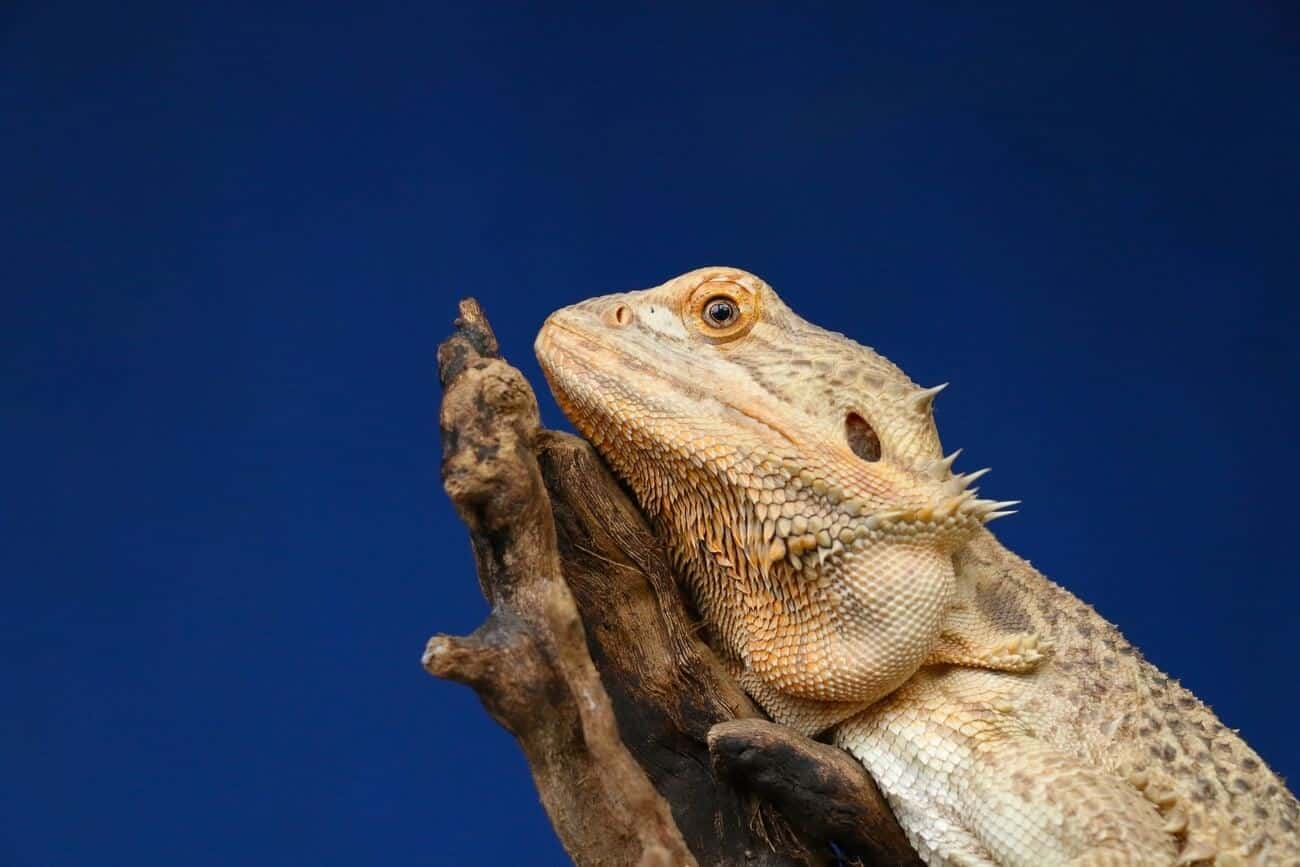
The products above are all solid choices, but the right one for you depends on your specific setup. Here’s what to consider:
Match the Thermostat to Your Heat Source
This is the most important factor. ON/OFF thermostats (all the products reviewed here) work safely with:
- Heat mats / undertank heaters
- Heat cables
- Ceramic heat emitters (CHEs)
- Radiant heat panels
They are not ideal for incandescent basking bulbs or halogen lamps. The constant on/off cycling shortens bulb life significantly. For basking lamps, use a dimming thermostat instead — brands like Herpstat, Vivarium Electronics, and ProRep offer good options.
Know Your Species’ Temperature Requirements
| Species | Warm Side / Basking | Cool Side / Ambient | Night Drop |
|---|---|---|---|
| Leopard Gecko | 88–92°F (heat mat side) | 70–75°F | 65–70°F |
| Bearded Dragon | 95–110°F (basking) | 80–85°F | 65–75°F |
| Ball Python | 88–92°F (warm side) | 76–80°F | 72–80°F |
| Corn Snake | 85°F (warm side) | 72–78°F | 65–72°F |
| Sulcata Tortoise | 95–100°F (basking) | 80–85°F | 70–75°F |
| Crested Gecko | 75–78°F | 72–75°F | 65–72°F |
Temperature recommendations based on published guidelines from the Association of Reptilian and Amphibian Veterinarians (ARAV) and established herpetological care literature.[4]
Safety Features to Look For
A thermostat failing open (leaving the heater on permanently) is the primary danger. Look for:
- High temperature alarm: Alerts you if temps exceed a safe threshold
- Probe failure auto shut-off: Cuts power if the probe disconnects or malfunctions
- Safety certification: ETL, UL, or CE listed products have been independently tested
Do You Need One Thermostat Per Enclosure?
In most cases, yes — one thermostat per heat source per enclosure. Running multiple enclosures from a single thermostat is generally not recommended, as a single probe reading won’t accurately reflect conditions across multiple tanks. The exception is a rack system with identical enclosures at very similar ambient temperatures, used by some experienced breeders — but this requires careful monitoring and is not recommended for beginners.
Always Verify With a Secondary Thermometer
No matter which thermostat you choose, always verify temperatures independently. A thermostat’s probe gives you one data point from one location. A digital infrared thermometer (temperature gun) lets you spot-check surfaces directly — the basking rock, the cool hide floor, the belly of your heat mat.
We recommend checking independently at least once a week, and any time you notice a change in your animal’s behaviour (reduced feeding, unusual hiding, lethargy) — temperature problems are consistently the first culprit.
Frequently Asked Questions
What is the best reptile thermostat for a beginner?
For most beginners, the BN-LINK Digital Heat Mat Thermostat offers the best combination of affordability, ETL safety certification, and ease of use. If budget allows, upgrading to the Inkbird ITC-308 provides significantly better accuracy and longer-term reliability.
Can I use a reptile thermostat with a basking lamp?
ON/OFF thermostats are not recommended for incandescent basking bulbs or halogen lamps. The constant power cycling causes premature bulb failure. For basking lamps, use a dimming thermostat instead. ON/OFF thermostats work well with ceramic heat emitters, heat mats, heat cables, and radiant heat panels.
How accurate should a reptile thermostat be?
For most reptile species, accuracy within ±1°F is acceptable. For temperature-sensitive species or breeding setups, look for thermostats rated at ±0.5°F — like the Inkbird ITC-308 or WILLHI WH1436A. Always verify accuracy independently using a digital probe thermometer or infrared temperature gun.
Do I need a thermostat for every reptile enclosure?
Yes — ideally one thermostat per heat source per enclosure. A single probe reading from one unit cannot accurately monitor multiple tanks simultaneously. Some experienced breeders use a single thermostat per shelf in rack systems with identical enclosures, but this requires close monitoring and is not recommended for beginners.
What happens if my reptile’s thermostat stops working?
If a thermostat fails open (heater stays permanently on), temperatures can rise dangerously within hours. If it fails closed (heater stays permanently off), temperatures will drop — particularly dangerous in cold rooms or at night. Check your enclosure temperatures daily and watch for any changes in your reptile’s behaviour (hiding more, not eating, lethargy) as early warning signs.
How do I set up a reptile thermostat?
Setup for most ON/OFF thermostats: (1) Plug the thermostat into your wall outlet. (2) Place the probe inside the enclosure — for heat mats, place it between the mat and the substrate; for ambient control, position it at mid-height on the warm side. (3) Connect your heater to the thermostat’s output socket. (4) Power on and set your target temperature. (5) Allow 30–60 minutes to stabilise, then verify with a secondary thermometer.
Final Thoughts
A reptile thermostat is not optional — it’s a fundamental part of any responsible reptile setup. The good news is that quality options are available at every price point, and even the most affordable products on this list will do the essential job of keeping your animal safe from thermal injury.
Our overall recommendation remains the Inkbird ITC-308 for most keepers. Its combination of precision (±0.5°F), wide temperature range, dual-relay capability, and long track record in the reptile hobby makes it the most versatile and dependable choice. On a tighter budget, the BN-LINK covers the basics safely and affordably for most starter setups.
Whatever you choose, always verify your temperatures with a secondary thermometer, check your setup regularly, and pay attention to your animal’s behaviour. The best thermostat is the one that’s properly set up and actively monitored.
References
- Angilletta, M.J. (2009). Thermal Adaptation: A Theoretical and Empirical Synthesis. Oxford University Press.
- Stahl, S.J. (2003). Reptile thermal burns and husbandry-related injuries. Journal of Herpetological Medicine and Surgery. 13(3):4–9.
- Tosini, G., & Menaker, M. (1995). Circadian rhythms in lizards and their responses to temperature. Physiology & Behavior. 58(1):119–126.
- Association of Reptilian and Amphibian Veterinarians (ARAV). Husbandry guidelines for commonly kept reptile species. arav.org