Table of Contents
Leopard geckos are strict insectivores. No fruit, no vegetables, no human food. Their diet is insects, full stop. I have kept Geek for years and the feeding routine has never been complicated, but getting the details right matters: which feeders to use as staples, which to offer as occasional treats, how to gut-load, and how to supplement correctly. This guide covers all of it.
What Do Leopard Geckos Eat?
In the wild, leopard geckos hunt insects, spiders, and other small invertebrates across the rocky, arid terrain of Afghanistan, Pakistan, India, and Iran. Their digestive system is built for animal protein, not plant matter. They lack the gut bacteria to ferment plant material and the metabolic pathways to extract useful nutrition from fruit or vegetables.
In captivity the diet is straightforward: a variety of live insects, gut-loaded before feeding, dusted with calcium and vitamin supplements. Here is a breakdown of the best options.
Staple Feeders
These should make up the majority of every meal:
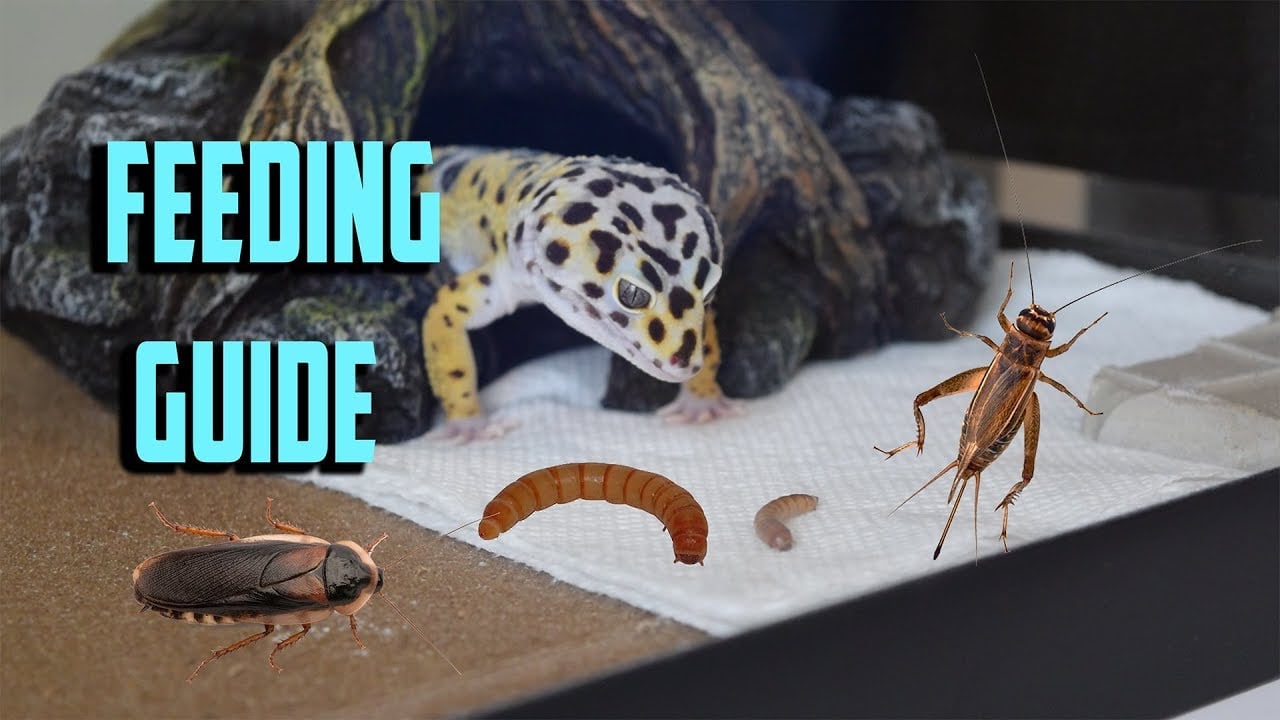
- Crickets: the most widely used staple feeder and a good one. High in protein, easy to gut-load, and the movement stimulates natural hunting behaviour. The main downside is that crickets are noisy and can be difficult to store. Feed appropriate quantities per the age-based schedule below.
- Dubia roaches: the best staple feeder overall. Higher protein than crickets, better calcium-to-phosphorus ratio, easy to breed and store, and virtually silent. Geek takes dubia readily and I find them far less hassle to maintain than crickets. They are the feeder I default to for regular meals.
- Mealworms: acceptable as a secondary staple but higher in fat than crickets or dubia. They are easy to keep (stored in the fridge) and most geckos eat them readily. Do not use them as the sole feeder. Rotate with crickets or roaches. See our guide on mealworm beetles and leopard geckos for more detail.
Occasional Feeders
These are treat feeders, nutritious in some respects but too high in fat or too low in other nutrients to use as staples:
- Waxworms: extremely high in fat. Useful for putting weight on an underweight gecko or encouraging a finicky feeder, but addictive. A gecko fed waxworms too frequently will often refuse other feeders entirely. Offer no more than once or twice per month as a treat.
- Hornworms: high water content, low fat, reasonably nutritious. A good choice for hydration as well as variety. Can grow large quickly, so use smaller ones for juveniles. Read more in our hornworm guide.
- Silkworms: excellent nutritional profile, high in protein and calcium, low in fat. Less widely available than the other feeders but worth sourcing occasionally.
- Earthworms and nightcrawlers: safe and accepted by many geckos. High moisture content. Source from pesticide-free areas only or buy from a reputable supplier. See our guides on earthworms and nightcrawlers for specifics.

Can Leopard Geckos Eat Fruits or Vegetables?
No. This is one of the most common misconceptions in leopard gecko care. Leopard geckos are obligate insectivores. They cannot digest plant matter and should not be offered fruit, vegetables, or any other plant-based food. They do not eat it in the wild and their digestive system is not equipped to process it.
What about human food more broadly? The answer is the same. Our full article on what human food leopard geckos can eat covers this in detail, but the short version is: none of it. Stick to live insects. And if you are wondering about fruit specifically, our leopard gecko fruit guide explains exactly why it is not appropriate.
Prey Sizing
The standard rule is that prey items should be no larger than the gap between the gecko’s eyes. This applies at every life stage. Feeders that are too large can cause impaction, regurgitation, or stress during feeding. With Geek I size-match every meal. It takes a moment but prevents problems.
For hatchlings and juveniles, small crickets and small dubia nymphs are appropriate. Adults can take standard-size crickets, medium dubia, and regular mealworms. Adjust as the gecko grows rather than feeding adult-sized prey to juveniles on the basis that they will figure it out.
Gut-Loading
Gut-loading means feeding the insects nutritious food for 24 to 48 hours before offering them to your gecko. The insects are essentially a delivery mechanism for nutrients. If they are fed nothing or fed poor-quality food before you offer them, you are feeding your gecko empty calories.
Good gut-load foods include leafy greens (collard greens, mustard greens, dandelion), squash, sweet potato, and commercial cricket gut-load products. Avoid citrus, onion, and anything high in oxalates. Most pet stores sell pre-gut-loaded crickets as a convenience option, which works fine if you are not gut-loading at home.
Supplements

Two supplements are essential: calcium and vitamin D3. Calcium supports bone density and muscle function. D3 is required for calcium absorption. Leopard geckos that do not receive adequate UVB lighting cannot synthesise D3 through the skin efficiently, which makes oral supplementation important. See our guide on whether leopard geckos need UVB for the full picture.
The standard approach:
- Calcium powder (without D3): dust insects at most feedings: 4 to 5 times per week for juveniles, 2 to 3 times per week for adults
- Calcium with D3: once per week (in addition to the plain calcium routine, not instead of it)
- Multivitamin: once per week. This provides trace nutrients that feeders alone may not deliver
A useful addition is a small dish of calcium powder left in the enclosure permanently, allowing the gecko to self-supplement as needed. Geek uses hers intermittently, especially in the days before a shed.

How Often to Feed a Leopard Gecko
Feeding frequency changes as the gecko grows. Our detailed leopard gecko feeding frequency guide covers this thoroughly, but here is the summary:
| Life Stage | Frequency | Quantity per Feeding |
|---|---|---|
| Hatchling (0–4 months) | Daily | 5–7 small feeders |
| Juvenile (4–12 months) | Daily or every other day | 6–8 appropriately sized feeders |
| Adult (12+ months) | Every 2–3 days | 6–10 feeders depending on size |
Feed in the evening rather than midday. Leopard geckos are crepuscular and most active at dusk, so evening feeding aligns with their natural hunting window and produces better feeding responses. Remove any uneaten live insects after 15 to 20 minutes. Crickets left in the enclosure overnight can stress the gecko or even bite it while it sleeps.
How Much Food Per Feeding
Offer only as much as the gecko can eat within 15 to 20 minutes. Overfeeding leads to obesity, which causes fat deposits in the armpits and around the limbs and creates internal health problems over time. A useful visual guide for adults is 2 insects per inch of body length per meal as a starting point, adjusted based on how the gecko looks and how readily it is eating.
Monitor tail thickness as a body condition indicator. A healthy adult leopard gecko should have a moderately plump tail. A very thin tail indicates the gecko is underweight and may need more frequent feeding or richer feeders temporarily. A very swollen or lumpy tail indicates the gecko may be overweight and needs fewer or leaner feeders.
Common Feeding Problems

Refusing to eat: the most common concern, and usually temporary. Check temperature (a gecko cannot digest food properly if the warm side is below 88°F), recent shed, stress from handling or enclosure changes, or seasonal slow-down in winter. Full details in our guide to leopard geckos not eating. For context on how long they can safely go without food, see our guide on fasting leopard geckos.
Refusing everything except waxworms: a classic feeder addiction problem. Waxworms are highly palatable and geckos will often hold out for them if they learn they are available. Stop offering waxworms entirely for several weeks and return to crickets or dubia only. Most geckos come around within a few days of being hungry enough.
Picky eating: try varying feeder type, feeding time, or enclosure temperature. Some geckos have genuine preferences and accepting one or two staples is fine as long as supplements and gut-loading are consistent.
Digestive issues: if your gecko is straining or producing abnormal droppings, check our complete leopard gecko poop guide for what different presentations indicate.
What do leopard geckos eat?
Leopard geckos are strict insectivores. They eat live insects only. Good staple feeders include crickets, dubia roaches, and mealworms. Occasional treat feeders include waxworms, hornworms, silkworms, and earthworms. They should not eat fruit, vegetables, or any plant material.
Can leopard geckos eat fruit or vegetables?
No. Leopard geckos are obligate insectivores and cannot digest plant matter. Offering fruit or vegetables is not appropriate and provides no nutritional benefit. Their diet should consist entirely of live insects, gut-loaded before feeding and dusted with calcium and vitamin supplements.
How often should I feed my leopard gecko?
Hatchlings should be fed daily. Juveniles can be fed daily or every other day. Adults are typically fed every two to three days. Feed in the evening to align with their natural crepuscular activity pattern, and remove uneaten live insects after 15 to 20 minutes.
Do leopard geckos need calcium supplements?
Yes. Calcium powder should be dusted on feeder insects at most meals. A calcium and D3 supplement should be given once per week. A small dish of plain calcium powder left in the enclosure also allows the gecko to self-supplement as needed. Without adequate calcium, leopard geckos are at risk of metabolic bone disease.
What is the best staple feeder for leopard geckos?
Dubia roaches are the best overall staple feeder for leopard geckos. They have a better nutritional profile than crickets, are easier to store and breed, and produce no noise or smell. Crickets are also a strong staple choice and more widely available. Mealworms are acceptable as a secondary staple but should not be the sole feeder due to their higher fat content.
Why is my leopard gecko not eating?
The most common causes are enclosure temperature too low, a recent shed, stress from handling or environmental changes, or seasonal slow-down in winter months. Check that the warm side of the enclosure is reaching 88 to 92 degrees Fahrenheit. If the gecko has not eaten for more than two to three weeks outside of a shed or seasonal slow-down, consult a reptile vet.