Table of Contents
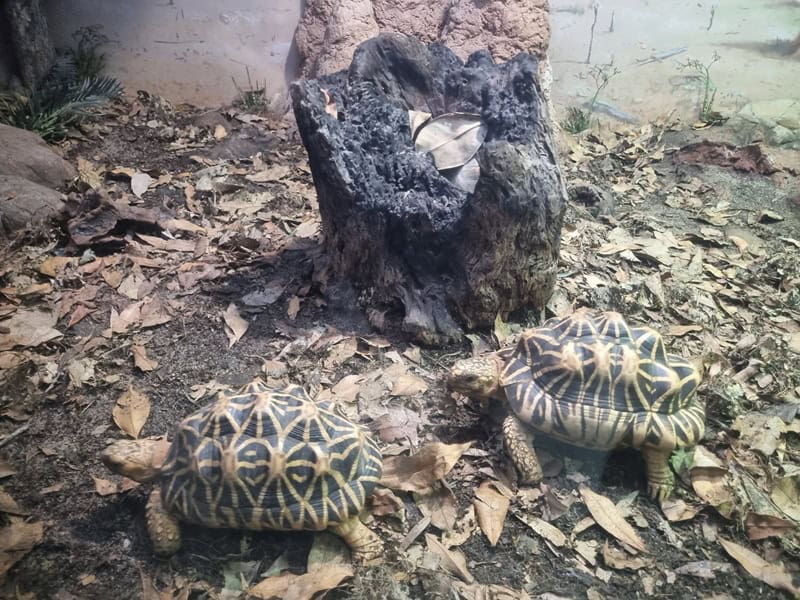
The Indian star tortoise (Geochelone elegans) is one of the most visually striking tortoise species in the hobby, with a domed shell bearing bold yellow-streaked star patterns on a dark brown or black base. It is also one of the more demanding tortoises to keep successfully, with high humidity requirements and sensitivity to environmental errors that make it unsuitable for beginners. This guide covers the full care picture alongside the conservation context that anyone buying this species should understand.
Species Summary
| Attribute | Detail |
|---|---|
| Scientific name | Geochelone elegans |
| Adult size | 7–12 inches; females larger |
| Lifespan | 30–55 years in captivity |
| Native range | Southern India, Sri Lanka, Pakistan |
| Habitat | Arid scrub, brush forest, grassland |
| Diet | Herbivore: grasses, leafy greens, hay |
| CITES status | Appendix I (Sri Lanka population); Appendix II (India/Pakistan) |
| Care level | Intermediate to advanced |
Indian star tortoises are native to three distinct regional populations across southern India, Sri Lanka, and Pakistan, each with slightly different size characteristics and climate adaptations. The species has suffered significant pressure from the wild pet trade and is now protected under CITES. The Sri Lankan population is listed under CITES Appendix I (prohibiting commercial international trade), while the Indian and Pakistani populations remain on Appendix II. India’s Wildlife Protection Act also prohibits domestic collection and trade. Always source captive-bred animals from reputable breeders and verify the legal status of ownership in your country before purchasing.
Appearance and Colours

The shell is what defines the species. The carapace is strongly domed with raised, ridged scutes. Each scute features bright yellow streaks radiating outward from a central point, creating the star pattern that gives the species its common name. The base colour is dark brown to black, which makes the yellow pattern highly contrasting and distinctive. Surrounding the central scutes, a row of marginal scutes flares slightly outward around the perimeter.
The plastron (underside) is lighter in colour and typically lacks the star pattern. In males the plastron is concave; in females it is flat, which is one of the most reliable ways to sex adults. Females are also noticeably larger than males, typically growing two to three inches longer at maturity. The head, neck, and limbs are covered in tan to yellow scales with a hooked beak appropriate for cropping vegetation.
Regional variation in appearance is real. Sri Lankan specimens tend to be smaller with finer patterning; Indian specimens are larger and often have bolder, more widely spaced star markings.
Size
Adults typically reach 7 to 12 inches in shell length. Females consistently reach the larger end of that range and are the larger sex across all regional populations. Males from Sri Lankan lineage may stay below 7 inches; females from mainland Indian lineage can reach or exceed 12 inches. Weight at full size ranges from around 3 to 6 pounds depending on sex and lineage.
Lifespan
The captive lifespan is typically 30 to 55 years with good care. Unverified reports suggest individuals may reach 80 years, though there are no reliable documented cases from captivity at that age. Indian star tortoises are a long-term commitment, and their sensitivity to husbandry errors means the full lifespan potential is only achievable with consistently correct conditions throughout their life. For a species comparison with other long-lived pet tortoises, the red-footed tortoise and leopard tortoise are both worth considering. See our full guide to the best pet tortoises.
Indian Star Tortoise Care
Indian star tortoise care is intermediate to advanced in difficulty. The husbandry requirements are not exotic, but this species is genuinely more sensitive to humidity fluctuations and temperature errors than hardier species like Russian tortoises, Hermann’s tortoises, or Greek tortoises. Daily monitoring of temperature and humidity is not optional. It is the baseline expectation for keeping this species successfully.
Enclosure Size
Indian star tortoises need more space than many beginners expect. For a single adult, an indoor enclosure of at least 4 feet by 2 feet (roughly 75 to 80 gallons equivalent) is the practical minimum; larger is better. A standard turtle table or tortoise table at those dimensions works well. The enclosure should have at least one ventilated side and adequate airflow. Indian stars are prone to respiratory infections in stagnant, damp conditions despite their humidity requirement.
In warm climates where outdoor temperatures stay above 70°F year-round, an outdoor pen is preferable. A small group can be kept in a pen measuring approximately 6 feet by 6 feet. Walls need only be tall enough to block the tortoise’s line of sight. This species is not a climber or a strong burrower. Provide predator protection with a secure screened top or covered sections, and ensure the pen has both sunny and shaded areas.
Habitat Setup

Substrate: use an absorbent material that holds moisture well to support the humidity requirement. Organic topsoil, coconut coir, peat moss, or a mixture of these work well at a depth of 3 to 4 inches. Avoid sand-heavy mixes. They dry out too quickly and can cause respiratory irritation. Live grass patches (Bermuda grass, orchard grass) are an excellent addition in outdoor enclosures and provide both substrate cover and supplemental food.
Hides: Indian star tortoises are naturally shy and will use hides consistently. Provide at least one enclosed hide large enough for the tortoise to fully withdraw into, positioned on the cooler end of the enclosure. Without adequate hiding space, this species shows elevated stress and is more susceptible to illness.
Plants and enrichment: live plants suitable for grazing (dandelion, clover, plantain weed, tortoise-safe grasses) provide both enrichment and supplemental nutrition. Rocks and flat surfaces give the tortoise grip and create micro-terrain, though elaborate decoration is not required.
Temperature and Lighting
- Basking area: 90–95°F
- Ambient cool side: 80–85°F
- Nighttime minimum: 70°F. Below this, use a ceramic heat emitter or under-tank heating pad on a thermostat
Maintain the temperature gradient across the enclosure so the tortoise can thermoregulate throughout the day. Indian star tortoises are active grazers and spend time both in warm basking areas and in cooler shaded spots. Always verify temperatures with a digital probe thermometer rather than relying on ambient room temperature estimates.
UVB lighting is essential for indoor kept tortoises. A 10% T5 HO UVB tube positioned to cover the bulk of the enclosure on a 10 to 12 hour timer provides appropriate UV exposure for calcium metabolism. Outdoor tortoises do not need supplemental UVB. Replace UVB bulbs every 12 months even if they appear to still be producing visible light. UV output degrades before the visible spectrum fails.

Humidity
Humidity is the most demanding aspect of Indian star tortoise care. Target 70 to 80 percent relative humidity throughout the enclosure. This is significantly higher than most other tortoises kept in captivity and is one of the primary reasons this species is classified as intermediate to advanced. In their native range across southern India and Sri Lanka, Indian star tortoises experience pronounced monsoon seasons with very high ambient humidity, which is the natural cycle is what their physiology is adapted to.
Maintaining these levels requires a combination of moisture-retaining substrate, daily misting, and careful management of enclosure ventilation. Too much airflow drops humidity rapidly; too little creates stagnant conditions that promote respiratory infection. Monitor with a digital hygrometer and adjust accordingly. An automatic misting system significantly reduces the daily management burden and is a worthwhile investment for this species.
Water
Provide a shallow water dish large enough for the tortoise to step into and soak. Indian star tortoises do not drink reliably from dishes but will absorb water during soaking, which contributes meaningfully to hydration. Check and clean the dish daily. Tortoises frequently defecate in water dishes, creating a bacterial contamination risk. Weekly baths of 15 to 20 minutes in shallow lukewarm water are also beneficial for hydration and bowel movement stimulation.
Food and Diet
Indian star tortoises are strict herbivores and natural grazers. In the wild they feed primarily on grasses, succulents, and fallen fruit during the monsoon season. In captivity, the diet should be built around high-fibre plant material with appropriate calcium supplementation. The VIN Veterinary Partner guidance on tortoise nutrition recommends a diet dominated by grasses and leafy greens with minimal fruit.
Good staple foods:
- Timothy hay and orchard grass (should make up a significant portion of the diet)
- Dandelion greens (excellent calcium and nutrition)
- Mustard greens
- Endive and escarole
- Alfalfa hay
- Bermuda grass and rye grass
- Cactus pads (good hydration and variety)
- Plantain weed
Use sparingly or avoid:
- Kale, spinach, cabbage, and broccoli: high oxalate content inhibits calcium absorption with regular feeding
- Fruit: acceptable occasionally as a treat but should not feature regularly. Indian star tortoises are prone to digestive issues from high-sugar foods
- Parsley: high oxalates, use only occasionally
- Romaine lettuce: very low nutritional value; offer more nutrient-dense options instead
Dust food with calcium carbonate powder several times per week. A multivitamin supplement once weekly covers trace nutrients. Feed daily, offering enough that the tortoise can graze for 20 to 30 minutes without depleting the food. Variety across the week provides the broadest nutritional coverage.
Potential Health Issues

Respiratory infections are the most common health problem and this species is more susceptible than most tortoises. Causes include humidity that is too low, temperatures that are too cold, or stagnant air in an enclosed damp space. Signs include nasal discharge, wheezing, open-mouth breathing, and lethargy. Correct environmental conditions and consult a reptile vet for antibiotic treatment. Research published via NCBI on chelonian respiratory disease covers the clinical picture for those wanting the veterinary detail.
Metabolic bone disease (MBD) develops from inadequate UVB exposure or calcium deficiency. In tortoises specifically, MBD can affect not just the skeletal structure but the shell, causing softening, deformation, and increased vulnerability to shell rot and injury. Prevent through consistent UVB provision (replace bulbs every 12 months), regular calcium dusting, and a diet built around calcium-appropriate foods.
Shell rot results from bacterial or fungal infection, most often following trauma to the shell or prolonged contact with damp, unsanitary substrate. Spot clean daily and do a full enclosure sanitisation monthly. Any visible softening, discolouration, or odour from the shell warrants a vet visit promptly. Shell infections progress rapidly in warm, humid conditions.
Parasites are more common in wild-caught animals. Purchasing captive-bred stock from reputable breeders significantly reduces this risk. Quarantine any new acquisition for 60 to 90 days and have a faecal examination performed by a reptile vet before introducing it to an established collection.
Behaviour and Temperament
Indian star tortoises are naturally shy and tend to withdraw into their shell when startled or handled. With time and consistent, calm interaction they will become more comfortable with their keeper’s presence and may approach during feeding, but they do not become handleable in the way some other tortoise species do. Excessive handling causes stress, depresses the immune system, and increases susceptibility to illness. Limit handling to what is necessary for husbandry.
One notable behavioural characteristic is the lack of territorial aggression between individuals. Indian star tortoises can be kept in groups, including multiple males, without the fighting that affects many tortoise species. This makes them practical for keepers who want to maintain more than one animal. Ensure the enclosure is large enough that all animals can reach food, basking areas, and hides without competition.
Day-to-day behaviour consists primarily of grazing, basking, and resting in the hide. They are not climbers or determined burrowers, which simplifies enclosure security compared to some other species.
Are Indian star tortoises good pets for beginners?
No. Indian star tortoises are sensitive to humidity fluctuations and temperature errors in a way that more forgiving species like Hermanns or Russian tortoises are not. They require daily monitoring, high humidity maintenance, and careful diet management. Beginners are better served starting with a hardier tortoise species before taking on an Indian star.
How big do Indian star tortoises get?
Adults typically reach 7 to 12 inches in shell length. Females are the larger sex and usually reach the upper end of that range. Males from Sri Lankan lineage tend to be smaller; females from Indian mainland lineage can reach or slightly exceed 12 inches. Weight at full size is typically 3 to 6 pounds.
What do Indian star tortoises eat?
Indian star tortoises are strict herbivores. The diet should be built around grasses and hay (Timothy, orchard grass, Bermuda grass) as the foundation, with leafy greens such as dandelion greens, endive, mustard greens, and escarole. Avoid high-oxalate foods like kale, spinach, and broccoli with regular feeding, as these inhibit calcium absorption. Fruit should be offered only occasionally. Calcium powder should be dusted on food several times per week.
How long do Indian star tortoises live?
The typical captive lifespan is 30 to 55 years with proper care. Like all tortoises, they are a very long-term commitment and may outlive their keepers. Consistent correct husbandry throughout their life is the primary factor determining whether they reach the upper end of that range.
Can Indian star tortoises be kept together?
Yes. Indian star tortoises are non-territorial and can be kept in groups including multiple males without significant aggression. Ensure the enclosure is large enough that all animals can access food, basking spots, and hides without competition. Monitor the group during feeding to confirm all animals are eating.
Are Indian star tortoises legal to keep as pets?
It depends on your location. The Sri Lankan population is listed under CITES Appendix I, which prohibits commercial international trade. The Indian and Pakistani populations are listed under CITES Appendix II. India also prohibits domestic collection under the Wildlife Protection Act. In most countries outside the native range, captive-bred specimens can be legally kept but import of wild-caught animals is restricted or prohibited. Always verify legal requirements in your country before purchasing.