The Rankin’s dragon is one of the most underappreciated lizards in the hobby. Most people who encounter one for the first time assume it is simply a small bearded dragon — and while the two species are closely related and have similar care requirements, the Rankin’s has traits that make it genuinely preferable for certain keepers. It stays compact at 10 to 12 inches, tolerates group housing in a way bearded dragons do not, and has a reliably calm temperament from a young age. If you want the bearded dragon experience in a smaller package, or you want to keep a small colony rather than a solitary lizard, the Rankin’s dragon is worth serious consideration.
Table of Contents
Species Summary
The Rankin’s dragon (Pogona henrylawsoni) is a small agamid lizard native to the black soil plains and dry woodlands of Queensland and the Northern Territory of Australia. It goes by several common names — Lawson’s dragon, black soil bearded dragon, and dwarf bearded dragon are all used — but Rankin’s dragon is the most widely accepted in the captive trade. All captive animals outside Australia are descended from stock that was exported before export restrictions tightened; the species is now illegal to export from Australia but is well-established in private breeding programs globally.
| Attribute | Details |
|---|---|
| Scientific name | Pogona henrylawsoni |
| Common names | Rankin’s dragon, Lawson’s dragon, black soil bearded dragon, dwarf bearded dragon |
| Origin | Queensland and Northern Territory, Australia |
| Adult size | 10–12 inches (25–30cm); occasionally to 14 inches |
| Lifespan | 8–15 years in captivity |
| Diet | Omnivore — insects and leafy vegetables |
| Temperament | Calm, social, tolerates group housing |
| Activity pattern | Diurnal |
| UVB required? | Yes — essential |
| Minimum enclosure | 36×18×18 inches for a single adult |
| Care level | Beginner |
Rankin’s Dragon vs Bearded Dragon
This comparison comes up constantly for anyone researching the Rankin’s dragon, and it is worth covering properly rather than in a sentence or two.
| Feature | Rankin’s Dragon | Bearded Dragon |
|---|---|---|
| Adult length | 10–12 inches | 18–24 inches |
| Minimum enclosure | 36×18×18 inches | 48×24×24 inches |
| Beard display | Present but smaller and less pronounced | Full, prominent beard |
| Head shape | Rounder, more domed | More elongated and angular |
| Group housing | Yes — females cohabit well | No — solitary only as adults |
| Temperament | Calm from early age; less variation | Excellent but can vary more individually |
| Morphs available | Fewer; some colour variants available | Extensive — dozens of established morphs |
| Availability | Less common; specialist breeders | Very widely available |
| Core care requirements | Essentially identical | Essentially identical |
The care requirements are so similar that any resource covering bearded dragon care is largely applicable to the Rankin’s dragon. The meaningful practical differences are size (smaller enclosure needed), sociability (groups are viable), and availability (expect to go to a specialist breeder rather than a pet shop).
Appearance
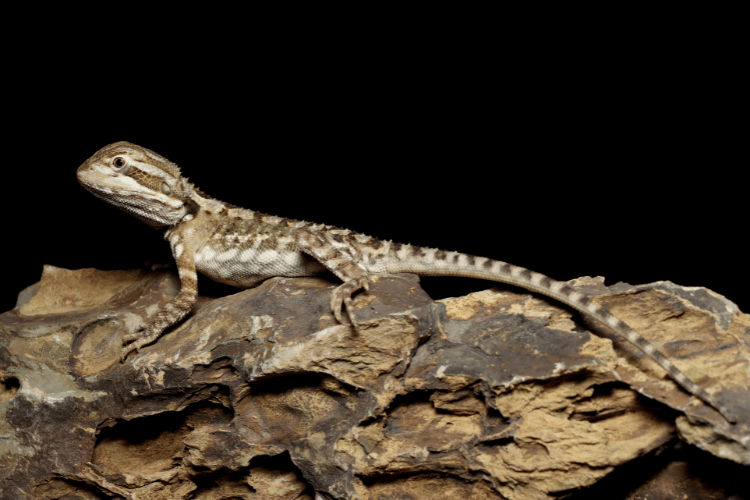
Rankin’s dragons have the same general body plan as bearded dragons: flattened body, spiny lateral scales, a slightly puffable throat pouch (“beard”), and strong clawed limbs suited to both ground movement and some climbing. The head is notably rounder and more compact than the bearded dragon’s more angular profile, which gives the Rankin’s a distinctive look once you know what to look for.

The base colouration is typically tan, brown, olive, or grey — natural earth tones suited to arid Australian scrubland. Pattern varies between individuals, with some showing more distinct banding or spotting across the back than others. Captive breeding has produced some colour variants but the morph range is considerably narrower than what is available in bearded dragons. The belly is uniformly pale.
The beard is present but noticeably smaller and less dramatic than the bearded dragon’s. A Rankin’s dragon displaying a dark beard is doing exactly the same thing as a bearded dragon — communicating stress, establishing dominance, or engaging in courtship — but the visual effect is more subtle.
Average Size
Adult Rankin’s dragons typically reach 10 to 12 inches (25–30cm) in total length. Occasional well-fed females approach 14 inches. Males tend to be slightly shorter and lighter than females. They reach adult size between 12 and 18 months of age under good conditions.
Lifespan
Rankin’s dragons live 8 to 15 years in captivity with good care. The 6-to-10-year figure cited in older care guides is the lower range seen in animals kept under less optimal conditions. Well-kept animals with correct UVB, a varied diet, and appropriate temperatures regularly reach 10 to 12 years, and 15-year animals have been documented. The commitment is real but more modest than a bearded dragon’s potential 15+ year lifespan.
Rankin’s Dragon Care
Rankin’s dragon care closely follows bearded dragon care principles. The temperature and UVB requirements are identical in practice. The main differences are the smaller enclosure footprint, the viability of group housing, and the slightly lower food volume required due to smaller body size. If you have kept a bearded dragon before, this species will feel immediately familiar.
Enclosure Size
| Setup | Minimum Enclosure | Notes |
|---|---|---|
| Hatchling (under 6 inches) | 20-gallon / 24×12×12 inches | Smaller space makes finding food easier for juveniles |
| Juvenile (6–9 inches) | 40-gallon / 36×18×18 inches | Upgrade as the lizard grows |
| Single adult | 36×18×18 inches minimum | 40-gallon equivalent; 48×24×24 preferred |
| Pair (1 male + females) | 48×24×24 inches minimum | Monitor for male harassment; add hides for retreat |
| Group of females (3–4) | 48×24×24 inches minimum | Larger is always better; watch for resource competition |
Glass or PVC enclosures with screen-topped lids are the most practical options. Front-opening doors make daily care and handling significantly easier than top-only access. Whatever enclosure you use, ensure the screen or mesh lid can support the weight of a UVB tube and basking lamp without bowing — this is a practical failure point on cheaper enclosures. Wooden vivariums hold heat well but are harder to spot-clean; glass is easier to maintain hygienically.
Habitat Setup
The setup should replicate the dry, open terrain of inland Queensland: warm, arid, with flat basking surfaces, some climbing opportunity, and sheltered retreats.

Substrate: Tile, slate, or large-grain sand/topsoil mixes are all suitable. Tile is the most hygienic and easiest to clean thoroughly — the smooth surface suits the Rankin’s dragon’s ground-dwelling habits and prevents substrate ingestion during feeding. A sand/organic topsoil mix (roughly 70/30) replicates the natural black soil environment and allows some digging behaviour. Avoid fine sand used alone, small-grain substrates, and any loose substrate with pieces small enough to be accidentally ingested during feeding.
Basking surfaces: Slate tiles or flat rocks positioned at different elevations under the basking lamp. These retain and radiate heat effectively and provide the stable flat surface Rankin’s dragons prefer for thermoregulation. Position the primary basking rock so the lizard can achieve a surface temperature of 105–115°F under the lamp.
Climbing and enrichment: A few diagonal branches and cork bark pieces at different heights give the semi-arboreal Rankin’s dragon the elevated positions it uses for secondary basking and territory display in group setups. Avoid sharp-edged branches — these lizards do jump between elevated positions and any protruding point near a landing zone is a potential injury.
Hides: At least one hide per lizard on the cool end of the enclosure. In group setups, ensure enough hides that every animal can retreat simultaneously — insufficient retreat space is the main driver of chronic stress and resource competition in group Rankin’s dragon setups.
Expert Tip: Rankin’s dragons in group setups establish loose hierarchies through head-bobbing, arm-waving, and occasional beard displays. This social signalling is normal and fascinating to observe — it is the same communication system used by bearded dragons. Genuine aggression (biting, sustained chasing, one animal consistently excluded from food or basking) needs to be addressed by separating the aggressor or adding space and resources. Most well-matched female groups remain stable indefinitely.
Temperature and Lighting
| Zone | Temperature | Notes |
|---|---|---|
| Basking spot (surface) | 105–115°F (40–46°C) | Surface temp directly under lamp; verify with temp gun |
| Warm side ambient | 90–95°F (32–35°C) | Air temp in warm half of enclosure |
| Cool side ambient | 78–82°F (26–28°C) | Retreat zone; always available |
| Night temperature | 65–72°F (18–22°C) | Lights off; ceramic heat emitter if below 65°F |
A halogen or incandescent basking lamp positioned directly above the primary basking rock creates the hot zone. Always verify basking surface temperature with an infrared temperature gun — dial thermometers and stick-on gauges are not accurate enough for basking spot measurement. A quality thermostat on the basking lamp prevents overheating. Run the basking lamp 10 to 12 hours per day on a timer, leaving it off at night.
UVB lighting is essential. Use a T5 HO 10.0 or 12% UVB tube running the full length of the enclosure. Rankin’s dragons come from the high UV environments of inland Australia and need strong UVB exposure for vitamin D3 synthesis and calcium metabolism. Position the UVB tube 10 to 12 inches above the lizard’s basking position. Replace the tube every 6 months — UV output degrades well before the tube stops producing visible light and the output cannot be measured without specialist equipment. The bearded dragon UVB guide covers the same tubes that work for Rankin’s dragons.

Humidity
Rankin’s dragons are an arid species that prefer 30 to 40% relative humidity. This is typically achieved passively in most homes without active management — the warm, dry enclosure environment naturally sits in this range. Daily misting is not appropriate for this species and will push humidity above the comfortable range, increasing respiratory infection risk. If your home environment is unusually humid, ensure the enclosure has adequate ventilation rather than actively reducing humidity. A digital hygrometer confirms the range is correct.
Water
Provide a shallow water dish on the cool end of the enclosure. Not all Rankin’s dragons drink visibly from the bowl — many obtain enough hydration from food and the occasional light surface misting — but the option should always be present. Keep the dish shallow enough that a juvenile cannot become trapped in it. Change the water daily and scrub the bowl thoroughly at least twice a week. The primary active hydration method is a brief twice-weekly warm bath of 5 to 10 minutes, which stimulates drinking and helps with shedding. The bearded dragon bathing guide covers the same approach.
Feeding and Diet
Rankin’s dragons are omnivores with dietary needs that shift with age. Juveniles require a protein-heavy diet to fuel rapid growth, while adults shift toward a predominantly plant-based diet with insects as a supplement rather than the primary component. Getting this ratio wrong — particularly feeding too many insects to adult animals — contributes to fatty liver disease, obesity, and shortened lifespan over time.
| Age | Insect % | Vegetable % | Feeding Frequency |
|---|---|---|---|
| Hatchling (0–3 months) | 80% | 20% | 2–3x daily; small insects |
| Juvenile (3–12 months) | 60–70% | 30–40% | Once daily |
| Sub-adult (12–18 months) | 40–50% | 50–60% | Once daily; transition diet |
| Adult (18+ months) | 20–30% | 70–80% | Vegetables daily; insects 3–4x per week |
Good feeder insects: crickets, dubia roaches, black soldier fly larvae, and silkworms are the best staples. Superworms and mealworms can be offered occasionally to adults. Waxworms are a high-fat treat given sparingly — once a week at most. All feeder insects should be gut-loaded for 24 to 48 hours before offering and dusted with a calcium supplement at most feedings. For detailed guidance, the bearded dragon diet guide covers feeders and vegetables that apply equally to Rankin’s dragons.
Good staple vegetables: collard greens, turnip greens, dandelion greens, arugula, endive, and mustard greens. Offer a varied leafy green salad daily to adult animals. Avoid spinach (oxalates bind calcium), kale in excess (goitrogens), and iceberg lettuce (no nutritional value). Occasional fruit treats — blueberries, mango pieces — are appreciated but should be infrequent due to sugar content.
Calcium supplementation is critical. Dust feeder insects with a calcium powder (without D3 if UVB is provided; with D3 if not) at most feedings for juveniles, and 3 to 4 times per week for adults. Provide a small dish of calcium powder in the enclosure so the animal can self-supplement, which many will do. For more detail on calcium needs, our bearded dragon calcium guide covers supplementation timing and products.
Common Health Issues
Metabolic bone disease (MBD) — the most common serious health issue in captive Rankin’s dragons. Caused by insufficient UVB and/or calcium deficiency. Signs include soft or deformed jaw, lethargy, difficulty walking, and limb trembling. Entirely preventable with a functional UVB tube and correct calcium supplementation. Replace the UVB tube every 6 months regardless of visible light output.
Yellow fungus disease (CANV — Nannizziopsis vriesii) is the most serious infectious condition Rankin’s dragons can develop and the one most specific to agamid lizards. It appears as rapidly spreading yellow-brown patches on the skin, typically starting at a wound site, and progresses into underlying tissue. Unlike surface infections, CANV invades deeper layers and can reach internal organs. It requires urgent veterinary treatment — antifungal medication and surgical debridement of affected tissue in severe cases. Sanitary husbandry, eliminating sharp surfaces that cause abrasions, and quarantining any new animals before adding them to a group are the primary prevention measures.
Respiratory infections — caused by enclosure temperatures too low or by humidity consistently above the recommended range for this arid species. Signs include open-mouth breathing, wheezing, and nasal discharge. Requires veterinary antibiotic treatment. Correct temperatures and 30–40% humidity prevent most cases.
Adenovirus (Atadenovirus) deserves a mention for Rankin’s dragons specifically. Pogona adenovirus, informally called “wasting disease,” is a viral infection that causes neurological symptoms and wasting in bearded and Rankin’s dragons. There is no treatment; animals with confirmed infection should be isolated. When sourcing from a breeder, ask whether their breeding stock has been tested. For any health concerns, find a reptile-experienced vet through the ARAV vet directory.
Behaviour and Temperament
Rankin’s dragons are diurnal, active during the day, and among the most reliably handleable lizard species available. Even young animals are generally calmer than equivalent-age bearded dragons, though juveniles of any species benefit from short, frequent handling sessions to build confidence rather than long infrequent ones.
The social behaviour of group-kept Rankin’s dragons is one of the genuinely rewarding aspects of keeping this species. Head-bobbing exchanges, arm-waving (a submissive behaviour), and communal basking are all observable in a well-matched group. Males can be kept with females but should be monitored — an overly persistent male can stress females, particularly around breeding season. Persistent male harassment, bite wounds on females, or any animal that consistently fails to access food or basking spots are all reasons to reconsider group composition.
Brumation is possible in Rankin’s dragons as with bearded dragons — a period of reduced activity, decreased appetite, and extended sleeping during cooler months. This is normal seasonal behaviour, not illness, and does not require veterinary intervention if the animal is healthy going in and was feeding well beforehand. Our bearded dragon brumation guide covers the process in detail and applies equally to Rankin’s dragons.
Handling
Rankin’s dragons tolerate and often seem to enjoy handling once established with their keeper. Support the full body when lifting — place your hand flat and let the lizard step onto it rather than grabbing from above, which triggers a predator-response flinch. A lizard that regularly climbs to the front of the enclosure when you approach is showing comfort with your presence. Allow free roaming in a safe, contained room during handling sessions — Rankin’s dragons explore confidently when given the space.
Always wash hands before and after handling. Yellow fungus disease is contagious between reptiles, and cross-contamination between animals is a genuine risk in households with multiple reptiles.
Price and Where to Buy
Rankin’s dragons typically sell for $75–$200 from specialist breeders. They are less commonly available than bearded dragons and rarely stocked in general pet chains — specialist reptile breeders, reptile expos, and online reptile marketplaces are the most reliable sources. Captive-bred animals from established breeding stock are strongly preferred. Ask about adenovirus testing of the breeding colony when purchasing, particularly if you intend to keep a group.
Frequently Asked Questions
Are Rankin’s dragons good pets?
Yes. Rankin’s dragons are genuinely excellent pets for beginners and experienced keepers alike. Their care requirements are very similar to the bearded dragon, they are reliably calm and tolerant of handling, and their smaller size (10 to 12 inches vs 18 to 24 inches for bearded dragons) makes enclosure requirements more manageable. The ability to keep small female groups is a practical advantage not available with bearded dragons.
How long do Rankin’s dragons live?
Rankin’s dragons live 8 to 15 years in captivity with good care. Older care guides citing 6 to 10 years reflect the lower range seen in animals kept under suboptimal conditions. Well-kept animals with correct UVB, varied diet, and appropriate temperatures regularly reach 10 to 12 years.
What is the difference between a Rankin’s dragon and a bearded dragon?
The main differences are size (Rankin’s: 10 to 12 inches; bearded dragon: 18 to 24 inches), head shape (Rankin’s is rounder), beard size (smaller and less pronounced in Rankin’s), and sociability (Rankin’s dragons can be kept in groups; bearded dragons are solitary as adults). Core care requirements including temperatures, UVB needs, and diet are essentially identical. Rankin’s dragons are also generally calmer at a younger age.
Can Rankin’s dragons live together?
Yes — female Rankin’s dragons can be kept in small groups in a suitably sized enclosure (minimum 48 by 24 by 24 inches for 3 to 4 animals). All-female groups are the most stable arrangement. One male can be kept with females but must be monitored for persistent harassment. Two males should not be housed together as they will fight. Ensure enough hides, basking spots, and feeding locations for every animal in the group to reduce competition.
What do Rankin’s dragons eat?
Rankin’s dragons are omnivores. Juveniles eat primarily insects (crickets, dubia roaches, black soldier fly larvae) with some leafy greens. Adults eat primarily leafy greens (collard greens, turnip greens, dandelion, arugula) with insects offered 3 to 4 times per week. Dust feeder insects with calcium powder at most feedings. Getting the age-appropriate insect to vegetable ratio right is one of the most important aspects of long-term health.
How big does a Rankin’s dragon get?
Adult Rankin’s dragons reach 10 to 12 inches (25 to 30cm) in total length, with occasional well-fed females approaching 14 inches. They are noticeably smaller than bearded dragons, which reach 18 to 24 inches. Adult size is reached between 12 and 18 months of age under good conditions.
References
- Wilson, S. & Swan, G. (2021). A Complete Guide to Reptiles of Australia (6th ed.). Reed New Holland, Sydney. — Definitive field reference covering the natural range, habitat, and ecology of Pogona henrylawsoni in Queensland and the Northern Territory.
- Australian Reptile Online Database (AROD). Pogona henrylawsoni. arod.com.au — Taxonomic and distribution data for the Rankin’s dragon within the Australian herpetofauna database.
- Merck Veterinary Manual. Management and Husbandry of Reptiles. merckvetmanual.com — Authoritative veterinary reference covering husbandry, nutrition, metabolic bone disease, and fungal infections in agamid lizards.
- American Association of Reptile and Amphibian Veterinarians (ARAV). Find a Reptile Vet. arav.org