Figuring out whether your female lizard is gravid — carrying eggs — is something many keepers only discover by accident. A female bearded dragon who has never been near a male can still produce infertile eggs. A leopard gecko who seemed fine at last feeding can be visibly bloated and digging two days later. Knowing what to look for means you can set up a proper laying environment in time, avoid accidental disturbance during a critical period, and spot the warning signs of egg binding before it becomes a life-threatening situation. This guide covers the signs of pregnancy across the most commonly kept pet lizard species, what to do once you know your lizard is gravid, and when veterinary attention is needed.
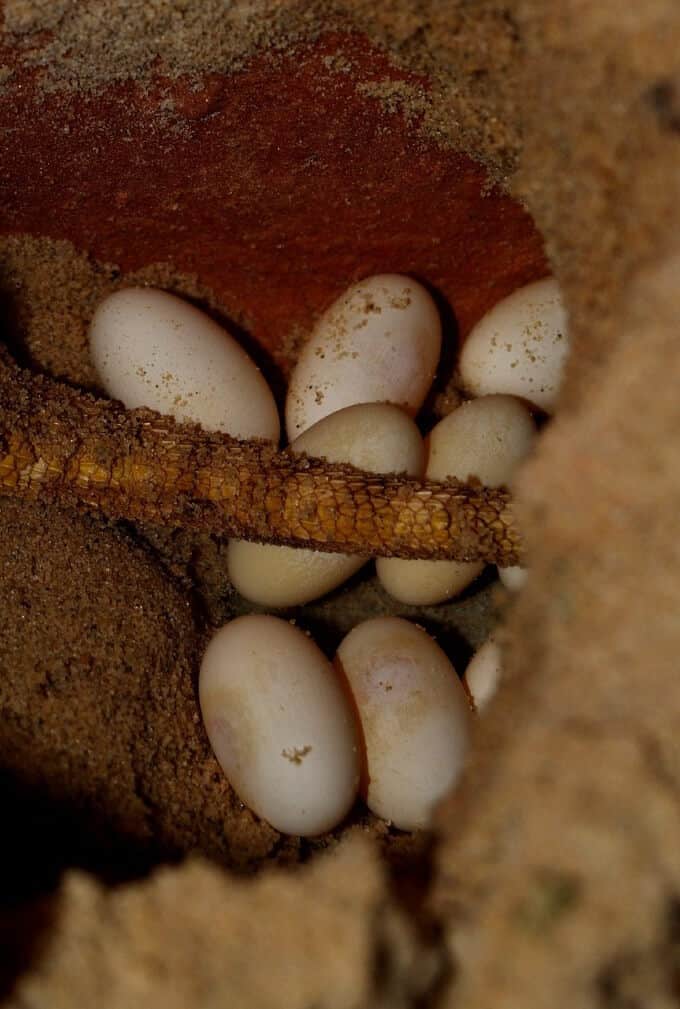
Table of Contents
Do Lizards Lay Eggs or Give Birth?
Most commonly kept pet lizards are oviparous — they lay eggs. This includes leopard geckos, bearded dragons, crested geckos, blue-tongue skinks, and most chameleons. A smaller number of species are viviparous, giving birth to live young; examples include some boa and skink species. There is also an intermediate category — ovoviviparity — where eggs develop internally and hatch just before or during birth.
An important point that surprises many first-time keepers: female lizards can produce eggs without ever mating. These are infertile eggs — they will not develop — but they go through the same physical process as fertile ones, including all the signs of gravidity described below. A female leopard gecko kept completely alone from hatching can still become egg-bound if her enclosure does not have a suitable laying site. This means every keeper of a sexually mature female lizard needs to be aware of pregnancy signs, regardless of whether a male has been present.
General Signs a Lizard is Gravid
Across species, the following signs are common indicators of a gravid female. The timing and intensity vary by species and individual, but any combination of these warrants checking the enclosure for a suitable laying site.
| Sign | What It Looks Like | When It Typically Appears |
|---|---|---|
| Abdominal swelling | The belly appears rounder and wider than usual when viewed from above or the side | As eggs develop — can be 2–4 weeks before laying |
| Visible eggs through skin | In thin-skinned species (leopard gecko, crested gecko) eggs may be visible as distinct round shapes through the ventral skin | From mid-development onward |
| Weight gain | Noticeable increase in weight without corresponding increase in food; body becomes heavier in the hand | Gradual through egg development |
| Digging behaviour | The lizard repeatedly digs in corners, under hides, or at the substrate — searching for a suitable laying site | Days to 1–2 weeks before laying |
| Restlessness | Increased pacing, glass surfing, or movement that is out of character — searching behaviour | Pre-laying phase |
| Appetite changes | Initial increase in appetite for protein (fuelling egg production) followed by reduced appetite in the final days before laying | Variable; reduced appetite close to laying is common |
| Colour changes | Some species darken slightly on the abdomen; bearded dragons may show stress marks over the belly area | Variable |
| Basking more frequently | Increased time at the warm end — the warmth supports egg development and calcium mobilisation | Throughout gravidity |
Signs by Species
Leopard Geckos
Leopard geckos are one of the easiest species in which to spot gravidity because their ventral skin is relatively thin and translucent. A gravid female held gently and viewed from below will often show two distinct oval shapes — the developing eggs — visible through the skin on either side of the abdomen. Leopard geckos typically produce two eggs per clutch and can produce multiple clutches in a breeding season.
The abdominal swelling is pronounced enough from above to be obvious in most cases. The female will begin digging insistently and may refuse food in the 24 to 48 hours before laying. If no suitable laying site is available she may retain the eggs — a dangerous situation. Females who have not been with a male will still go through this process with infertile eggs from around 8 to 10 months of age. For sexing guidance to confirm you have a female, see our leopard gecko sexing guide.
Expert Tip: The clearest sign in leopard geckos is holding the female gently over a light source — a phone torch works well — and looking at the underside of the belly. Two round, pale shapes sitting symmetrically on either side of the midline are the eggs. This is the most reliable early detection method well before external swelling is obvious.
Bearded Dragons
Bearded dragons produce large clutches relative to their body size — typically 15 to 30 eggs per clutch, sometimes more — so gravid females become visibly distended. The swelling is most obvious when viewed from above: the normally tapered body widens substantially in the mid-section. Eggs can sometimes be felt through the abdominal wall as firm, round shapes when the female is relaxed, though pressing on the abdomen is not recommended as a diagnostic technique — if in doubt, a vet can confirm with a gentle palpation or X-ray.
Digging behaviour is very pronounced in gravid bearded dragons and is often mistaken for stress or boredom. A female digging insistently in every corner of the enclosure is almost always looking for a laying site. The digging can become frantic if no suitable site is provided. Gravid bearded dragons also tend to spend more time flattening out under the basking lamp — the warmth supports egg calcification. For more detail on egg care once laid, see our bearded dragon eggs guide. For sexing, see our guide to sexing bearded dragons.
Crested Geckos
Crested geckos produce two eggs per clutch and can lay multiple clutches through the year, much like leopard geckos. The eggs are visible through the skin of a gravid female in good light — look for two round shapes in the lower abdomen when the gecko is held against a light source. The belly will be noticeably firmer and rounder than a non-gravid female of similar body weight. Gravid crested geckos often become more restless at night and may spend more time at lower levels of the enclosure investigating potential laying sites. See our crested gecko sexing guide to confirm the sex of your animal.
Blue-Tongue Skinks
Blue-tongue skinks are viviparous — they give birth to live young rather than laying eggs. A gravid blue-tongue skink will show progressive abdominal swelling over the gestation period (roughly 100 days from mating). The body widens substantially and the individual young can sometimes be felt through the body wall in late pregnancy. Gravid blue-tongues tend to eat more early in gestation and less as parturition approaches. The birth process does not require any specific intervention in most cases, but ensure the enclosure is clean and quiet.
Chameleons
Most commonly kept chameleon species — veiled, panther, and Jackson’s — handle gravidity differently from each other. Veiled and panther chameleons are oviparous and lay large clutches; a gravid veiled chameleon can carry 40 to 80 eggs and the abdominal distension is very pronounced. Jackson’s chameleons are live-bearing. Gravid chameleons of any species should be provided with a deep, moist laying substrate well in advance — a chameleon unable to find a suitable laying site will retain eggs, which is rapidly fatal in this family. Gravid female chameleons often darken in colour and become more reclusive.
Setting Up a Laying Box
Once you suspect your lizard is gravid, the priority is providing a suitable laying site before she reaches the frantic pre-laying digging phase. A lizard that cannot find a suitable site to lay will retain eggs, which leads to egg binding (dystocia) — a life-threatening condition requiring urgent veterinary treatment.
A basic laying box is a container large enough for the female to turn around inside, filled to half depth with damp (not wet) substrate. The substrate needs to hold a tunnel shape when packed — a 50/50 mix of organic topsoil and play sand, or pure coir held at field capacity (where it clumps when squeezed but does not drip), both work well. The box should have an entrance hole and be positioned in the warm end of the enclosure. Leave it in place from when you first suspect gravidity until after laying is confirmed.
| Species | Box size | Substrate depth | Substrate |
|---|---|---|---|
| Leopard gecko | Small sandwich box or deli cup | 3–4 inches | Damp coir or topsoil/sand mix |
| Bearded dragon | Large storage tub (40×25cm minimum) | 8–12 inches | Damp topsoil/sand mix (60/40) |
| Crested gecko | Small deli cup or margarine tub | 3–4 inches | Damp coir |
| Veiled/panther chameleon | Tall bucket (30cm+ deep) | Full depth of bucket | Damp topsoil/sand mix |

Increased Nutritional Needs During Gravidity
Egg production is metabolically expensive, particularly for calcium. Each eggshell requires significant calcium, and a gravid female producing multiple clutches in a season can deplete her reserves rapidly. Increase calcium supplementation during gravidity — for oviparous species, dust feeder insects at every feeding rather than the usual alternate-feeding schedule. Provide a small dish of calcium powder in the enclosure so the female can self-supplement, which gravid animals typically do. Increase protein-rich feeder insects in the weeks before laying to support the energy demands of egg production, then return to normal ratios after laying is complete.
Ensure the female has constant access to fresh water. Egg production increases hydration demands and a dehydrated gravid female is at greater risk of complications during laying.
After Laying — Egg Care and Female Recovery
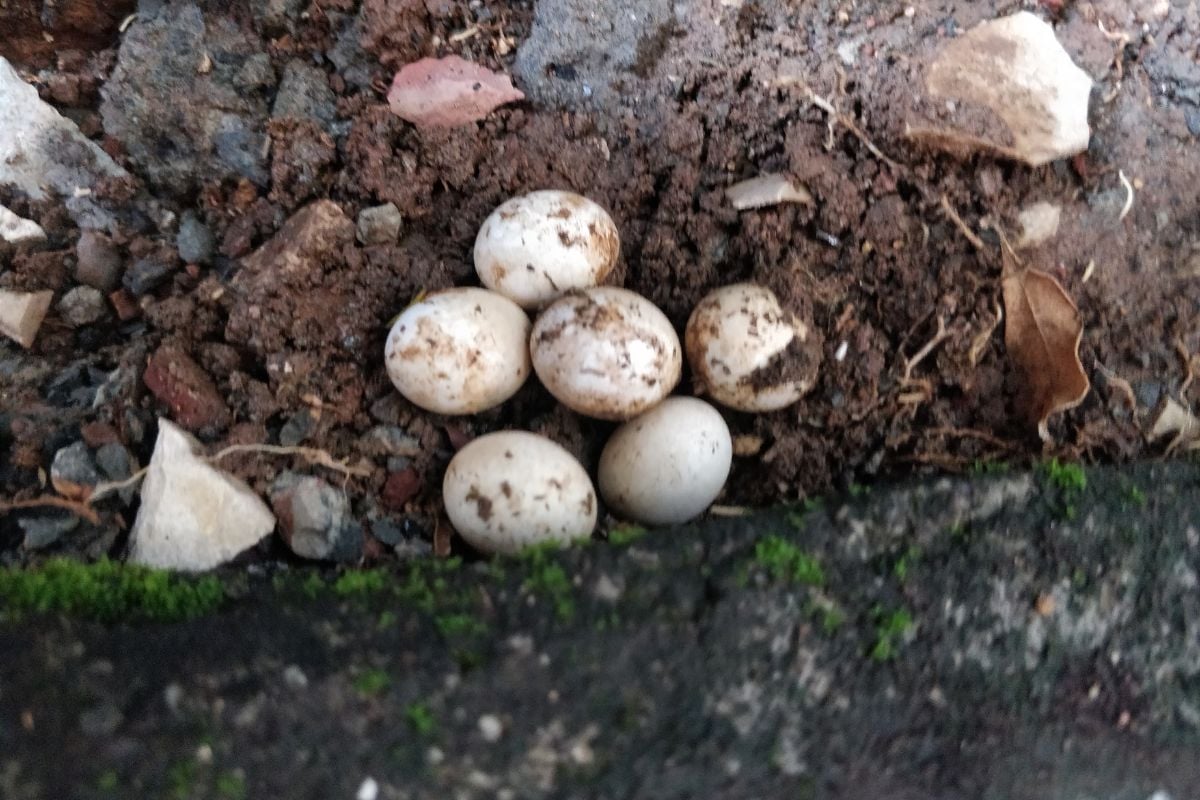
Once eggs are laid, remove them carefully to a separate incubation container without rotating them — the developing embryo is positioned relative to gravity and rotating the egg can be fatal to the embryo. Mark the top of each egg with a soft pencil before moving it so you can maintain the same orientation. Place eggs in a slightly damp incubation medium (vermiculite or perlite at a 1:1 ratio by weight with water) and keep the container in a warm, stable location at the incubation temperature appropriate for the species. For details on what gecko eggs look like, see our gecko egg guide. For lizard eggs generally, see what lizard eggs look like.
The female needs focused recovery care after laying. Increase her feeding frequency and keep calcium supplementation elevated for at least two weeks post-laying. Inspect the abdomen carefully to confirm all eggs have been passed — a retained egg will feel like a firm lump and is a veterinary emergency. Most females recover well from laying if their enclosure conditions are correct and nutrition has been adequate.
Egg Binding — When to Call a Vet
Egg binding (dystocia) occurs when a female cannot pass her eggs. It is life-threatening and requires veterinary treatment — do not attempt to manually assist egg laying at home. Signs that a gravid female may be egg-bound include prolonged digging without laying (more than a week of obvious pre-laying behaviour with no eggs produced), straining without result, visible distress, loss of use of the hind legs, extreme lethargy, or a sudden dramatic change in appearance. A reptile vet can confirm retained eggs with palpation or X-ray and provide appropriate treatment, which may include oxytocin to stimulate contractions or surgical removal in severe cases. Find a reptile-experienced vet through the ARAV vet directory.
Prevention is the most effective approach: always have a suitable laying box in the enclosure for any sexually mature female, maintain adequate calcium supplementation year-round, and ensure temperatures are correct for the species. Most cases of egg binding in captive lizards result from an inadequate laying site, calcium deficiency, or both.
Frequently Asked Questions
How can you tell if a lizard is pregnant?
The main signs are abdominal swelling (the belly becomes visibly rounder and wider), digging behaviour as the female searches for a laying site, weight gain, and appetite changes. In thin-skinned species like leopard geckos and crested geckos, the eggs are often visible as round shapes through the ventral skin when the gecko is held against a light source. Restlessness and increased time basking are also common. These signs apply whether or not a male has been present — female lizards can produce infertile eggs without mating.
Do lizards lay eggs or give birth?
Most commonly kept pet lizards are egg-layers (oviparous): leopard geckos, bearded dragons, crested geckos, most chameleons, and many skink species. Some lizards give birth to live young (viviparous), including blue-tongue skinks and Jackson’s chameleons. Female lizards can produce infertile eggs without mating — this is a normal physiological process that still requires a suitable laying site to prevent egg binding.
Can a female lizard lay eggs without a male?
Yes. Female lizards of most oviparous species will produce infertile eggs without any male being present. The eggs cannot develop into hatchlings but the physical process is identical to fertile egg production — including all the signs of gravidity, the need for a suitable laying site, and the risk of egg binding if no site is available. This means all keepers of sexually mature female lizards need to be aware of gravidity signs and maintain a laying box in the enclosure.
What is egg binding and how do I know if my lizard has it?
Egg binding (dystocia) occurs when a female cannot pass her eggs. Signs include prolonged digging behaviour without any eggs being laid (more than a week of pre-laying behaviour with no result), straining without producing eggs, loss of use of hind legs, extreme lethargy, and visible distress. It is a veterinary emergency — do not attempt to assist manually at home. A reptile vet can confirm and treat egg binding. Prevention involves providing a suitable laying site, maintaining adequate calcium supplementation, and keeping enclosure temperatures correct.
How long is a lizard pregnant before laying eggs?
This varies significantly by species. Leopard geckos typically carry eggs for 3 to 4 weeks between ovulation and laying. Bearded dragons carry eggs for around 4 to 6 weeks. Crested geckos are similar to leopard geckos at 3 to 4 weeks. Veiled chameleons carry eggs for 4 to 6 weeks. Incubation after laying varies by species and temperature but typically ranges from 45 to 90 days for most commonly kept species.
What should I do when my lizard is gravid?
Provide a suitable laying box immediately — a container large enough for the female to turn around in, filled to at least half its depth with damp substrate (topsoil and sand mix, or coir). Increase calcium supplementation to every feeding rather than alternate feedings. Increase protein-rich feeder insects in the weeks before laying. Ensure constant access to fresh water. Monitor for signs of egg binding. Once eggs are laid, move them carefully to an incubation container without rotating them and provide recovery feeding for the female.