The number of eggs a lizard lays varies more than most people expect — and the difference between species is dramatic. A small gecko might lay just one or two eggs at a time. A Komodo dragon can produce over 30. Between those two extremes sits almost every lizard you’re likely to keep or encounter.
If you keep lizards, you’ve probably found yourself wondering whether your female has eggs, how many to expect, and what to do when they arrive. This guide covers all of that — egg counts by species, where and when lizards lay, what the eggs look like, which lizards don’t lay eggs at all, and what to do if something goes wrong.

Table of Contents
How Many Eggs Do Lizards Lay? Quick Reference by Species
There is no single answer for lizards as a group — clutch size is one of the most variable traits across the roughly 7,000 known lizard species. The general pattern is that larger lizards tend to produce larger clutches, but there are enough exceptions to make species-specific knowledge essential if you’re keeping lizards.
| Species | Clutch Size | Clutches Per Year | Incubation Period |
|---|---|---|---|
| Leopard gecko | 1–2 eggs | 4–8 clutches | 35–90 days |
| Crested gecko | 2 eggs | 6–9 clutches | 60–120 days |
| Bearded dragon | 15–35 eggs | 2–3 clutches | 55–75 days |
| Green iguana | 20–70 eggs | 1 clutch | 60–90 days |
| Chameleon (veiled) | 20–70 eggs | 2–3 clutches | 150–200+ days |
| Blue tongue skink | Live birth: 6–25 young | 1 litter | N/A (live birth) |
| Green anole | 1 egg | Every 2–4 weeks | 30–45 days |
| Monitor lizard (Nile) | 20–60 eggs | 1–2 clutches | 10–12 months |
| Komodo dragon | 15–30 eggs | 1 clutch | 7–9 months |
| Common house gecko | 1–2 eggs | Multiple | 45–60 days |
| Water dragon (Chinese) | 6–18 eggs | 2–3 clutches | 60–75 days |
| Tokay gecko | 1–2 eggs | Multiple | 100–150 days |
A few things stand out from this table. First, geckos consistently produce very small clutches — typically one or two eggs — but compensate by producing many clutches across the breeding season. A leopard gecko laying two eggs eight times a year produces 16 eggs annually, which is actually a reasonable total. Second, the incubation period varies enormously — a green anole egg hatches in about six weeks, while a Nile monitor egg takes nearly a year.
Where Do Lizards Lay Their Eggs?

Nesting behaviour varies as much as clutch size, but most lizards share a common priority: finding a site that provides consistent warmth and humidity throughout the incubation period while offering some protection from predators.
Wild Lizards
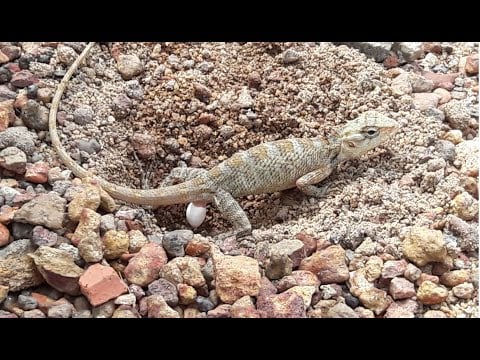
In the wild, most egg-laying lizards bury their clutches in loose soil or sand, typically in a sun-exposed spot that receives enough solar warming to maintain incubation temperatures. Common sites include:
- Loose soil or sand — the most common choice for ground-dwelling species. The female digs a small chamber, deposits the eggs, and covers them
- Rotting logs and leaf litter — forest species often use decomposing organic matter, which generates its own warmth as it breaks down
- Rock crevices — many gecko species wedge eggs into rock cracks or behind bark. Gecko eggs have a slightly adhesive surface when first laid, which helps them stick to vertical surfaces
- Termite mounds — monitor lizards and some other large species have been documented laying eggs inside active termite mounds, which maintain remarkably stable temperatures and humidity
Captive Lizards
A female lizard in captivity will lay her eggs wherever she can if a proper laying site isn’t provided — and this is a common cause of retained eggs, broken eggs, and failed clutches. For any egg-laying species, providing a lay box is essential once your female reaches breeding age.
A lay box is simply a container filled with slightly moist substrate — coco coir, vermiculite, or peat moss all work well — that is deep enough for the female to fully bury herself. For a bearded dragon, a container at least 30cm deep and 30cm wide is a minimum. For a leopard gecko, a plastic container with a hole cut in the lid and filled with moist coco coir is the standard approach.
Signs your female is looking for a laying site: increased digging behaviour, restlessness, pacing the enclosure, and loss of appetite that follows a period of abdominal swelling.
When Do Lizards Lay Their Eggs?

In the wild, most lizard species lay eggs in spring and early summer. The timing is driven by temperature — eggs require warmth to develop, and spring ground temperatures are warm enough to sustain incubation while also ensuring hatchlings emerge when insect prey is abundant.
In captivity, the timing is less predictable because temperature fluctuations are reduced. However, many keepers observe that their lizards still follow a seasonal laying pattern even in stable enclosure conditions, particularly species that originate from areas with distinct wet and dry seasons.
A few species-specific timing notes worth knowing:
- Bearded dragons typically lay in late spring to summer, 4–6 weeks after mating. Females can retain sperm for up to a year and produce fertile clutches without a male present if previously mated
- Leopard geckos produce eggs roughly every 3–4 weeks during the breeding season (typically February to August in the northern hemisphere), laying two eggs per clutch
- Green iguanas lay once a year, with females digging elaborate tunnel nests in sandy soil. A single female iguana can take several days to complete her nest and lay her clutch of up to 70 eggs
- Chameleons are notable for their long gestation even before laying — a veiled chameleon may carry eggs for 20–30 days before laying, and the eggs then require 150–200 days to hatch
What Do Lizard Eggs Look Like?
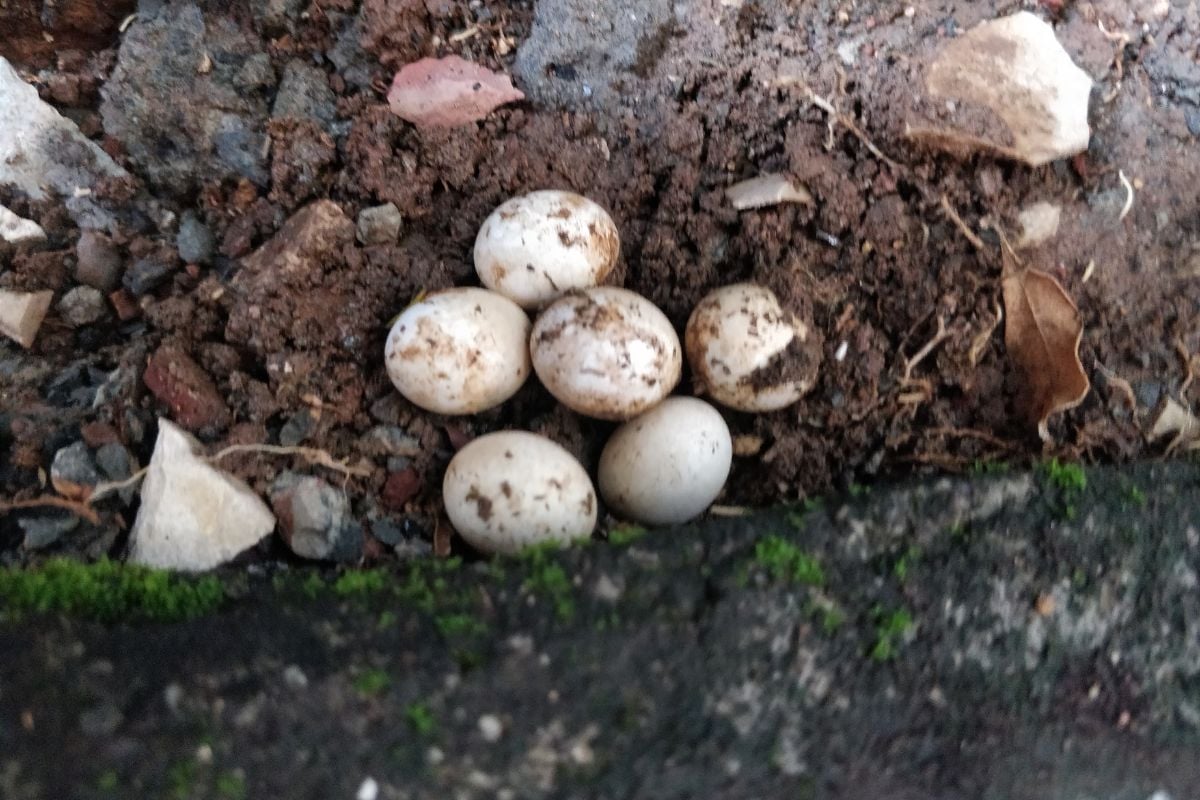
Most lizard eggs share a similar appearance — oval or elongated, white to off-white in colour, with a soft leathery shell rather than the hard calcified shell of bird eggs. The leathery shell is semi-permeable, allowing gas exchange and moisture absorption, which is why humidity management during incubation matters so much.
Size varies considerably by species. A leopard gecko egg is roughly the size of a large grape — about 2–3cm long. A green iguana egg can reach 4–5cm. Most gecko eggs are noticeably smaller and more elongated than the rounder eggs of larger lizards.
Gecko eggs are somewhat unique in that they arrive with a slightly sticky surface when freshly laid, which in the wild causes them to adhere to rock surfaces or bark. This is normal and not a sign of a problem.
Fertile vs infertile eggs: If you candle a fertile egg (shine a small torch through it in a dark room) you should see blood vessels forming within a week or two of laying, and a pink or reddish glow. An infertile or “slug” egg typically appears yellow, collapses quickly, and often develops mould. Remove infertile eggs from the incubation container promptly as they can introduce bacteria that affect the healthy eggs. Our dedicated guide on what lizard eggs look like covers identification in more detail.
Do Any Lizards Give Live Birth?
Yes — a significant number of lizard species skip egg-laying entirely and give birth to live young. The scientific term is viviparity, and it has evolved independently multiple times across different lizard lineages, which tells us it confers genuine survival advantages in the right conditions.
According to a 2014 study published in PLOS ONE by researchers at the University of Adelaide, viviparity in lizards tends to evolve in cooler climates — environments where ground temperatures are too low or too unpredictable to reliably incubate eggs externally. By retaining the developing young internally, the mother can thermoregulate by basking, effectively acting as a mobile incubator.
Common pet lizard species that give live birth rather than laying eggs include:
- Blue tongue skinks — one of the most popular live-bearing species in the hobby, producing litters of 6–25 fully formed young after a pregnancy of around 100 days. See our full blue tongue skink care guide for breeding details
- Some boa species — Colombian red-tailed boas and other boa constrictors are live-bearers, though these are snakes rather than lizards
- Some skink species — beyond blue tongues, many skink species across Australia and Africa give live birth
- Some garter snake relatives — again, snakes, but worth noting as the principle is the same
A small number of lizard species are also capable of parthenogenesis — reproducing without fertilisation. The New Mexico whiptail lizard (Aspidoscelis neomexicanus) is an all-female species that reproduces entirely through parthenogenesis. Some captive Komodo dragons have also been documented producing viable offspring without mating.
How To Care For Lizard Eggs
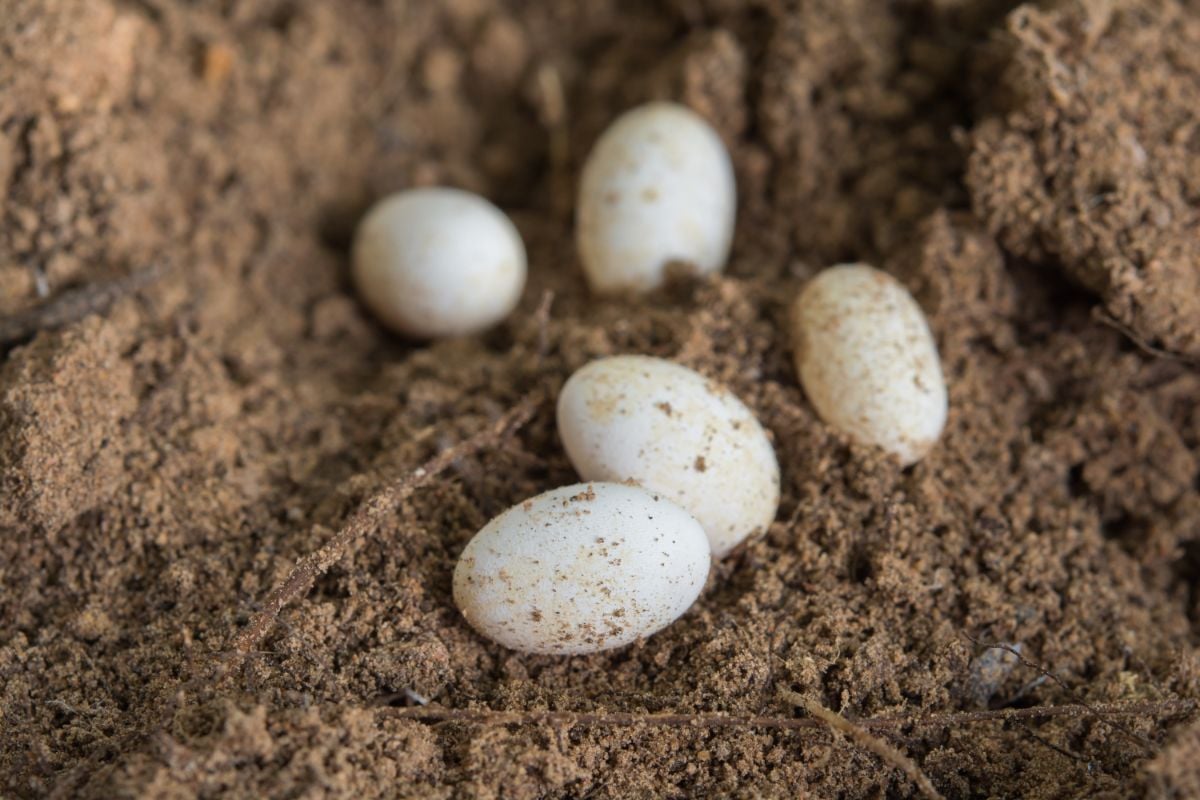
If your captive lizard has laid eggs and you want to hatch them successfully, the basic principles are consistent across most species.
Do Not Rotate the Eggs
This is the most important rule. Once a lizard egg has been positioned by the female and begins developing, the embryo orients itself relative to gravity. Rotating the egg even slightly can cause the embryo to detach from the yolk and die. Mark the top of each egg with a soft pencil immediately after collecting them so you can maintain their orientation throughout incubation.
Incubation Temperature and Humidity
Most lizard eggs incubate successfully between 26–32°C (79–90°F), with the specific optimum varying by species. Temperature during incubation also determines the sex of the hatchlings in many species — a phenomenon called temperature-dependent sex determination (TSD). In bearded dragons, for example, higher incubation temperatures produce more females.
Humidity requirements vary, but most eggs do well in substrate with around 80% humidity. Vermiculite mixed with water at a 1:1 ratio by weight is the standard incubation medium — it holds moisture without becoming waterlogged and provides good air circulation.
Use a Purpose-Built Incubator
Incubating eggs at room temperature is unreliable — ambient temperature fluctuates, and even small drops can slow development or kill embryos. A reptile incubator maintains a stable temperature throughout. Purpose-built reptile incubators are available from most reptile suppliers and make the process significantly more predictable, especially for species with long incubation periods.
Egg Retention (Dystocia) — When Laying Goes Wrong
Egg retention — known clinically as dystocia — occurs when a female lizard is unable to lay her eggs. It is a genuine veterinary emergency that requires prompt attention.
Common causes include the absence of a suitable laying site, inadequate calcium levels (calcium is required for muscle contractions during laying), dehydration, oversized eggs, or an underlying health condition. A female that has been visibly gravid (carrying eggs) for longer than normal for her species without laying should be seen by a reptile vet without delay.
Warning signs of dystocia:
- Visible abdominal swelling that persists beyond the expected laying window
- Prolonged lethargy and loss of appetite beyond what’s normal for a gravid female
- Straining or repeated unsuccessful digging without producing eggs
- Weakness in the hind legs, which can indicate calcium depletion from retained eggs
Treatment typically involves calcium supplementation, fluid therapy, and in some cases hormone injections to stimulate egg expulsion. Surgical removal is required in severe cases. The good news is that dystocia caught early responds well to treatment. For bearded dragons specifically, our guide on caring for bearded dragon eggs covers the full laying and incubation process in detail.
Wrapping Up
How many eggs a lizard lays comes down almost entirely to species. Small geckos lay one or two eggs at a time but do so repeatedly throughout the season. Larger lizards like bearded dragons and iguanas produce much larger clutches but less frequently. And a handful of popular species skip eggs entirely and give live birth.
If you keep a female lizard of an egg-laying species, the most useful preparation you can do is provide a proper lay box before she needs it, keep her calcium supplementation consistent year-round, and know what a normal laying timeline looks like for your specific species so you can recognise when something might be wrong.
Any questions about your specific lizard species — drop them in the comments below.
Frequently Asked Questions
How many eggs does a lizard lay?
It depends entirely on the species. Geckos typically lay 1–2 eggs per clutch but produce many clutches per year. Bearded dragons lay 15–35 eggs per clutch, 2–3 times per year. Green iguanas can produce up to 70 eggs in a single clutch. As a general rule, larger lizards produce larger clutches.
Do lizards lay eggs or give live birth?
Most lizard species lay eggs. However, a significant number — including blue tongue skinks and many other skink species — give live birth to fully formed young. Viviparity (live birth) is particularly common in lizard species from cooler climates, where external egg incubation is less reliable.
Where do lizards lay their eggs?
Most lizards bury their eggs in loose soil or sand in a warm, sun-exposed location. Some gecko species glue their eggs to rock surfaces or behind bark. Monitor lizards have been documented laying eggs inside termite mounds, which maintain stable temperatures. In captivity, a lay box filled with moist substrate (coco coir or vermiculite) should always be provided for egg-laying species.
What do lizard eggs look like?
Most lizard eggs are white to off-white, oval-shaped, and have a soft leathery shell rather than a hard calcified one like bird eggs. Size varies by species — leopard gecko eggs are roughly grape-sized, while iguana eggs can reach 4–5cm. Gecko eggs often have a slightly sticky surface when freshly laid. A healthy fertile egg will show blood vessels when candled with a torch.
How do you know if a lizard egg is alive?
Candle the egg by shining a small torch through it in a dark room. A fertile developing egg will show blood vessels within 1–2 weeks of laying and produce a pink or reddish glow. An infertile or dead egg typically appears yellow throughout with no visible vessels, and will often begin to collapse or develop mould. Remove infertile eggs from the incubation container promptly.
Do lizards lay eggs without mating?
Some species can. Parthenogenesis — reproduction without fertilisation — occurs naturally in species like the New Mexico whiptail lizard, which is an all-female species. Komodo dragons in captivity have also produced viable eggs without a male. Additionally, female bearded dragons can retain sperm from a previous mating and produce fertile clutches for up to a year without mating again.
When do lizards lay eggs?
In the wild, most species lay in spring to early summer when ground temperatures are warm enough to sustain incubation. In captivity, timing is less predictable but many species still follow a seasonal pattern. Leopard geckos typically lay every 3–4 weeks during their breeding season (roughly February to August). Bearded dragons usually lay 4–6 weeks after mating.