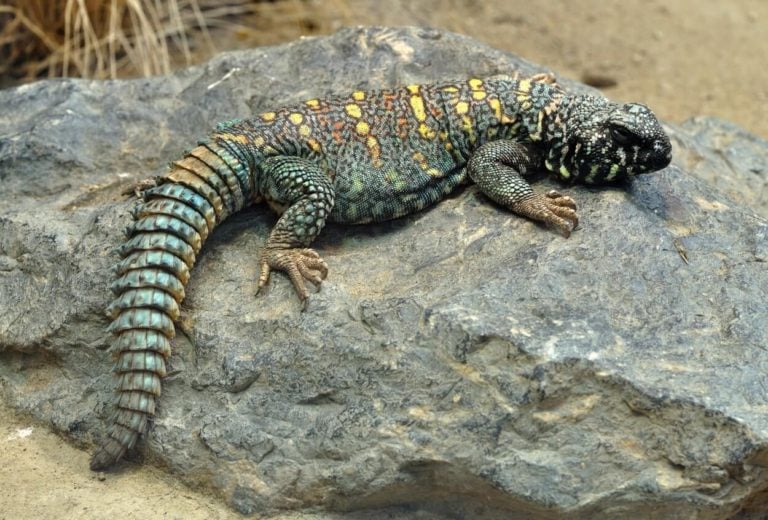
Painted agamas and bearded dragons are two of the most widely available pet lizards, but they have some important differences. Agamas are smaller, more active lizards native to Africa. They need a tall vertical terrarium, UVB lighting, a hot basking zone, and a diet of insects and vegetables.
Bearded dragons come from eastern Australia. They are calmer and larger, requiring a bigger enclosure with a heat lamp, UVB light, and a mixed diet of leafy greens and feeder insects.
Both species can be tamed and make rewarding pets, but their enclosure setups, lighting, feeding requirements, and temperaments differ considerably due to their different origins and natural behaviours.
Physical Characteristics and Appearance
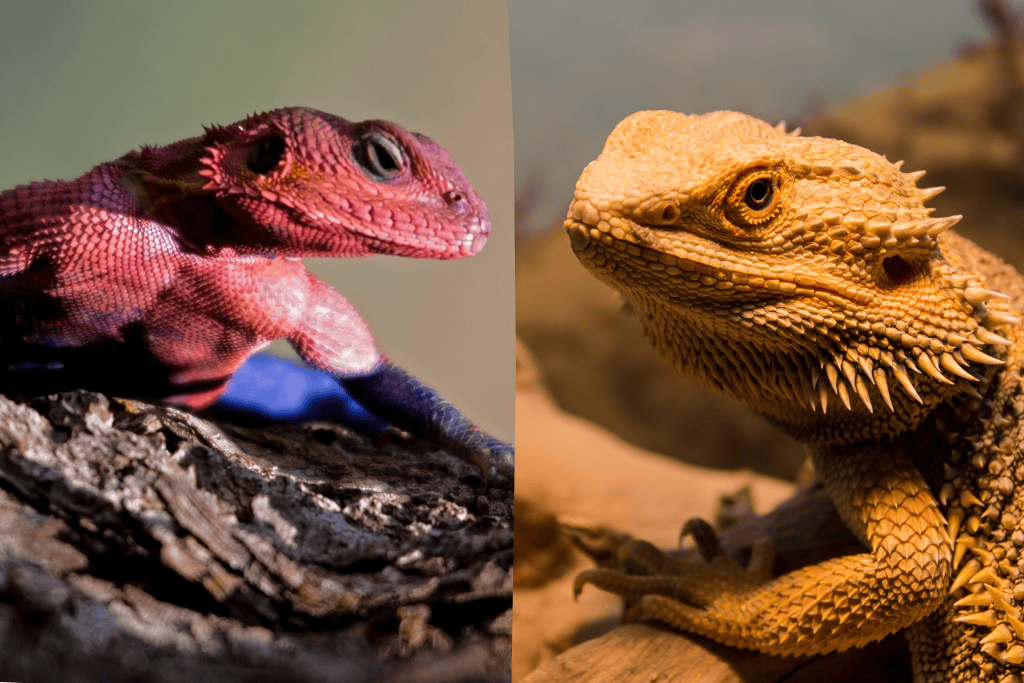
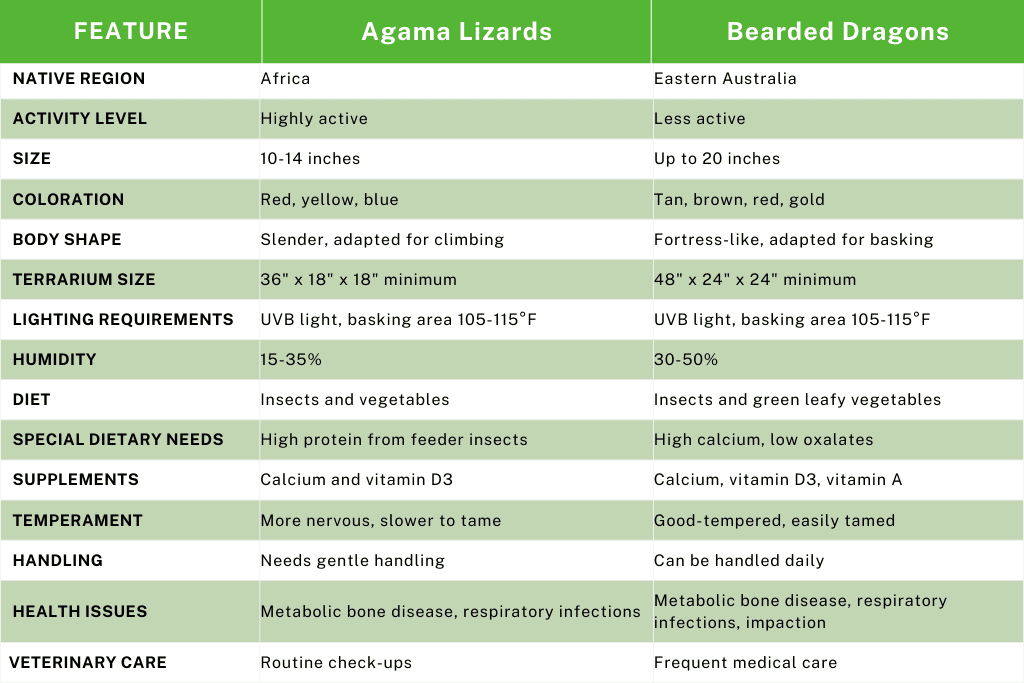
Bearded dragons and painted agamas both belong to the Agamidae family. Bearded dragons display natural tones of tan, brown, red, and gold, while painted agamas are more vividly coloured with striking reds, yellows, and blues — particularly during courtship displays.
Color and Pattern Differences
Bearded dragons have more muted, earthy colouration that blends with the Australian outback. Painted agamas, by contrast, can flash vivid blues and reds when displaying. Bearded dragons have a broader, flatter body suited to basking on the ground, while painted agamas have a more slender build that helps them move quickly and climb.
Size and Body Shape Differences
Adult bearded dragons can reach up to 20 inches in length, making them one of the larger commonly kept pet lizards. Painted agamas are noticeably smaller, typically reaching 10 to 14 inches at most. Understanding these size differences is important when planning their enclosures and long-term care.
Blue Agama Lizard
Habitat and Environmental Requirements
Both species originate from hot, arid, rocky environments and both enjoy basking. Painted agamas are native to Africa and the Middle East, while bearded dragons come from eastern Australia. Despite their different origins, both thrive in warm, dry conditions with ample basking opportunities.
Terrarium Size and Setup
A single painted agama can be comfortably housed in an enclosure measuring at least 36 x 18 x 18 inches. Bearded dragons are significantly larger and need more space — a minimum of 48 x 24 x 24 inches for an adult.
Both species need a temperature gradient with a warm basking zone and a cooler retreat, along with stable shelter and hides. Painted agama males are territorial and must be housed separately — never keep two males together.
Lighting and Temperature Requirements
Both species need a basking zone of 105–115°F and UVB exposure for 10–12 hours per day. Nighttime temperatures should not drop below 70°F. Painted agamas prefer drier conditions with humidity between 15–35%, while bearded dragons do better at 30–50% humidity.
Avoid red or “night time” bulbs entirely — they disrupt the natural day/night cycle and don’t provide adequate heat.
Diet and Nutrition
Omnivorous Diet Comparison
Both species are omnivores and need a mix of animal protein and plant matter. Bearded dragons do best on a calcium-rich diet with low oxalate vegetables — collard greens and mustard greens are excellent staples that support healthy bone development.
Starred agamas (painted agamas) need a higher protein diet. Dubia roaches, discoid roaches, and crickets are ideal feeder insects to keep them active and healthy.
Supplements and Vitamins
Both species need calcium and vitamin D3 supplementation for healthy bone development. Bearded dragons may also benefit from additional vitamin A supplementation. Proper UVB lighting remains essential for both species regardless of supplementation.
Bearded Dragons
Behavior and Handling Comparison
Temperament and Socialization Differences
Bearded dragons are generally calm and tolerant of handling, making them one of the most beginner-friendly lizards available. Painted agamas tend to be more nervous and skittish, particularly when first introduced to captivity. They can take longer to tame and may remain more easily startled than a well-handled bearded dragon.
Both species can be tamed with patient, consistent handling and positive reinforcement, the key is moving slowly, keeping sessions short initially, and never forcing interaction.
Handling and Taming Comparison
Once comfortable with their owner, bearded dragons can be handled daily and will often sit calmly on a hand or shoulder. Some owners allow them to roam freely in a safe room without signs of stress.
Painted agamas require a gentler approach. Keep handling sessions shorter, move slowly, and always read their body language. Even a well-tamed painted agama may remain shyer than a comparable bearded dragon.
Care and Health Considerations
Common Health Issues and Prevention
Both the inland bearded dragon (Pogona vitticeps) and the starred agama (Laudakia stellio) are susceptible to metabolic bone disease, respiratory infections, and impaction if their care requirements aren’t met consistently.
The best prevention is straightforward — proper UVB lighting, a calcium-rich diet, clean enclosures, and correct temperatures. Regular vet check-ups with an exotic animal specialist are strongly recommended for both species.
Veterinary Care
Routine vet visits help catch problems early before they become serious. Both species are good at hiding illness, so don’t wait for obvious symptoms to appear. A specialist in exotic reptiles will be able to assess UVB exposure, body condition, and dietary health far more accurately than a general practice vet.

Frequently Asked Questions
What is the main difference between a bearded dragon and an agama?
The main differences are origin, size, and temperament. Bearded dragons come from Australia and are larger, calmer, and easier to handle. Painted agamas come from Africa and are smaller, more active, and generally more skittish.
Which is a better pet, an agama or a bearded dragon?
For most people, especially beginners, a bearded dragon is the better choice. They’re more tolerant of handling, their care requirements are well-documented, and they tend to be more relaxed overall. Painted agamas suit keepers who enjoy observing a more active, quick-moving lizard.
Are agama lizards good pets?
Yes — agamas make interesting pets for keepers who understand their needs. They require a large enclosure, precise temperatures, and regular UVB exposure. They can be tamed with consistent, patient handling, though they’ll never be quite as relaxed as a bearded dragon.
Are painted agamas friendly?
Painted agamas aren’t aggressive by nature, but they are more easily startled than bearded dragons and take longer to become comfortable with handling. They’re better suited to experienced keepers or those who enjoy observing rather than frequent hands-on interaction.