Chinese water dragons are one of the most visually striking lizards in the hobby — the vivid emerald green, the banded tail, the prehistoric crest along the spine. I have kept a number of species in the agamid family and Chinese water dragons are genuinely rewarding animals when set up correctly. The catch is that “correctly” requires more thought and effort than most beginner guides suggest. Get the enclosure right from the start and these lizards thrive; cut corners on space or humidity and problems follow quickly. Here is the full picture.
Table of Contents
Species Summary
The Chinese water dragon (Physignathus cocincinus) is a large arboreal agamid lizard native to the humid tropical forests of southern China, Thailand, Vietnam, Cambodia, and Laos. In the wild they inhabit areas near slow-moving rivers and streams, spending time both in trees above the water and entering the water to escape predators or regulate temperature — a lifestyle directly reflected in their captive care requirements.
| Attribute | Details |
|---|---|
| Scientific name | Physignathus cocincinus |
| Origin | Southern China, Southeast Asia |
| Adult size (male) | Up to 3 feet (90cm) including tail |
| Adult size (female) | Up to 2 feet (60cm) including tail |
| Lifespan | 10–15 years; well-kept animals may reach 20 years |
| Diet | Omnivore — primarily insectivorous with plant matter |
| Activity pattern | Diurnal (active during the day) |
| UVB required? | Yes — essential |
| Care level | Intermediate–Advanced |
Wild-caught Chinese water dragons were historically common in the trade and many are still available, though captive-bred animals are increasingly obtainable and are the strongly preferred choice. Captive-bred animals arrive without internal parasites, are already accustomed to captive conditions, and tend to settle into handling far more readily than wild-caught specimens. The higher price of captive-bred animals is worth it.
Lifespan
The average Chinese water dragon lifespan in captivity is 10 to 15 years. Well-maintained animals with excellent husbandry can reach close to 20 years, though this is not the norm. As with most reptiles, the quality of the enclosure and diet is the primary driver of longevity — animals kept in inadequate conditions are significantly more susceptible to chronic stress, infection, and disease.
Appearance
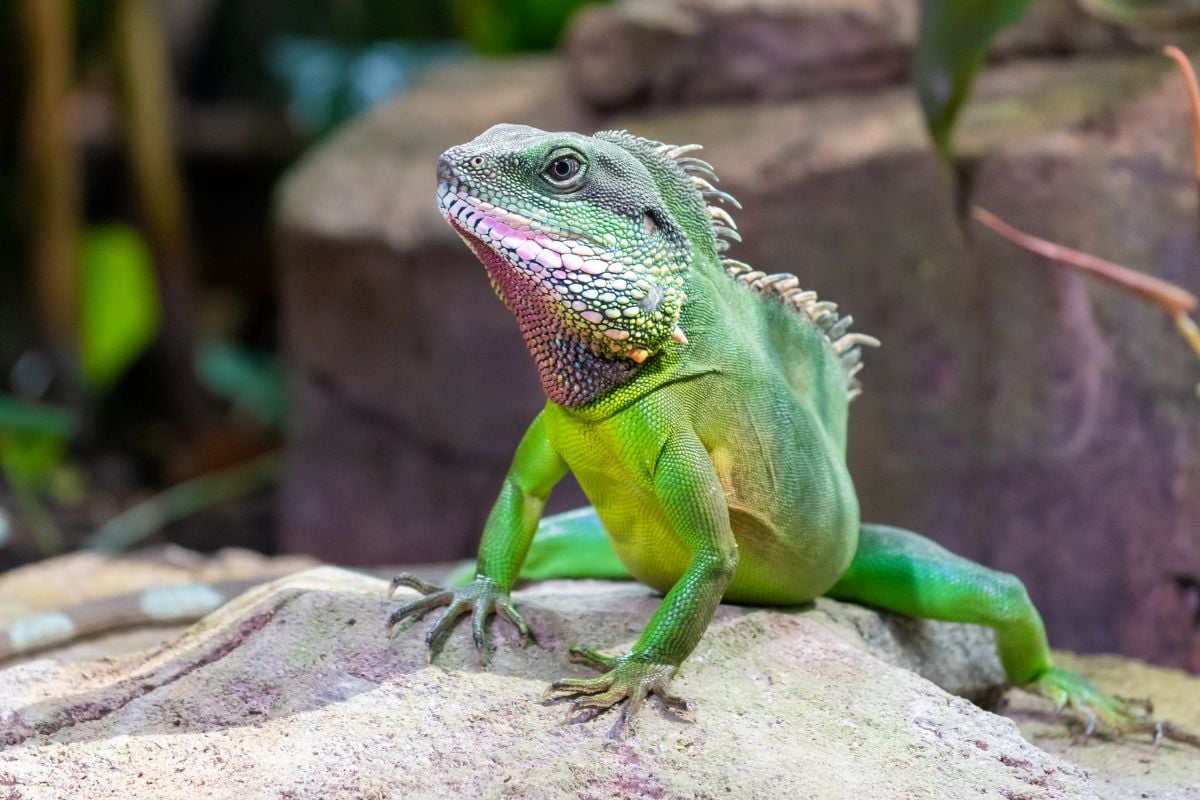
Hatchling Chinese water dragons are brownish-green with white or pale belly colouration and faint lateral striping. As they mature, the colouration becomes more vivid — adult animals range from bright lime green to deep emerald, with diagonal white or turquoise striping on the flanks, brown and green banding on the tail, and often vivid throat colouration in yellow, orange, or pink.

Several features distinguish this species. The tail makes up roughly 70% of total body length and is used for balance, climbing, and as a defensive whip. The strong hindlimbs allow brief bipedal running. The dorsal crest runs from the head down the neck and back. The parietal eye — a small photosensitive organ visible as a faint scale on top of the head between the eyes — helps detect changes in overhead light and shadows, functioning as an early predator detection system.
Males are larger than females, develop a taller nuchal crest, have a broader head, and display more vivid throat colouration. Sexual differences become apparent once the lizard reaches 14–16 inches in length.
Average Size
Adult males reach up to 3 feet (90cm) in total length. Females are smaller, typically reaching up to 2 feet (60cm). Since the tail comprises most of the total length, the body itself is more compact than these numbers suggest — adult males have a snout-to-vent length of roughly 12–14 inches. Growth is rapid in the first two years and slows significantly by year three.
Chinese Water Dragon Care
Chinese water dragon care is genuinely intermediate to advanced in difficulty. The enclosure requirements are substantial, the humidity demands are high, and snout rubbing — the species’ defining health challenge — is an ever-present concern that requires a specific approach to enclosure design. Once those fundamentals are addressed, the ongoing care is manageable and deeply rewarding.
Enclosure Size
Chinese water dragons are large, active, arboreal lizards. Undersized enclosures are the root cause of most problems in this species — chronic stress, snout rubbing, failure to thrive. Standard commercial terrariums are only appropriate for juveniles. Adults require a custom-built enclosure.
| Stage | Minimum Enclosure | Notes |
|---|---|---|
| Hatchling (under 10 inches) | 20–40 gallon terrarium | Screen-sided; upgrade quickly as growth is rapid |
| Juvenile (10–18 inches) | 4×2×4 ft custom or large commercial | Height is critical — prioritise this dimension |
| Adult | 6×3×6 ft minimum | Custom-built; screen or partially screen sides |
Height is the most critical dimension — Chinese water dragons are strongly arboreal and spend the majority of their time elevated. A 6-foot-tall enclosure gives them the vertical range to thermoregulate properly by moving between the basking zone and cooler lower areas.

Avoid glass-sided enclosures for adults. Chinese water dragons do not recognise glass as a barrier and will repeatedly run into it or rub their snouts against it — this is the primary cause of snout abrasion and rostral injuries in captive animals. Screen-sided enclosures or enclosures with opaque solid panels on the sides and back, with a screen or mesh front, are significantly safer. This is the single most important design decision for this species.
Habitat Setup
The interior should reflect the lizard’s natural riparian forest habitat — dense vegetation, climbing surfaces at multiple heights, and a substantial water feature at the base.
Substrate: Cypress mulch is the best choice — it retains moisture for humidity, is soft for any falls, and is easy to spot-clean. Aim for 3–4 inches depth. A top layer of sphagnum moss increases surface moisture retention. Avoid fine particulate substrates; stick to coarser natural options.
Climbing structures: Multiple horizontal and diagonal branches at varying heights are essential. Arrange them to give access to the full height of the enclosure, with the primary basking perch positioned 8–10 inches below the basking lamp. Cork bark tubes, natural hardwood branches, and bamboo poles all work well.
Plants: Live plants significantly improve the enclosure environment by maintaining humidity and providing natural cover that reduces stress. Good options include Pothos, Dracaena, Hibiscus, Ficus, and Philodendron. All of these tolerate the high humidity conditions well. Artificial plants work equally well from a function standpoint and require no maintenance.
Water feature: A large, deep water dish or built-in pond area is essential. The water should be deep enough for the lizard to fully submerge — Chinese water dragons are genuinely semi-aquatic and will use the water for swimming, soaking, drinking, and thermal regulation. Change the water daily; these lizards defecate in their water consistently. If you build a vivarium with a proper water section, adding a small filter dramatically reduces cleaning frequency.
Expert Tip: The more cover and visual security you build into the enclosure, the calmer your Chinese water dragon will be. A lizard that can retreat into dense foliage rather than running into a glass wall when startled is a healthier, longer-lived animal. Plant density is not just aesthetic — it is a welfare consideration.
Temperature and Lighting
Chinese water dragons are diurnal, active baskers that need a proper thermal gradient and full-spectrum UVB to remain healthy.
| Zone | Temperature | Notes |
|---|---|---|
| Basking spot | 90–95°F (32–35°C) | Surface temp at the primary basking perch |
| Warm ambient (upper) | 84–88°F (29–31°C) | General air temperature in the upper enclosure |
| Cool zone (lower/floor) | 75–80°F (24–27°C) | Retreat zone; cooler area for thermoregulation |
| Night temperature | 70–75°F (21–24°C) | Can drop naturally; use ceramic heat emitter if lower |
A halogen basking bulb positioned outside the enclosure above the primary perch creates the basking spot. Pair this with a high-output T5 HO UVB tube — a 5.0 or 6% rated tube — running the length of the enclosure and positioned to illuminate the basking zone. UVB is essential for Vitamin D3 synthesis and calcium metabolism; without it, metabolic bone disease develops regardless of dietary calcium. Replace UVB bulbs every 6–12 months even if they still produce visible light, as UV output degrades first. Use a quality thermostat to regulate heat output and prevent overheating. Run all lighting on a 12–14 hour day cycle using a timer.
Humidity
Maintain humidity at 70–80% throughout the enclosure. Chinese water dragons come from humid tropical forest and are intolerant of chronically dry conditions — inadequate humidity leads to incomplete sheds, skin problems, and respiratory stress over time.
With a screen-sided enclosure, maintaining high humidity requires daily misting and moisture-retentive substrate. An automatic misting system set to run morning and evening removes most of the manual effort and keeps levels more consistent than hand-misting alone. A digital hygrometer placed at mid-enclosure height gives the most representative reading. The large water feature at the base also contributes meaningfully to ambient humidity through evaporation.
Good airflow must be balanced with humidity — stagnant high-humidity conditions promote bacterial growth in the substrate. If condensation is building on all surfaces and not drying out between mistings, increase ventilation slightly.
Chinese Water Dragon Diet
Chinese water dragons are omnivores. Insects form the core of their diet but plant matter is a meaningful and important component — particularly for adults, where the diet should be closer to 60–70% insects and 30–40% plant matter. The original figure of only 10–15% plant matter for all ages is too low and can lead to nutritional imbalance in adults over time.
| Category | Good Options | Frequency |
|---|---|---|
| Insects (primary protein) | Dubia roaches, crickets, black soldier fly larvae, silkworms, earthworms | Daily for juveniles; 3–4x/week for adults |
| Other protein | Small feeder fish, small shrimp (excellent for water dragons specifically) | 1–2x per week |
| Leafy greens | Collard greens, dandelion greens, mustard greens, endive, squash | Offered with every feeding for adults |
| Fruit | Raspberries, mango, fig, papaya | Occasional — 1–2x per week maximum |
| Avoid | Fireflies (toxic), avocado, rhubarb, iceberg lettuce (no nutrition) | Never |

Gut-load all feeder insects for 24–48 hours before offering. Dust insects with a calcium supplement (without D3 if UVB is adequate) three to four times per week for juveniles and two to three times per week for adults. Use a calcium+D3 supplement once per week and a reptile multivitamin once per fortnight. Feeder fish and shrimp are particularly suitable for this species given their semi-aquatic natural diet and are worth incorporating regularly.
Feed juveniles daily. Adults can be fed every other day — watch body condition and adjust quantity to maintain a healthy weight without obesity. A healthy adult should have visible muscle definition along the jawline and hindlimbs without protruding hip or spine bones.
Expert Tip: Chinese water dragons can develop food preferences and become reluctant to eat new items if the diet is not varied from a young age. Introduce a wide range of feeder insects and plant matter from the start rather than defaulting to one or two staples. A dragon that only accepts crickets is harder to nutritionally balance than one accustomed to variety.
Common Health Issues
Chinese water dragons are prone to a specific set of health problems, several of which are almost entirely preventable with correct enclosure design and husbandry.
Snout Rubbing (Rostral Abrasion) — the #1 Issue
This is by far the most common and most preventable health problem in captive Chinese water dragons. These lizards do not recognise transparent barriers as solid surfaces and will repeatedly run into or rub against glass walls, screen panels, and enclosure sides. Over time this causes progressive abrasion to the snout — initially minor skin damage, progressing to open wounds, bone exposure, and serious infection if the underlying cause is not addressed.
The solution is enclosure design, not treatment. Opaque solid panels on all sides except the viewing front, dense planting that creates visual barriers, and adequate space all reduce the drive to escape by pressing against the walls. A lizard that feels secure in its environment and cannot see through its enclosure walls will not rub its snout. Minor existing abrasions can be treated with antiseptic and allowed to heal once the cause is removed — significant wounds require veterinary attention.
Metabolic Bone Disease (MBD)
Caused by insufficient UVB exposure and/or calcium deficiency. Signs include soft jaw, limb trembling, difficulty gripping branches, and in advanced cases pathological fractures. Entirely preventable with correct UVB setup and calcium supplementation. MBD in a lizard of this size is serious — if you suspect it, see a reptile vet promptly rather than attempting to manage it at home.
Parasites
Wild-caught Chinese water dragons almost universally carry internal parasites. Any newly acquired animal — particularly wild-caught — should be quarantined for 60–90 days and receive a faecal screen from a reptile vet. Even captive-bred animals benefit from a baseline health check. Parasites cause weight loss, lethargy, and diarrhoea and can be fatal if untreated.
Respiratory Infections
Caused by temperatures consistently too cool or high humidity with poor airflow. Signs include open-mouth breathing, wheezing, nasal discharge, and lethargy. Requires veterinary antibiotic treatment — do not delay as respiratory infections in medium-to-large lizards progress quickly.
Mouth Rot (Stomatitis)
Often follows snout-rubbing injuries, prey bites, or abrasions from enclosure furniture. Signs include redness and swelling around the mouth, visible discharge, and reluctance to eat. Requires veterinary antibiotic treatment. Address the underlying cause (usually enclosure design) at the same time.
Register with a reptile-experienced vet before you need one — the ARAV vet directory is the best starting point. Emergency situations are not the time to be researching exotic vets for the first time.
Behaviour and Temperament
Chinese water dragons are more interactive and handleable than many similarly-sized lizard species, but they require time and patience to settle. A newly acquired animal will be flighty and may thrash, tail-whip, and attempt to escape during the first weeks. This is normal stress behaviour — not aggression — and improves significantly with a well-designed enclosure and calm, consistent interaction.
Once settled, most Chinese water dragons become genuinely calm and tolerant of regular handling, and some become quite interactive at feeding time. This takes weeks to months for captive-bred animals and potentially much longer for wild-caught specimens. Do not rush the process.
Never house two males together — they are territorial and will fight, causing serious injury. A male/female pair or a single male with two females in a sufficiently large enclosure can work, but monitor closely and separate immediately if aggression occurs. Female-only groups are generally peaceful.
Handling
Allow at least two weeks for a newly acquired Chinese water dragon to settle before handling attempts. During this period, spend time near the enclosure, move calmly, and let the lizard observe you as non-threatening. Begin feeding by hand if possible — associating your presence with food delivery is the fastest trust-building tool.
When you begin handling, approach slowly from the side rather than from above. Scoop from below and support the full body weight — allow the tail to drape rather than restraining it. Keep initial sessions brief and increase duration gradually as the lizard relaxes. A Chinese water dragon that is flat and still in your hands is comfortable; one that is whipping its tail, thrashing, or puffing up needs more time before longer sessions.

For broader context on how Chinese water dragons compare to other large arboreal lizard species in care commitment and handling difficulty, our best pet lizards guide and our Australian water dragon care guide give useful comparisons. The Australian water dragon is a close relative and is generally considered easier to keep as a beginner large lizard.
Frequently Asked Questions
Are Chinese water dragons good pets?
Chinese water dragons are excellent pets for keepers who can provide the correct enclosure size and environmental conditions. They are more interactive and handleable than many lizard species and become quite personable once settled. However, they are not beginner animals — their enclosure requirements are substantial, snout rubbing is a significant ongoing concern, and they need precise humidity and UVB conditions to stay healthy.
How big do Chinese water dragons get?
Adult male Chinese water dragons reach up to 3 feet in total length including the tail. Females are smaller, typically reaching up to 2 feet. Since the tail makes up roughly 70 percent of total body length, the body itself is more compact than these measurements suggest. Most of the growth occurs in the first two to three years.
Why does my Chinese water dragon rub its nose on the glass?
Snout rubbing is the most common health problem in captive Chinese water dragons. These lizards do not recognise transparent barriers as solid surfaces and repeatedly run into or rub against glass and screen walls. The solution is enclosure design rather than treatment — use opaque solid panels on the sides and back, plant the enclosure densely for visual security, and ensure adequate space. Minor abrasions heal once the cause is removed; significant wounds require veterinary attention.
What do Chinese water dragons eat?
Chinese water dragons are omnivores. Insects form the primary protein source — dubia roaches, crickets, black soldier fly larvae, and earthworms are all good staples. Adults should also receive leafy greens and vegetables at each feeding, making up around 30 to 40 percent of their diet. Small feeder fish and shrimp are particularly appropriate for this semi-aquatic species. Gut-load all insects before feeding and dust with calcium supplement several times per week.
What humidity do Chinese water dragons need?
Chinese water dragons need 70 to 80 percent relative humidity throughout their enclosure. This reflects their humid tropical forest habitat. Daily misting, moisture-retentive substrate, live plants, and a large water feature all contribute to maintaining these levels. A digital hygrometer is essential for monitoring. Chronically low humidity causes incomplete sheds, skin problems, and respiratory stress over time.
How long do Chinese water dragons live?
Chinese water dragons live between 10 and 15 years in captivity with good care. Well-maintained animals can approach 20 years, though this is not typical. Lifespan is closely tied to husbandry quality, particularly enclosure size, correct UVB, humidity, and low stress levels from a well-designed, visually secure enclosure.