One of the most common questions new reptile owners ask — and one of the most important ones to have an honest answer to before choosing a species.
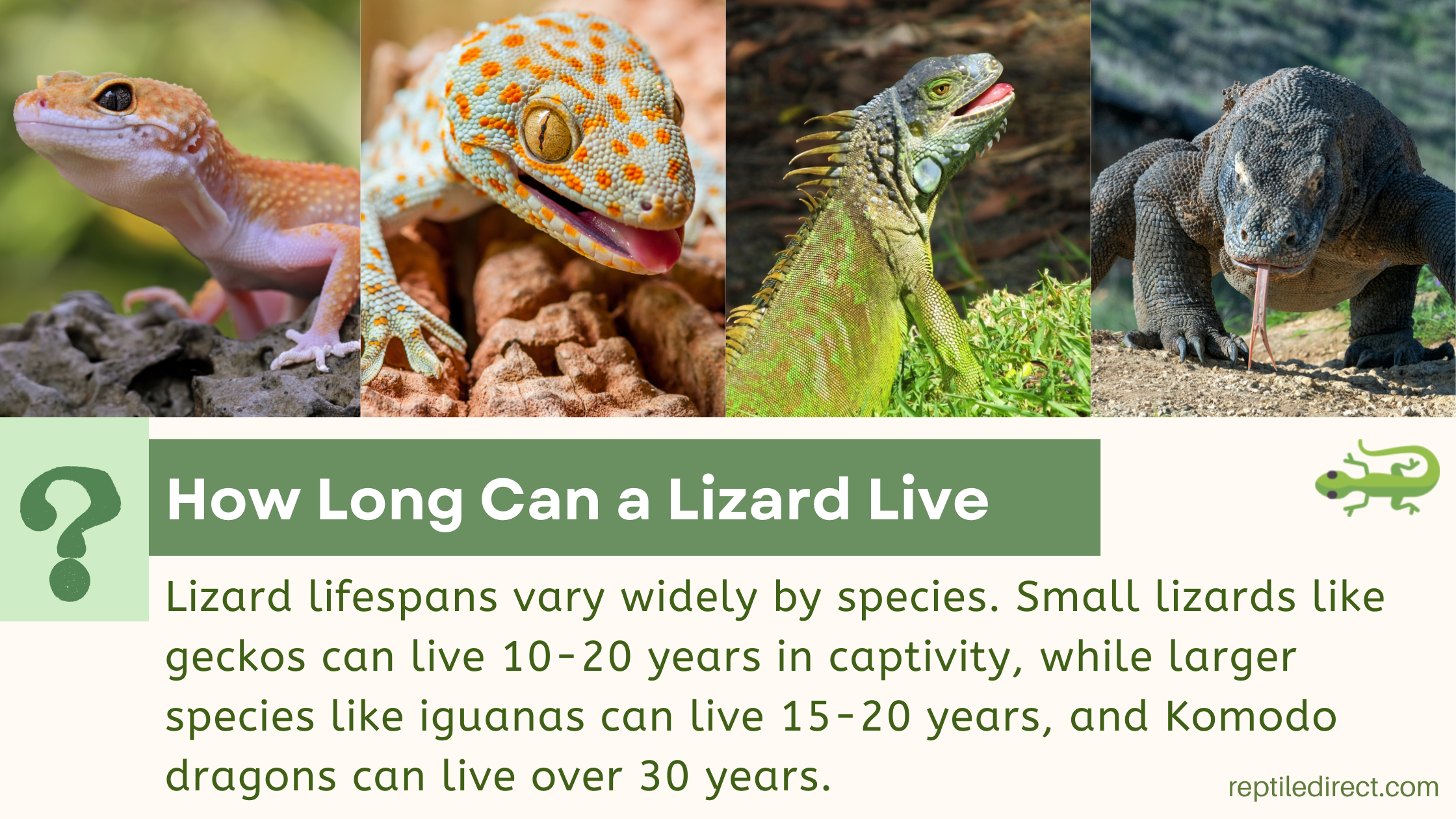
Lizard lifespans vary enormously. A small house gecko might live 5 years. A well-kept leopard gecko can reach 20. A green iguana given proper care is a 15–20 year commitment. And at the extreme end, Komodo dragons in captivity have been documented living past 30 years.
Understanding lifespan by species is not just interesting — it’s essential information before you bring a lizard home. This guide covers the lifespan of every common pet lizard species, what the difference is between wild and captive lifespans, and what you can do to push your animal toward the top end of its expected range.

Table of Contents
Lizard Lifespan by Species — Quick Reference
| Species | Captive Lifespan | Wild Lifespan | Notes |
|---|---|---|---|
| Leopard gecko | 10–20 years | 6–10 years | Well-documented long-lived species in captivity |
| Crested gecko | 15–20 years | Unknown (little studied) | Relatively new to captive hobby |
| Bearded dragon | 10–15 years | 5–8 years | Record captive age is over 18 years |
| Green iguana | 15–20 years | 8–12 years | Major long-term commitment |
| Blue tongue skink | 15–20 years | 10–15 years | One of the longest-lived common pet lizards |
| Veiled chameleon | 5–8 years | 3–5 years | Shortest-lived of the popular pet species |
| Green anole | 4–8 years | 3–5 years | Small size limits lifespan |
| Chinese water dragon | 10–15 years | 5–10 years | Sensitive to husbandry errors |
| Tegu (Argentine) | 15–20 years | 10–15 years | Large, long-lived intelligent lizard |
| Monitor (Nile) | 15–25 years | 10–15 years | Highly variable; depends on captive conditions |
| Komodo dragon | 30+ years | 20–30 years | Rarely kept outside professional institutions |
| Mediterranean house gecko | 5–10 years | 3–5 years | Small, robust, widely encountered |
| Tokay gecko | 7–10 years | 5–7 years | Notoriously defensive; stress reduces captive lifespan |
Why Captive Lizards Live Longer Than Wild Ones
The gap between wild and captive lifespans is consistent and significant across virtually every lizard species. A bearded dragon living 5–8 years in the Australian outback routinely reaches 12–15 years under proper captive care. The reasons are straightforward.
No predation. In the wild, predation is the primary cause of early death for most lizard species. Birds of prey, snakes, cats, foxes, and larger lizards all prey on smaller ones. A captive lizard faces none of this. The energy spent on vigilance and escape in the wild is simply not a factor in captivity.
Consistent food supply. Wild lizards experience seasonal food shortages, drought, and competition. A captive lizard with a knowledgeable owner eats regularly, receives calcium and vitamin supplementation, and never faces the metabolic stress of extended fasting outside of normal brumation cycles.
Veterinary care. Parasitic infections, respiratory illness, and metabolic bone disease — conditions that would be fatal to a wild lizard — can be diagnosed and treated in captive animals. Early intervention extends lifespans significantly. A reptile vet check once a year is one of the highest-value investments you can make in your lizard’s long-term health.
Stable environment. Wild lizards in many parts of the world face extreme temperature fluctuations, drought, and habitat disruption. Captive environments maintain consistent temperatures, lighting cycles, and humidity — removing the constant physiological stress that wild conditions impose.
Lifespan of Common Pet Lizard Species
Leopard Gecko (10–20 Years)

Leopard geckos are one of the most reliably long-lived species in the reptile hobby. A well-kept leopard gecko living 15–20 years is genuinely common, not exceptional. The record for captive leopard geckos exceeds 28 years.
Their longevity in captivity is partly due to their robustness — they’re forgiving of minor husbandry errors in a way that more sensitive species like chameleons are not — and partly due to their relatively modest environmental requirements compared to other long-lived species.
The biggest threats to leopard gecko lifespan are obesity (common in captive animals overfed on fatty waxworms), calcium deficiency leading to metabolic bone disease, and reproductive complications in females. See our full leopard gecko care guide for the husbandry detail.
Bearded Dragon (10–15 Years)

Bearded dragons typically live 10–15 years in captivity. The record is over 18 years — an animal kept in exceptional conditions throughout its life. In the wild, predation, food availability, and harsh climate mean most bearded dragons live 5–8 years.
The factors that most affect bearded dragon lifespan in captivity are UVB lighting quality (inadequate UVB leads to metabolic bone disease regardless of calcium supplementation), diet diversity, and for females, the cumulative physical toll of egg production. Female bearded dragons that are allowed to breed repeatedly throughout their lives have shorter average lifespans than males or non-breeding females. Our guide on bearded dragon lifespan covers this in full detail.
Crested Gecko (15–20 Years)
Crested geckos are a relatively recent addition to the reptile hobby — they were rediscovered in New Caledonia in 1994 after being thought extinct. This means captive longevity data is still accumulating, but animals kept since the mid-1990s are now reaching 20+ years of age, suggesting a lifespan comparable to leopard geckos.
They are one of the easier gecko species to maintain long-term — they tolerate a range of temperatures, eat commercial crested gecko diet as a staple, and are generally robust. See our crested gecko care guide for full setup details.
Green Iguana (15–20 Years)
Green iguanas are one of the most misunderstood long-term commitments in the reptile hobby. Purchased as small, bright green juveniles, they grow to 1.5–1.8 metres and live 15–20 years under good care. They require large enclosures, strong UVB lighting, a predominantly herbivorous diet, and regular social interaction to remain handleable.
Many iguanas in captivity die significantly earlier than their potential lifespan due to poor diet (animal protein is damaging to iguana kidneys over time), inadequate UVB, and enclosures they outgrow. An iguana given proper lifelong care is a genuinely rewarding animal — an iguana kept in poor conditions is one of the more common reptile welfare failures in the hobby.
Veiled Chameleon (5–8 Years)
Chameleons are the shortest-lived of the commonly kept lizard species. A veiled chameleon reaching 7–8 years in captivity is an animal that has been excellently cared for throughout its life. Most captive specimens live 5–6 years.
Their relatively short lifespan is partly biological — chameleons are naturally fast-living animals in ecological terms — and partly a consequence of their sensitivity to husbandry errors. Incorrect humidity, poor ventilation, inadequate UVB, and stress from inappropriate handling all shorten chameleon lifespans significantly. Females that are allowed to produce multiple clutches typically live shorter lives than males due to the physical demands of egg production. Our guide on veiled chameleon care covers their specific requirements in full.
Blue Tongue Skink (15–20 Years)
Blue tongue skinks are among the most rewarding long-term pet lizards available — robust, handleable, and genuinely long-lived. 15–20 years is realistic for a well-kept animal, and some individuals have exceeded 25 years in captivity.
Unlike many other skink species, blue tongues give live birth rather than laying eggs, which removes reproductive complications as a significant factor in female lifespan. Their biggest health risk in captivity is obesity — they have strong feeding responses and will overeat readily if given the opportunity, which leads to fatty liver disease and shortened lifespan.
What Affects How Long a Pet Lizard Lives?
Within any given species, the gap between a short-lived and a long-lived captive individual almost always comes down to the same core factors.
UVB Lighting
This is the single most commonly mishandled aspect of lizard care and the most significant avoidable cause of premature death. Most lizard species require UVB radiation to synthesise vitamin D3, which is essential for calcium metabolism. A lizard kept without adequate UVB — or with a UVB bulb that hasn’t been replaced on schedule (most require replacement every 6–12 months even if they still emit visible light) — will develop metabolic bone disease over time, regardless of dietary calcium supplementation.
According to guidance from the British Veterinary Zoological Society, UVB deficiency is the leading cause of preventable disease in captive reptiles in the UK. The same pattern holds across captive reptile keeping globally.
Diet Quality and Variety
A lizard fed a narrow, repetitive diet misses micronutrients that a varied diet provides. For insectivorous species, gut-loading feeder insects 24–48 hours before feeding and rotating between species (crickets, dubia roaches, mealworms, hornworms) produces a nutritionally richer food source than relying on a single feeder insect throughout the animal’s life. For omnivorous species like bearded dragons, the balance of plant to insect material should shift with age — adult beardies should eat far more plant matter than juveniles, and failing to make this shift contributes to obesity and related health problems.
Enclosure Size and Environmental Complexity
A lizard kept in an enclosure too small to thermoregulate properly — moving between warm basking areas and cool retreats — is under constant physiological stress. Thermoregulation is not a behavioural preference for lizards, it’s a biological necessity. An animal that cannot maintain its preferred body temperature cannot digest food properly, mount an effective immune response, or regulate its metabolism normally. All of these limitations shorten lifespan.
Stress
Chronic stress is a significant and underappreciated lifespan factor in captive lizards. Stress suppresses immune function, increases cortisol levels, and leads to reduced feeding, which over time contributes to a wide range of health problems. Common sources of captive stress include inappropriate tank mates, excessive handling of animals not yet socialised to it, inadequate hides, glass surfing from undersized enclosures, and vibration or noise near the enclosure. Removing unnecessary stress from your lizard’s environment is one of the simplest and most effective things you can do to extend its life.
Regular Veterinary Care
Annual health checks with a reptile-specialist vet catch problems before they become serious. Internal parasites, early kidney disease, and subclinical respiratory infections are all conditions that are straightforward to treat when caught early and potentially fatal when left unaddressed. Many reptile owners only visit a vet when something is visibly wrong — by which point significant progression has often already occurred.
Signs of Aging in Lizards
Lizards don’t show age as visibly as mammals, but there are consistent signs that an animal is in the later phase of its life:
- Reduced activity levels — an older lizard will spend more time resting and less time exploring or basking actively
- Reduced appetite — normal in older animals, but worth monitoring to ensure weight is maintained
- Slower shedding — older lizards often shed less frequently and may retain shed in problem areas more easily than younger animals
- Muscle mass reduction — visible thinning of the tail, limbs, and dorsal muscles in animals past their prime
- Cloudy eyes outside of shedding — can indicate age-related changes or developing health issues
- Reduced colour intensity — particularly noticeable in species like bearded dragons and chameleons that display vivid colours when young and healthy
None of these signs require immediate veterinary attention on their own, but a combination of several — particularly alongside weight loss — warrants a check-up.
Choosing a Species Based on Lifespan
Lifespan should be a genuine consideration when choosing which lizard to keep. A species that lives 20 years is a different kind of commitment to one that lives 5–7 years, and both approaches suit different owners.
If you’re looking for a shorter commitment, or are keeping a lizard with children who may lose interest over time, a green anole or house gecko is a reasonable choice. If you want a lizard that will genuinely be part of your life for the long term and you’re prepared to invest in proper setup, a leopard gecko, blue tongue skink, or bearded dragon is more appropriate.
For a full comparison of the most popular beginner species across all the relevant factors, see our guide to the best pet lizards for beginners.
Wrapping Up
Lizard lifespans range from around 5 years for smaller species like anoles and house geckos to 20+ years for leopard geckos, blue tongue skinks, and iguanas. In almost every case, captive animals outlive their wild counterparts significantly — not because captivity is inherently superior to wild life, but because the absence of predation, consistent nutrition, and access to veterinary care removes the primary causes of early death.
The difference between a lizard that reaches the bottom and top of its expected lifespan range almost always comes down to husbandry. Get the UVB, diet, enclosure size, and temperature gradient right, minimise stress, and arrange annual vet checks — and you give your animal the best realistic chance of a full lifespan.
Frequently Asked Questions
How long do lizards live as pets?
It depends heavily on species. Leopard geckos and crested geckos regularly live 15–20 years in captivity. Bearded dragons typically live 10–15 years. Chameleons are the shortest-lived at 5–8 years. Blue tongue skinks and iguanas reach 15–20 years with good care. In all cases, captive animals significantly outlive their wild counterparts when kept correctly.
How long do lizards live in the wild?
Wild lifespans are considerably shorter than captive ones due to predation, food scarcity, disease, and harsh environmental conditions. A bearded dragon lives 5–8 years in the wild versus 10–15 years in captivity. Leopard geckos live 6–10 years in the wild versus 10–20 in captivity. The gap is consistent across nearly all species.
What lizard lives the longest?
Among commonly kept species, blue tongue skinks and green iguanas are among the longest-lived at 15–20+ years. Leopard geckos and crested geckos also regularly reach 20 years with good care. Wild Komodo dragons live 20–30 years and captive individuals can exceed 30, but they are rarely kept outside professional institutions.
What is the average lifespan of a house lizard?
Mediterranean house geckos — the small pale geckos commonly found in homes in warm climates and increasingly established in parts of the United States — typically live 5–10 years in captivity and 3–5 years in the wild. Green anoles, another commonly encountered house lizard, live 4–8 years in captivity.
How can I help my lizard live longer?
The most impactful things you can do are: provide adequate UVB lighting and replace bulbs on schedule; feed a varied, species-appropriate diet with proper calcium supplementation; ensure the enclosure is large enough to allow proper thermoregulation; minimise sources of chronic stress; and arrange annual veterinary checks with a reptile specialist to catch health issues early.
Do lizards live longer in captivity or the wild?
Captivity, in almost all cases. The absence of predation, consistent nutrition, veterinary access, and stable environmental conditions means captive lizards routinely outlive wild counterparts by 50–100% or more. A bearded dragon living 5–8 years in the wild can reach 15 years or more under proper captive care.