Crested geckos and gargoyle geckos come from the same small island — New Caledonia in the South Pacific — share similar care requirements, and are often kept by the same type of keeper. So it’s understandable that people frequently ask which one to choose.
Having kept both species, I can tell you that they’re more different in practice than their shared origins might suggest. The crested gecko is one of the most forgiving reptiles in the hobby — genuinely beginner-friendly, tolerant of minor husbandry errors, and easy to handle. The gargoyle gecko is a step up: calmer once settled, hardier in some respects, more impressive physically, but with a few quirks that make it better suited to keepers with some experience.
This guide covers everything you need to decide between them — appearance, size, temperament, handling, diet, enclosure requirements, lifespan, cost, and a direct answer to which species suits your situation.
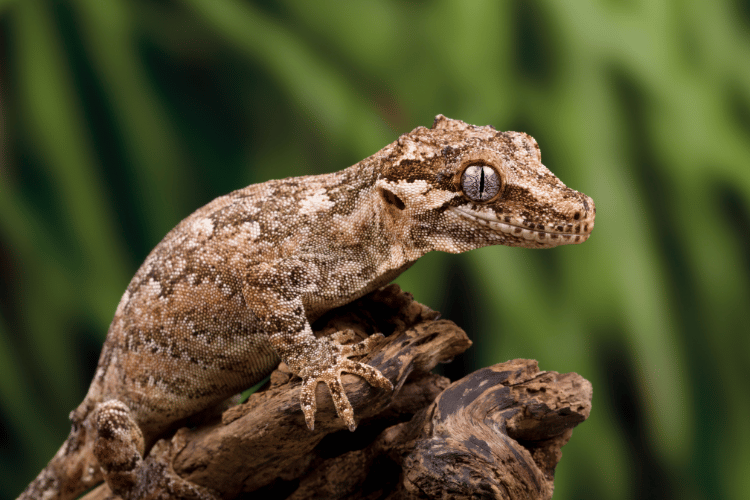
Table of Contents
- Quick Comparison: Crested Gecko vs Gargoyle Gecko
- Origins and Background
- Appearance and Physical Differences
- Size and Weight
- Temperament and Handling
- Diet
- Enclosure Requirements
- Co-habitation
- Lifespan
- Cost and Availability
- Which Should You Choose?
- Wrapping Up
- Frequently Asked Questions
- What is the difference between a crested gecko and a gargoyle gecko?
- Which is better for beginners — crested gecko or gargoyle gecko?
- Do gargoyle geckos regrow their tails?
- Can crested geckos and gargoyle geckos live together?
- Are gargoyle geckos more expensive than crested geckos?
- Do crested geckos and gargoyle geckos have the same care requirements?
Quick Comparison: Crested Gecko vs Gargoyle Gecko
| Feature | Crested Gecko | Gargoyle Gecko |
|---|---|---|
| Adult length | 7–9 inches | 8–10 inches |
| Adult weight | 35–55g | 60–80g |
| Lifespan (captive) | 15–20 years | 15–20 years |
| Temperature | 72–78°F (22–25°C) | 72–78°F (22–25°C) |
| Humidity | 60–80% | 60–80% |
| Enclosure (adult) | 18×18×24″ minimum | 18×18×24″ minimum |
| Diet | CGD + insects | CGD + insects |
| Activity period | Crepuscular (dawn/dusk) | Nocturnal |
| Tail regrowth | No — lost permanently | Yes — regrows fully |
| Co-habitation | Possible (females only) | Not recommended |
| Beginner-friendly? | ✅ Yes — one of the best | 🟡 Moderate experience preferred |
| Cost (standard morph) | $50–$150 | $150–$400+ |
Origins and Background
Both species are native to New Caledonia, a French territory consisting of several islands located roughly 1,500km east of Australia. This shared origin is why their care requirements overlap so closely — same climate, same vegetation type, same humidity and temperature ranges.
The crested gecko (Correlophus ciliatus) was formally described in 1866 but was considered extinct for most of the 20th century. It was rediscovered during a 1994 expedition led by Robert Seipp following Tropical Cyclone Kina. Since then it has become one of the most popular pet reptiles worldwide, valued for its hardiness, tolerance of handling, and the enormous variety of colour morphs developed in captivity.
The gargoyle gecko (Rhacodactylus auriculatus) takes its common name from the horn-like cranial bumps that give it a distinctly rugged, prehistoric appearance. Less widely kept than the crested gecko, it has developed a loyal following among experienced gecko keepers who appreciate its calmer adult temperament and impressive size relative to other New Caledonian species.
Appearance and Physical Differences
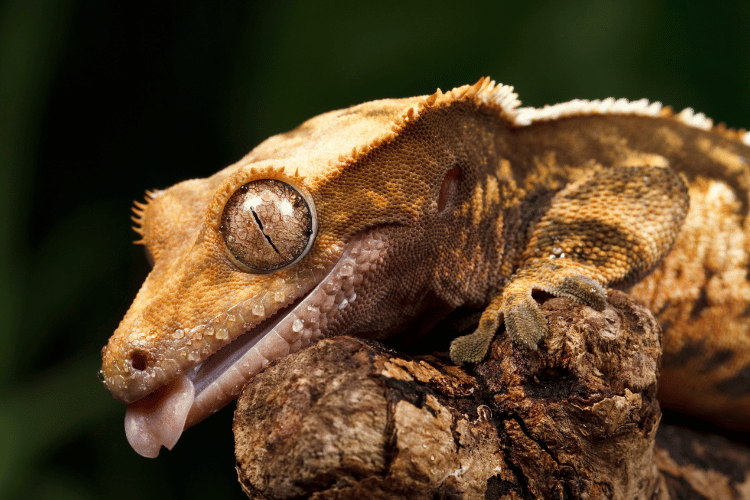
Side by side, these two geckos are actually easy to tell apart once you know what to look for.
Crested geckos have a distinctive row of soft spines running from the top of the head, over each eye, and down the dorsal ridge to the tail — the feature that earned them the alternative common name “eyelash gecko.” They have a relatively triangular head, large eyes, and lamellae (adhesive toe pads) that allow them to climb smooth vertical surfaces.
Gargoyle geckos have a broader, more robust head with cranial bumps rather than crests — the lumps and ridges across the skull give them their characteristic gargoyle-like profile. They’re stockier and heavier-bodied than crested geckos for similar length. Their toe pads are less developed, making them competent but not exceptional climbers compared to cresties.
Both species lack eyelids — like most geckos they clean and moisten their eyes by licking them — and both have the large pupils characteristic of crepuscular and nocturnal animals.
The Tail Difference
This is one of the most practically significant physical differences between the two species. Both can drop their tail as a predator escape mechanism (autotomy), but the outcome differs completely:
- Gargoyle geckos fully regrow a dropped tail. The regenerated tail is cartilage rather than bone and looks slightly different to the original, but it is functional
- Crested geckos drop their tails permanently. Unlike most lizards, they do not regenerate the tail at all. This is common enough in captive cresties that tailless individuals are frequently sold and kept without any welfare concern — but it is worth knowing before you handle a juvenile crested gecko carelessly
Colour Morphs
Crested geckos have been selectively bred in captivity since the mid-1990s and now exist in an enormous variety of colour morphs — from the standard olive/brown through to high-contrast pinstripe, harlequin, dalmatian, phantom, and flame patterns. Morph pricing ranges from under $50 for common colours to several thousand dollars for ultra-rare genetics.
Gargoyle gecko morphs are less numerous but include striped, blotched, reticulated, and solid patterns in colours ranging from white and cream through to deep red and orange. Unusual morphs command premium prices.
Size and Weight
Gargoyle geckos are noticeably heavier and more substantial than crested geckos at adult size. An adult crested gecko typically weighs 35–55g and reaches 7–9 inches nose to tail. An adult gargoyle gecko reaches 8–10 inches and weighs 60–80g — making it a meaningfully stockier animal that feels different in the hand.
Both species reach adult size around 18–24 months of age.
Temperament and Handling
This is where the most meaningful practical difference lies for most keepers.
Crested geckos are generally easy and predictable to handle but can be jumpy, particularly as juveniles. They have a tendency to leap unexpectedly — the first few handling sessions with a young crested gecko often involve the gecko making a break for it mid-session. With consistent, gentle handling they settle well and become calm animals, but their natural inclination to jump means new owners occasionally drop them. They rarely bite.
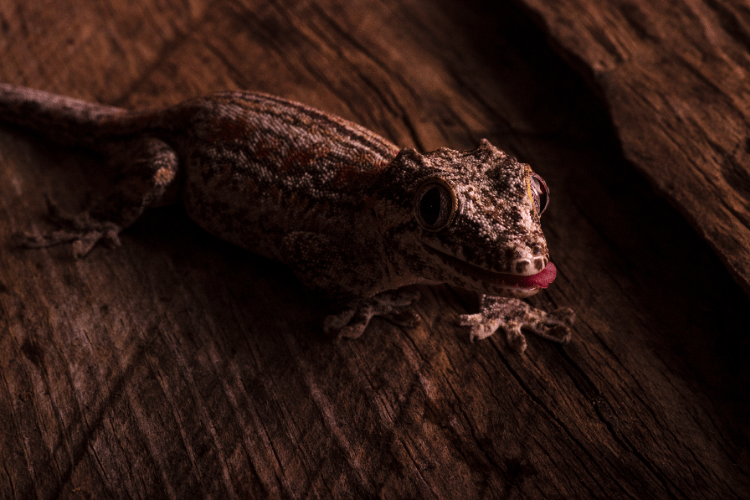
Gargoyle geckos as adults are often described as calmer and less prone to sudden movement during handling. They tend to be slower and more deliberate. However, juveniles can be more defensive than young crested geckos and may bite more readily — gargoyle bites are not dangerous but they’re more forceful than a crested gecko nip. Most gargoyle geckos calm significantly with age and regular handling.
For young children or first-time reptile handlers, the crested gecko’s predictability makes it the safer choice. For someone with some gecko experience who wants a more substantial animal to handle, the adult gargoyle gecko is arguably the more satisfying of the two.
Diet
This is one area where the two species are genuinely similar, which makes keeping both species at the same time straightforward.
Both species thrive on commercially prepared Crested Gecko Diet (CGD) — products like Repashy Crested Gecko MRP or Pangea Fruit Mix — supplemented with live insects. CGD provides a complete nutritional profile that removes most of the complexity from feeding these species. Both species also readily take small live insects: crickets, dubia roaches, and mealworms.
The main difference is feeding frequency and appetite:
- Crested geckos should be offered CGD every 1–2 days, with insects 2–3 times per week for juveniles and once or twice weekly for adults
- Gargoyle geckos have a slower metabolism and eat less frequently — CGD every 2–3 days and insects once or twice a week is typical for adults. They can also be pickier about insect species, with some individuals refusing certain feeders entirely
Both species benefit from calcium supplementation (without D3 if they have appropriate lighting, with D3 if not). For a detailed breakdown of crested gecko feeding, see our crested gecko care guide. For the gargoyle gecko’s specific requirements, see our gargoyle gecko care guide.
Enclosure Requirements

Both species have nearly identical enclosure requirements, which is one of the practical advantages of keeping either or both.
Enclosure Size
Both species are arboreal — they spend most of their time off the ground — and need vertical height more than floor space. A minimum of 18×18×24 inches (Exo Terra or equivalent) for an adult of either species. Taller is always better. A 24×18×36 inch enclosure is ideal for an adult gargoyle given its larger size.
Temperature
Both species prefer ambient temperatures of 72–78°F (22–25°C). Neither tolerates sustained temperatures above 80°F — heat stress is a real and common issue in summer for New Caledonian geckos kept in warmer climates. If your home regularly exceeds 80°F, cooling the gecko room becomes a priority. Temperatures below 65°F will slow metabolism significantly and can trigger brumation-like torpor.
Neither species requires a basking spot or heat gradient in the way that a bearded dragon does — the ambient temperature throughout the enclosure should be within the target range.
Humidity
Both species need humidity of 60–80%, achieved by misting the enclosure once or twice daily. The enclosure should be allowed to partially dry out between mistings — sustained saturation without dry periods leads to bacterial and fungal issues in the substrate and respiratory problems in the gecko. A hygrometer inside the enclosure is essential for accurate monitoring.
Furnishings
Both species need multiple climbing opportunities and secure hides at different heights. Cork bark tubes, bamboo poles, and artificial or live plants all work well. Live bioactive setups suit both species particularly well — the high humidity requirements make tropical plant growth straightforward, and a well-planted bioactive enclosure largely maintains itself between maintenance sessions.
Co-habitation
The two species differ significantly here.
Crested geckos can sometimes be kept together — a single male with one or two females in a sufficiently large enclosure, or same-sex groups of females. Males will fight and should never be housed together. Co-habitation is not recommended as a default and requires careful monitoring, but it is possible with the right setup.
Gargoyle geckos are significantly more territorial and aggressive toward conspecifics. Males will fight seriously — wounds from gargoyle gecko combat can be severe. Even male-female pairs require careful management during breeding. Outside of intentional breeding, gargoyle geckos should be housed individually.
Lifespan
Both species have similar captive lifespans of 15–20 years with good care. The crested gecko’s lifespan data is more established — animals kept since the mid-1990s are now well into their third decade — while gargoyle gecko longevity data is still accumulating. Both are genuine long-term commitments.
Cost and Availability
There is a meaningful price difference between the two species, which often influences the decision for new keepers.
Crested geckos are widely available from specialist breeders and most reptile shops. Standard morphs start from around $50–$100. Mid-range morphs (harlequin, pinstripe) typically cost $100–$300. Exceptional high-colour or rare genetics can run to several thousand dollars, but a healthy, well-bred crested gecko is accessible at almost any budget.
Gargoyle geckos are less commonly stocked in general reptile shops and typically need to be sourced from specialist breeders. Standard animals start from around $150–$200. Unusual morphs regularly reach $400–$800+, and top-end breeding animals command significantly higher prices. The gargoyle gecko hobby is smaller and more specialist than the crested gecko world.
Both species have broadly similar ongoing costs — enclosure setup, CGD food, insects, and occasional vet care are comparable between them.
Which Should You Choose?

The honest answer depends almost entirely on your experience level and what you want from a gecko.
Choose a Crested Gecko If:
- You are a first-time reptile keeper or gecko keeper
- You want a gecko that is forgiving of minor husbandry errors while you find your feet
- You want a wide variety of colour morphs at accessible price points
- You want an animal that can be handled by children with adult supervision
- Budget is a consideration — quality crested geckos are available for under $100
Choose a Gargoyle Gecko If:
- You already have some gecko or reptile keeping experience
- You want a more substantial, impressive animal — the gargoyle is a visually striking gecko with a real presence
- You prefer a calmer, slower-moving gecko for handling sessions
- The tail regrowth capability matters to you — gargoyle geckos that drop their tail can regrow it
- You’re interested in the specialist end of the gecko hobby and enjoy working with a less mainstream species
There is no wrong answer here — both are excellent geckos. If you’re genuinely undecided, starting with a crested gecko and adding a gargoyle gecko later is a very common path, and their identical care requirements mean the second enclosure is easy to set up once you know the first one works.
Wrapping Up
Crested geckos and gargoyle geckos share an island, similar care requirements, and a place in the same corner of the gecko hobby — but they’re genuinely different animals to keep. The crested gecko is more widely available, more affordable, more forgiving, and better suited to beginners. The gargoyle gecko is larger, calmer as an adult, more impressive physically, and better suited to experienced keepers who want something a step beyond the standard.
Both are long-term commitments of 15–20 years — worth choosing carefully rather than on impulse.
Any questions about either species — leave them in the comments below.
Frequently Asked Questions
What is the difference between a crested gecko and a gargoyle gecko?
Both are New Caledonian gecko species with similar care requirements. Key differences: gargoyle geckos are larger and heavier (60–80g vs 35–55g), have cranial bumps rather than dorsal crests, can regrow dropped tails (crested geckos cannot), are more territorial with other geckos, and are generally calmer as adults during handling. Crested geckos are more beginner-friendly and widely available.
Which is better for beginners — crested gecko or gargoyle gecko?
Crested geckos are better suited to beginners. They are more forgiving of minor husbandry errors, more predictable to handle, widely available, and accessible at lower price points. Gargoyle geckos are better suited to keepers with some prior gecko or reptile experience — juveniles can be more defensive, and their territorial nature means co-habitation is not recommended.
Do gargoyle geckos regrow their tails?
Yes. Gargoyle geckos can fully regrow a dropped tail, though the regenerated tail is composed of cartilage rather than bone and may look slightly different from the original. Crested geckos, by contrast, drop their tails permanently — they do not regrow. This is one of the most commonly asked-about differences between the two species.
Can crested geckos and gargoyle geckos live together?
No — they should not be housed together. Gargoyle geckos are territorial and will fight with other geckos, including crested geckos. Even housing two gargoyle geckos together is generally not recommended outside of supervised breeding situations. The two species should always be kept in separate enclosures.
Are gargoyle geckos more expensive than crested geckos?
Yes, generally. Standard crested geckos start from around $50–$100, with mid-range morphs at $100–$300. Gargoyle geckos start from around $150–$200 for standard animals, with unusual morphs regularly reaching $400–$800 or more. Gargoyle geckos are also less commonly stocked and often need to be sourced from specialist breeders.
Do crested geckos and gargoyle geckos have the same care requirements?
Largely yes. Both species need the same temperature range (72–78°F), humidity (60–80%), arboreal enclosure setup with vertical height, and can thrive on commercial Crested Gecko Diet (CGD) supplemented with live insects. The main care differences are that gargoyle geckos eat less frequently, can be more territorial, and should always be housed individually.