Bearded dragons are one of the best reptiles you can own. I’ve kept them for years, and they remain one of my all-time favourite species — they’re tame, genuinely interactive, and surprisingly expressive once you know what to look for.
But there’s a lot of conflicting information out there, especially for new owners. Some of it is outdated. Some of it is just wrong.
This care sheet covers everything you need to know to keep a bearded dragon healthy and happy — enclosure setup, temperatures, diet, supplements, handling, shedding, health issues, and behaviour. If you’re just getting started or want to make sure you’ve got the basics right, you’re in the right place.
Let’s get into it.
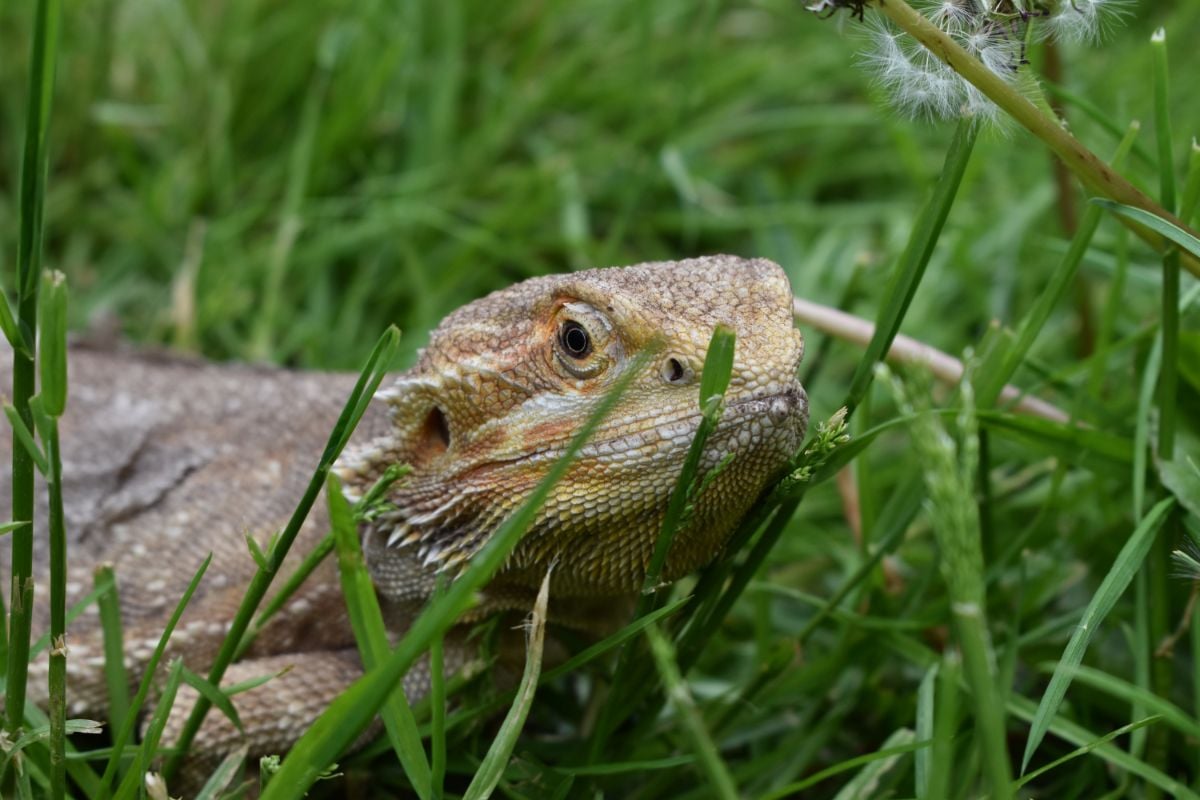
Table of Contents
Species Overview
The bearded dragon (Pogona vitticeps) is a medium-sized agamid lizard native to the arid and semi-arid regions of central and eastern Australia. In the wild they spend their days basking on rocks and branches, hunting insects, and grazing on vegetation — which tells you a lot about what they need in captivity.
They’re diurnal, meaning active during the day, and they’re one of the few reptiles that genuinely seem to enjoy human interaction once they’re comfortable with you. That combination of daytime activity and tameness is a big part of why they’ve become one of the most popular pet reptiles in the world.
Before committing, it’s worth reading our full breakdown of whether bearded dragons make good pets — including the honest time and cost commitment involved. Speaking of which, bearded dragon costs go well beyond the initial purchase price once you factor in the enclosure, lighting, and food.

| Quick Stats | |
|---|---|
| Adult Size | 18–24 inches (nose to tail) |
| Lifespan | 10–15 years in captivity |
| Adult Enclosure | 120 x 60 x 60cm (4ft x 2ft x 2ft) minimum |
| Basking Temperature | 100–110°F (38–43°C) |
| Cool Side Temperature | 80–85°F (27–29°C) |
| Night Temperature | 65–70°F (18–21°C) |
| Humidity | 30–40% |
| UVB | Essential — T5 HO 10.0 or 12% |
| Diet | Omnivore — insects + leafy greens |
| Difficulty Level | Beginner friendly |
Enclosure Size & Setup
Getting the enclosure right is the foundation of good bearded dragon care. Everything else depends on it.
A hatchling can start in a 20-gallon tank, but you’ll be upgrading quickly. For an adult bearded dragon, the minimum enclosure size is 4ft x 2ft x 2ft (120 x 60 x 60cm). Many experienced keepers go larger — a 5ft or 6ft enclosure gives them more room to thermoregulate properly and reduces stress significantly.
Glass terrariums work well and are the most common choice. Make sure the enclosure has front-opening doors if possible — reaching in from above mimics a predator attack and stresses most beardies out.
Inside the enclosure you’ll need:
- A basking rock or branch positioned directly under the basking bulb
- At least one hide on the cool side
- Additional climbing branches — bearded dragons are active climbers
- A food dish and a shallow water dish
- Optional: live or artificial plants for enrichment and cover
Never house two adult bearded dragons together. Two males will fight. A male and female will breed constantly, which is exhausting and dangerous for the female. Even two females can develop dominance issues. One beardie per enclosure — always.
For a full step-by-step walkthrough, read our bearded dragon habitat setup guide.

Lighting & Temperature
This is the area where most new owners go wrong, and where mistakes have the most serious health consequences. Bearded dragons need two distinct types of lighting: a basking bulb for heat and a UVB bulb for vitamin D3 synthesis.
Basking Temperatures
The basking spot should reach 100–110°F (38–43°C) for adults, and up to 110–115°F for juveniles. The cool end of the enclosure should sit at 80–85°F (27–29°C). This temperature gradient is what allows them to thermoregulate — moving between warm and cool as needed to digest food, absorb nutrients, and regulate their body temperature.
At night, temperatures can drop to 65–70°F (18–21°C). Most homes stay warm enough that a night heat source isn’t needed, but if your home drops below 65°F at night you’ll want a ceramic heat emitter. Our guide on whether bearded dragons need heat at night covers this in detail. And if you’re ever wondering how long they can go without heat, the short answer is: not long.
Always measure temperatures with a digital thermometer and probe, not the stick-on strip thermometers — those are notoriously inaccurate.

UVB Lighting
UVB is non-negotiable. Without it, bearded dragons cannot synthesise vitamin D3, which means they can’t absorb calcium, which leads to metabolic bone disease — a painful, debilitating, and unfortunately common condition in poorly kept beardies.
Use a T5 HO 10.0 or 12% UVB bulb that spans at least two-thirds of the enclosure length. Position it inside the enclosure (not on top of a mesh lid — mesh blocks a significant percentage of UVB output). Replace the bulb every 12 months even if it still looks bright — UVB output degrades long before the visible light does.
Run both the basking and UVB lights on a 12-hour on / 12-hour off cycle to simulate a natural day. They don’t need light at night — see our guide on whether bearded dragons need light at night for more detail.
Humidity
Bearded dragons come from dry Australian environments and need low humidity — 30–40%. Too much moisture in the enclosure can lead to respiratory infections and skin problems.
If your humidity is running high, improve ventilation, reduce the size of the water dish, or switch to a substrate that doesn’t retain moisture. If it’s running low (below 25%), a very light misting of the enclosure once or twice a week is enough to bring it up without overdoing it.
Check our full guide on bearded dragon humidity if you’re struggling to keep it in range.
Substrate
Substrate choice matters more than most people realise. The wrong choice is one of the leading causes of bearded dragon impaction — a potentially fatal condition where substrate is ingested and blocks the digestive tract.
Safe options:
- Reptile carpet — easy to clean, no ingestion risk, good for juveniles
- Ceramic tile — excellent heat retention, easy to clean, long-lasting
- Topsoil/sand mix (60/40) — great for adult dragons, allows natural digging behaviour
- Newspaper or paper towels — not pretty, but safe and easy for hatchlings
Avoid for juveniles under 6 months: loose sand, calci-sand, wood chips, or any fine particulate substrate. Young beardies are at the highest risk of accidental ingestion.
Read our full bearded dragon substrate guide for a complete comparison of every option.
Diet & Feeding
Bearded dragons are omnivores and their diet should reflect that — a mix of live insect protein and fresh leafy greens. The ratio changes significantly as they grow.
Feeding by Age
| Age | Insects | Vegetables | Feeding Frequency |
|---|---|---|---|
| Hatchling (0–3 months) | 80% | 20% | 3x daily, as much as they’ll eat in 10 mins |
| Juvenile (3–12 months) | 60% | 40% | 2x daily |
| Sub-adult (12–18 months) | 40% | 60% | Once daily |
| Adult (18 months+) | 20–30% | 70–80% | Insects 3–4x per week, greens daily |
Insects
The best staple feeder insects are dubia roaches and crickets. Dubia roaches have an excellent nutritional profile and are less likely to cause impaction. Crickets work well too, though they’re more difficult to keep alive between feedings.
Other good options include black soldier fly larvae (BSFL), silkworms, and hornworms. Superworms and waxworms should be treated as occasional treats only — they’re high in fat. Find out how many crickets to feed with our crickets feeding guide.
A key rule: never feed an insect larger than the space between your beardie’s eyes. Anything larger risks gut impaction or neurological issues.
Vegetables & Greens
Leafy greens should make up the bulk of an adult’s plant diet. The best staples are collard greens, mustard greens, turnip greens, dandelion greens, and endive. Offer a fresh mix daily.
Fruits should be occasional treats only — a few times per week maximum for adults. Safe options include blueberries, strawberries, raspberries, watermelon, and apples (no seeds).
Foods to avoid entirely: avocado, rhubarb, onions, mushrooms, citrus fruit, and fireflies — all toxic to bearded dragons.
For the complete breakdown of every food, read our bearded dragon diet guide.

Supplements
Two supplements are essential:
- Calcium without D3 — dust feeder insects at every feeding for juveniles, 3–4x per week for adults. The UVB light handles D3 synthesis naturally, so you want calcium-only powder for most feedings
- Multivitamin — once per week for adults, twice per week for juveniles
Calcium deficiency is one of the most common and serious health issues in captive bearded dragons. Our dedicated guide on bearded dragon calcium covers everything you need to know about dosing and the best products.
Water
Bearded dragons don’t drink from standing water the way mammals do, but they still need hydration. Keep a shallow water dish in the cool end of the enclosure and change it daily.
The most reliable way to hydrate a bearded dragon is through regular warm baths. A 15-minute lukewarm bath 2–3 times per week helps with hydration, digestion, and shedding. Our bearded dragon bathing guide covers the right technique. And yes — bearded dragons can swim, though most prefer to just soak rather than paddle around.
Handling & Temperament
Bearded dragons are one of the most handleable reptiles you can own. Most become genuinely relaxed with their owners — some will happily sit on your shoulder or chest for extended periods.
That said, handling needs to be introduced gradually, especially with younger animals. Start with short 5–10 minute sessions once a day. Always scoop from below — never grab from above, which triggers a predator response. Let them walk onto your hand rather than grabbing them.
Signs they’re comfortable: calm body posture, normal colouring, relaxed eyes. Signs they’re not: darkened beard, puffed-up body, hissing, or trying to flee. If you see those signals, end the session. Read more in our guide on whether bearded dragons like to be handled.
Bearded dragons very rarely bite, but it does happen — usually from a startled young animal or one that mistakes your fingers for food. See our bearded dragon bite guide for what to do if it happens.
Behaviour & Body Language
One of the most rewarding things about keeping bearded dragons is how expressive they are. Once you learn their signals, they’re surprisingly easy to read.
- Head bobbing — fast bobs signal dominance or territorial behaviour; slow bobs are often a greeting or acknowledgement
- Arm waving — a submissive gesture, most often seen in females and juveniles
- Black beard — stress, threat display, or breeding behaviour depending on context
- Glass surfing — repeatedly pawing at the glass, usually signals stress, boredom, or an enclosure that needs attention
- Mouth open while basking — usually just thermoregulating (gaping), not a sign of illness
- Pancaking / lying flat — flattening the body to maximise heat absorption from the basking spot
- Stress marks — dark oval markings on the belly indicating stress or discomfort
Bearded dragons also make a range of sounds. Our dedicated guide covers all bearded dragon noises and what each one means.

Shedding
Bearded dragons shed their skin regularly throughout their lives — more frequently as juveniles (every few weeks) and less often as adults (every few months). The process is called ecdysis.
Signs a shed is coming: dull, grey or opaque skin colouring, reduced appetite, and sometimes slightly closed or cloudy eyes. During a shed, increase the frequency of warm baths to help loosen the skin. Never pull shed skin off — if it’s not coming off naturally, a soak will usually sort it.
Read our complete guide on bearded dragon shedding for everything you need to know about the process and stuck shed.
Brumation
Brumation is the reptile equivalent of hibernation, and it’s something many first-time owners panic about. During brumation — usually in autumn and winter — your beardie may sleep for days or weeks, eat very little, and become largely unresponsive. This is completely normal.
Not every beardie brummates, and those that do vary widely in how deeply they go. If your dragon suddenly becomes inactive and stops eating in the cooler months, don’t rush to the vet — read our full guide to bearded dragon brumation first to confirm that’s what you’re dealing with.
Common Health Issues
Bearded dragons are hardy animals, but there are a handful of health issues every owner should know how to recognise.
- Impaction — blockage of the digestive tract from ingested substrate or oversized feeders. Symptoms include lethargy, swollen abdomen, and failure to pass stool
- Mouth rot (stomatitis) — bacterial infection of the mouth. Look for yellow or brown discharge, swollen gums, or reluctance to eat
- Tail rot — tissue death starting at the tail tip, usually from injury or constriction. The affected area turns black and dry. Requires vet attention
- Mites — tiny parasites visible around the eyes and beard area. Highly treatable but need to be caught early
- Refusing food — can signal illness, stress, an enclosure problem, or simply the onset of brumation. Read our troubleshooting guide to identify the cause
- Shaking or trembling — a warning sign of calcium deficiency, metabolic bone disease, or neurological issues. Always needs investigating
- Sunken eyes — a reliable indicator of dehydration. Increase baths and check the water dish
If you’re ever unsure whether something is normal, a reptile-experienced vet is always worth contacting. Many issues that seem serious are straightforward to treat when caught early.
Lifespan
A well-kept bearded dragon will typically live 10–15 years in captivity. The oldest recorded captive bearded dragon lived to 18 years. Lifespan is closely tied to husbandry quality — correct lighting, diet, and temperatures make a measurable difference to how long and how well they live.
Read more in our full bearded dragon lifespan guide, including factors that affect longevity and what you can do to maximise their years.
Size & Growth
Most bearded dragons reach their full adult size of 18–24 inches by around 12–18 months of age, with males typically reaching the upper end of that range. Females tend to be slightly smaller.
Growth rate varies based on diet, temperatures, and genetics. Our guide on how big bearded dragons get includes a full growth chart by age so you can track whether your beardie is developing on schedule.
Wrapping Up
Bearded dragons are one of the most rewarding reptiles you can keep. They’re interactive, expressive, and — with the right setup — genuinely low maintenance once you’ve got the basics dialled in.
The most common mistakes I see new owners make are undersized enclosures, incorrect UVB lighting, and inadequate calcium supplementation. Get those three things right from day one and you’re most of the way there.
If you’re still deciding whether a bearded dragon is the right reptile for you, have a look at our best pet lizards guide for a broader comparison — or the bearded dragon vs leopard gecko comparison if you’re torn between the two most popular options.
Any questions — drop them in the comments below.
Frequently Asked Questions
How big do bearded dragons get?
Adult bearded dragons typically reach 18–24 inches (nose to tail) and weigh between 10–18oz. Males tend to be larger than females. Most reach their full adult size by 12–18 months of age, though some continue filling out until around 2 years.
How long do bearded dragons live?
A well-cared-for bearded dragon will typically live 10–15 years in captivity. The oldest recorded lived to 18 years. Lifespan is heavily influenced by husbandry quality — correct UVB lighting, diet, and temperatures are the biggest factors.
What do bearded dragons eat?
Bearded dragons are omnivores. Juveniles eat around 60–80% insects (dubia roaches, crickets) and 20–40% leafy greens. Adults flip to 70–80% leafy greens and vegetables with insects 3–4 times per week. Fruits can be given as occasional treats. Avocado, onions, and fireflies are toxic and must be avoided entirely.
Do bearded dragons need UVB?
Yes — UVB is essential, not optional. Without it bearded dragons cannot synthesise vitamin D3, which prevents calcium absorption and leads to metabolic bone disease. Use a T5 HO 10.0 or 12% UVB bulb positioned inside the enclosure, not on top of mesh. Replace it every 12 months.
How often should I handle my bearded dragon?
Daily handling sessions of 15–30 minutes are ideal for a settled adult bearded dragon. Start shorter with juveniles or newly acquired animals — 5–10 minutes per session — and build up gradually as they become comfortable. Always scoop from below, never grab from above, and end the session if they show signs of stress.
Why is my bearded dragon not eating?
Loss of appetite in bearded dragons can have several causes: the onset of brumation (especially in cooler months), stress from a recent enclosure change, incorrect temperatures, illness, or shedding. Check husbandry conditions first. If nothing resolves it within 2 weeks and brumation isn’t the cause, a reptile vet visit is the right next step.