Adult bearded dragons should get roughly 70 to 80 percent of their diet from plant matter, with the vast majority of that being leafy greens and vegetables. I have been growing up with bearded dragons for over 15 years, and the vegetable side of Draco’s diet is where I spend the most time — not because it is complicated, but because variety and rotating the right options really does make a measurable difference to long-term health. This guide covers everything you need to know: which vegetables are staples, which are occasional treats, what to avoid completely, and a quick-reference table you can use as a daily reference.
Table of Contents
Quick Reference: Safe Vegetables for Bearded Dragons
The most important concept to understand before getting into individual vegetables is the calcium-to-phosphorus ratio, usually written as Ca:P. Bearded dragons need significantly more calcium than phosphorus in their diet to support bone health and prevent metabolic bone disease. A Ca:P ratio of at least 2:1 is ideal — meaning twice as much calcium as phosphorus per serving. Vegetables with a poor ratio (close to 1:1 or with more phosphorus than calcium) are not toxic, but they should be fed less often so they do not pull the overall balance in the wrong direction. That is the logic behind most of the frequency guidance below.
| Vegetable | Frequency | Ca:P ratio | Key notes |
|---|---|---|---|
| Collard greens | Daily staple | ~3:1 | One of the best staple greens available |
| Turnip greens | Daily staple | ~3:1 | Excellent calcium source; mix with other greens |
| Dandelion greens | Daily staple | ~3:1 | Highly nutritious; most beardies love them |
| Mustard greens | Daily staple | ~2:1 | Good staple; slight goitrogenic risk in very large amounts |
| Endive / escarole | Daily staple | ~2:1 | Low oxalate; reliable rotation green |
| Arugula (rocket) | Daily staple | ~3:1 | Mild peppery flavour most beardies accept well |
| Watercress | Several times a week | ~2:1 | High in vitamins A and C; good rotation option |
| Butternut squash | Several times a week | ~2:1 | High in vitamins; serve raw, finely grated |
| Bell peppers | 2–3 times a week | ~1:1 | High vitamin C; red peppers are most nutritious |
| Cilantro | 2–3 times a week | ~2:1 | Good herb addition; strong flavour some beardies ignore |
| Cabbage (green) | 1–2 times a week | ~2:1 | Safe in moderation; goitrogens limit frequency |
| Zucchini (courgette) | 1–2 times a week | ~1:2 (reversed) | More phosphorus than calcium; occasional only |
| Kale | 1–2 times a week | ~2:1 | Nutritious but goitrogens prevent daily use |
| Carrots (root) | 1–2 times a week | ~1:1 | High beta-carotene; see vitamin A note |
| Carrot tops | Several times a week | ~2:1 | Better than the root; treat as a staple green |
| Beets (root) | Occasional treat | Poor (oxalates) | High oxalates bind calcium; small amounts only |
| Beet greens | 1–2 times a week | Better than root | Preferable to the root; still moderate oxalates |
| Spinach | Avoid | Very high oxalates | Oxalates bind calcium strongly; not worth the risk |
| Iceberg lettuce | Avoid | No nutritional value | Mostly water; displaces nutritious food |
| Avocado | Never | Toxic | Contains persin — toxic to bearded dragons |
| Onion / leek / garlic | Never | Toxic | All alliums are harmful to reptiles |
| Rhubarb | Never | Toxic | Very high oxalic acid — do not feed |
Staple Vegetables to Offer Daily
These are the vegetables that should form the backbone of your beardie’s plant intake. They have strong Ca:P ratios, good vitamin profiles, and no significant antinutrient concerns that limit daily feeding. I rotate three or four of these on any given day for Draco rather than sticking to the same one — variety keeps the diet nutritionally complete and stops beardies from fixating on one food to the exclusion of others.
Collard greens, turnip greens, and dandelion greens are the three I come back to most often. All have Ca:P ratios around 3:1, good vitamin A from beta-carotene, and are widely available in most supermarkets year round. Dandelion is also easy to grow or forage if you have access to an unsprayed garden — just make sure any foraged greens come from an area not treated with herbicides or pesticides.
Arugula (rocket) and endive are reliable daily options that most beardies accept readily. Arugula has a slightly peppery flavour that tends to go down well. Endive is low in oxalates and particularly useful when you want to avoid any calcium-binding risk.
Mustard greens are another strong staple. The mild goitrogenic compounds they contain (which can interfere with thyroid function in large quantities) are not a practical concern when mustard greens are part of a varied rotation rather than the sole green offered every day.
Expert Tip: Build the daily salad from at least two or three different staple greens rather than one. Draco’s typical salad starts with a base of collard greens, then gets topped with rotating additions depending on what is available. The variety is what ensures genuine nutritional completeness over time — no single green covers everything.
Occasional Vegetables (A Few Times a Week)
These vegetables are nutritious and safe but have specific reasons to avoid daily feeding — goitrogens that affect thyroid function in large amounts, Ca:P ratios that are less favourable, or high beta-carotene that can interact with preformed vitamin A supplements. Offered 2 to 3 times a week as part of a mixed salad, they add genuine nutritional variety without the downsides that come with overfeeding any single item.
Kale

Kale is safe and nutritious — it has a good Ca:P ratio around 2:1 and high levels of vitamin K, vitamin C, and beta-carotene. The reason it does not make the daily staple list is its goitrogenic content. Goitrogens are naturally occurring compounds found in brassica vegetables that can interfere with thyroid hormone production when consumed in large amounts consistently. For a beardie getting kale 1 to 2 times a week as part of a varied diet this is not a concern. A beardie eating kale as its primary daily green over months is a different situation. Rotate it in freely but do not make it the dominant green.
Carrots and Carrot Tops

Carrot tops are the better part of the plant for bearded dragons and can be offered several times a week — they have a Ca:P ratio of around 2:1 and considerably more calcium than the root itself. The orange root is safe but should be kept to 1 to 2 times a week. Carrots are high in beta-carotene, which the body converts to vitamin A as needed. That self-regulating process means carrots alone are unlikely to cause vitamin A toxicity — the risk comes from combining beta-carotene-rich vegetables with preformed vitamin A supplements, which can push total vitamin A levels too high over time. If your beardie’s supplement uses retinol or retinyl acetate (preformed vitamin A) rather than beta-carotene, keep carrot portions modest. Always grate or finely slice the raw root — large chunks are a choking and impaction risk.
Bell Peppers
Bell peppers are safe and well-liked by most beardies. Red peppers are the most nutritious — they contain significantly more vitamin C and beta-carotene than green peppers, which are simply unripe red peppers. The Ca:P ratio is around 1:1, which is why daily feeding is not ideal, but 2 to 3 times a week as a salad addition is perfectly fine. Remove seeds and slice into small thin pieces. Never offer hot peppers — capsaicin is irritating to a bearded dragon’s digestive system.
Cilantro

Cilantro is safe and has a reasonable Ca:P ratio of around 2:1. It is a good herb to rotate in 2 to 3 times a week. The main thing to know is that some bearded dragons will ignore it entirely — the strong volatile oils that give cilantro its distinctive smell are not universally appealing to reptiles. If your beardie avoids it, do not force it; there are plenty of other greens to offer. Wash thoroughly before serving and chop or tear into small pieces.
Cabbage

Green cabbage is safe in moderation and has a Ca:P ratio around 2:1. Like kale it is a brassica and contains goitrogens, so daily feeding is not recommended. Once or twice a week is the right frequency. Green cabbage is preferable to red or purple varieties, which have higher oxalate content. Shred finely and mix into the salad rather than offering large leaves — beardies have difficulty tearing tough leaf matter and small pieces make for safer eating.
Zucchini (Courgette)

Zucchini is safe but has more phosphorus than calcium — the Ca:P ratio is roughly reversed at 1:2 — which makes it unsuitable as a regular staple. Once or twice a week in small amounts alongside higher-calcium greens is fine. It is high in water content and low in calories, so it is not displacing anything nutritionally significant when offered in modest amounts. Slice thinly or grate; both raw and lightly steamed are acceptable.
Beets — A Special Case
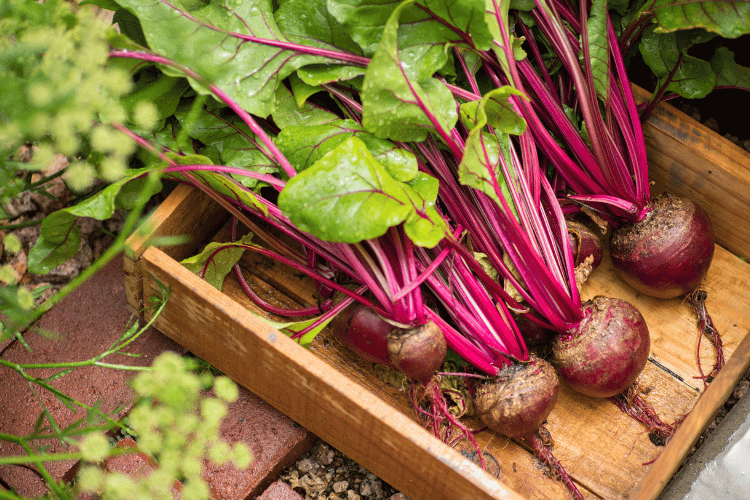
Beets are worth treating as their own category. The root is safe in small occasional amounts, but it contains oxalic acid — the same antinutrient found in spinach — which binds to calcium in the gut and prevents absorption. For a beardie with good bone density eating a calcium-rich varied diet, a small piece of beet root occasionally is not a practical risk. For a younger beardie still building bone density, or one that is already calcium-deficient, it is worth avoiding entirely. Beet greens are a better option — they still contain some oxalates but have a considerably better Ca:P ratio than the root. If you are feeding beets, small portions once a week maximum for the root and 1 to 2 times a week for the greens.
Vegetables to Avoid
Spinach is the most commonly asked about vegetable in the avoid category. It is not acutely toxic but its very high oxalate content makes it a poor choice — the oxalates bind calcium so effectively that regular spinach feeding can contribute to calcium deficiency even when other dietary calcium sources are adequate. Given how many excellent safe alternatives are available, there is no reason to include it.
Iceberg lettuce is not harmful but has essentially no nutritional value — it is about 96% water. Offering it takes up space in the salad bowl that a nutritious green should occupy. Romaine lettuce is a modest step up but still not a useful vegetable for bearded dragons; the staple greens listed above are always a better use of the space.
Avocado, onions, leeks, chives, and garlic are genuinely toxic to bearded dragons and should never be offered in any amount. Avocado contains persin, which causes cardiovascular damage in reptiles. All alliums — onions, leeks, chives, garlic — contain compounds that cause oxidative damage to red blood cells. Rhubarb contains very high concentrations of oxalic acid and should never be fed.
How to Prepare Vegetables for Your Beardie
Wash everything thoroughly under cold running water before serving. Pesticide and herbicide residues are a genuine concern with shop-bought produce, particularly on leafy greens. Organic where possible, and always wash regardless.
Chop or shred into pieces no larger than the space between your beardie’s eyes — this is the standard sizing rule for all solid food and applies to vegetables as well as insects. Large pieces of tough vegetables like raw carrot or broccoli stems are a choking and impaction risk. Grate hard vegetables (carrot, raw butternut squash) rather than slicing into chunks.
Raw is almost always better than cooked. Cooking reduces water-soluble vitamins, softens the fibre in ways that reduce digestive benefit, and changes the texture in ways that most beardies find less appealing. If you do lightly steam a vegetable to improve palatability for a fussy eater, use no oil, butter, salt, or seasoning of any kind.
Mix the salad in a stable, shallow bowl wide enough for the beardie to access all of the contents without difficulty. Place higher-value staple greens as the bulk of the bowl and add the occasional vegetables as smaller components on top — this encourages the beardie to eat through the whole bowl rather than picking out favoured items first.
Expert Tip: Dust the vegetable salad with calcium powder (without D3 if your beardie has proper UVB; with D3 if not) 3 to 4 times a week for adults. The calcium supplement is primarily associated with feeder insects in most care guides, but dusting the salad as well — particularly for adults who eat proportionally fewer insects than juveniles — helps maintain the calcium load needed for long-term bone health.
How Much Vegetable Does a Bearded Dragon Need?
The ratio changes significantly with age. Juveniles (under 12 months) need roughly 60 to 70 percent insects and 30 to 40 percent plant matter — they are growing rapidly and protein drives that growth. From around 12 to 18 months as growth slows, the balance tips. Adult bearded dragons (18 months and over) should be eating 70 to 80 percent plant matter with insects as a supplement offered 3 to 4 times a week rather than daily.
Getting this transition right is one of the most important dietary adjustments in a bearded dragon’s life. Adults fed the high insect ratio appropriate for juveniles tend toward obesity and fatty liver disease over time. For a full breakdown of the diet by age including insect types, feeding frequencies, and supplementation, see our complete bearded dragon diet guide.
Frequently Asked Questions
What vegetables can bearded dragons eat every day?
The best daily staple vegetables are collard greens, turnip greens, dandelion greens, arugula, endive, and mustard greens. These all have strong calcium-to-phosphorus ratios and no significant antinutrient concerns that limit daily feeding. Rotating between three or four of these each day provides better nutritional coverage than relying on a single green.
Can bearded dragons eat carrots?
Yes, occasionally. The orange root is safe 1 to 2 times a week, grated or finely sliced and mixed into a salad. Carrot tops are a better option and can be offered several times a week — they have significantly more calcium than the root and a better Ca:P ratio. The main reason to limit carrot root frequency is the high beta-carotene content, which can contribute to vitamin A issues when combined with preformed vitamin A supplements.
Can bearded dragons eat kale?
Yes, 1 to 2 times a week. Kale is nutritious with a good Ca:P ratio, but it contains goitrogens — compounds that can interfere with thyroid function in large amounts. Offered as part of a varied salad a couple of times a week this is not a concern. Making kale the primary daily green over many months is where problems can develop.
Can bearded dragons eat spinach?
Spinach should be avoided. It is not acutely toxic but has very high oxalate content, which binds calcium in the gut and prevents absorption. Regular spinach feeding can contribute to calcium deficiency even when other dietary calcium sources are adequate. There are many excellent calcium-rich safe greens available — use those instead.
Can bearded dragons eat cabbage?
Yes, green cabbage is safe 1 to 2 times a week. Like kale it is a brassica with goitrogens, so daily feeding is not ideal. Shred finely before serving. Green cabbage is preferable to red or purple varieties, which have higher oxalate content.
What vegetables should bearded dragons never eat?
Never feed avocado (contains persin, which is toxic to reptiles), onions, leeks, chives, or garlic (all alliums damage red blood cells), or rhubarb (extremely high oxalic acid). Spinach and iceberg lettuce are worth avoiding for different reasons — spinach binds calcium through oxalates, and iceberg lettuce has essentially no nutritional value. These should be replaced with the staple greens listed in the guide.
References
- Donoghue, S. & Langenberg, J. (1996). Nutrition. In: Mader, D.R. (ed.) Reptile Medicine and Surgery. W.B. Saunders, Philadelphia. — Foundational veterinary reference covering calcium metabolism, oxalate toxicity, goitrogens, and dietary ratio requirements in reptiles including agamid lizards.
- Merck Veterinary Manual. Management and Husbandry of Reptiles. merckvetmanual.com — Authoritative veterinary reference on reptile nutritional requirements, metabolic bone disease, and dietary supplementation.